The tradition & historical record
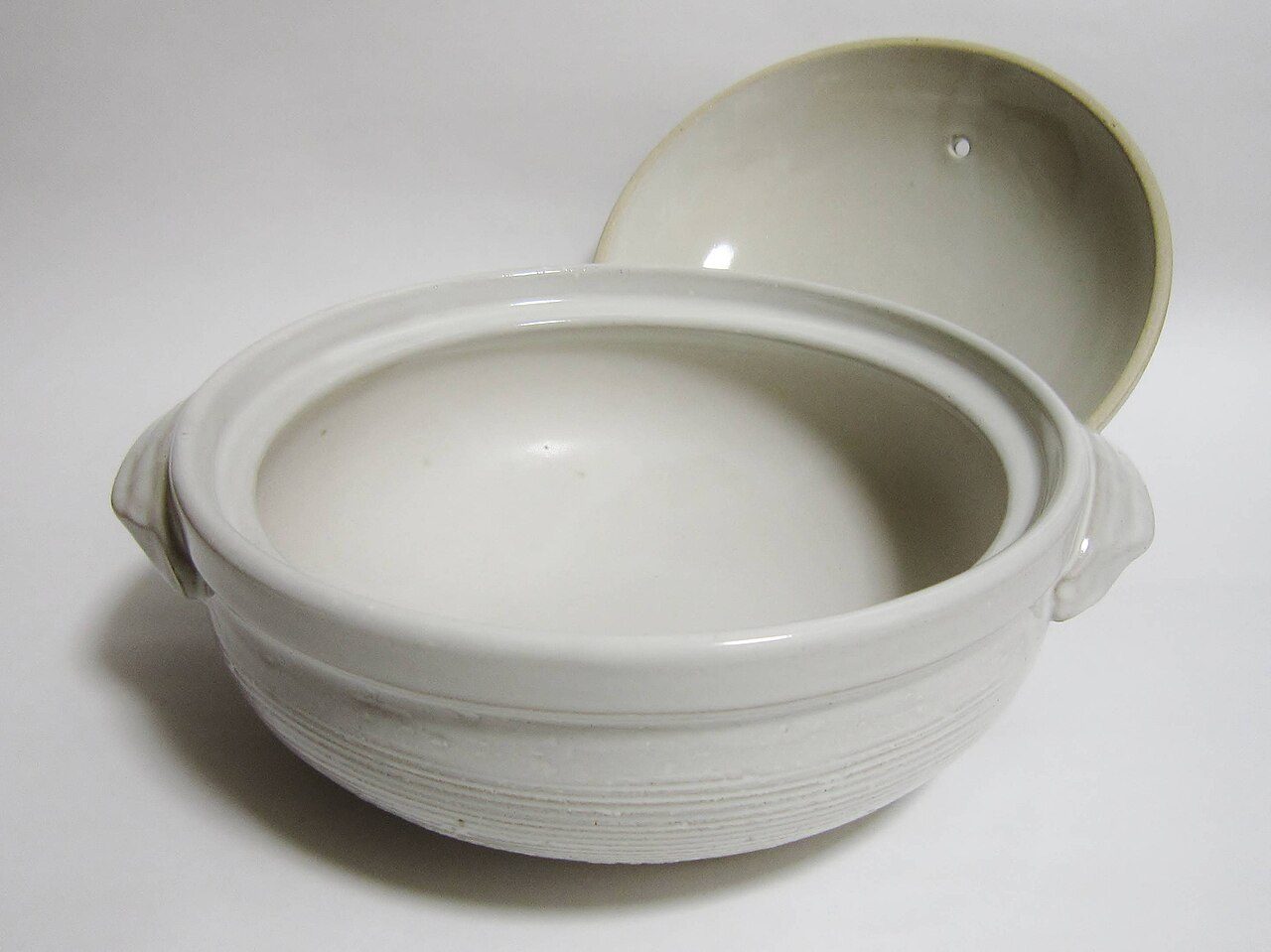
2 min read · 2 sourcesDonabe (Japanese: 土鍋, literally "earthenware pot") are pots made out of a special clay for use over an open flame in Japanese cuisine, and in the case of semi-stoneware Banko ware of high petalite content. Often, the food is cooked at the table on a gas burner for various nabemono dishes such as shabu-shabu and dishes served simmering including nabeyaki udon. They are sized by sun, one of the Japanese units of measurement. The donabe is usually glazed on the inside and porous on the outside. While the material is similar to earthenware or stoneware, donabe can be used over an open flame as well as in an oven if three precautions are taken. First, the outside of the donabe should be dry before use, as moisture within the clay will expand in the heat and may chip or crack the pot. Secondly, the pot should be heated gradually to reduce the possibility of cracks due to heat stress. Third, the pot should never be left over the flame while empty. Donabe is a traditional cooking vessel. It is made from a clay that is porous and coarse. In the area around Iga, Iga-yaki (Iga-style) donabe, have been made since 1832; Iga-yaki pottery in general dates back to the 7th century and is highly valued. It became particularly popular for donabe during the Edo Period. The highest-quality donabe can take two weeks to make. There are multiple styles of donabe made for the preparation of different dishes. 1
The text above is adapted from the Wikipedia article “Donabe”, available under the Creative Commons Attribution-ShareAlike 4.0 licence. 1
donabe is Japanese clay pot, according to the structured record cited below. This entry was generated automatically from that record and has not yet been reviewed by a person familiar with the tradition. 2
The source record links this tradition to 2 external registers, which can be verified through the citation. 2