The tradition & historical record
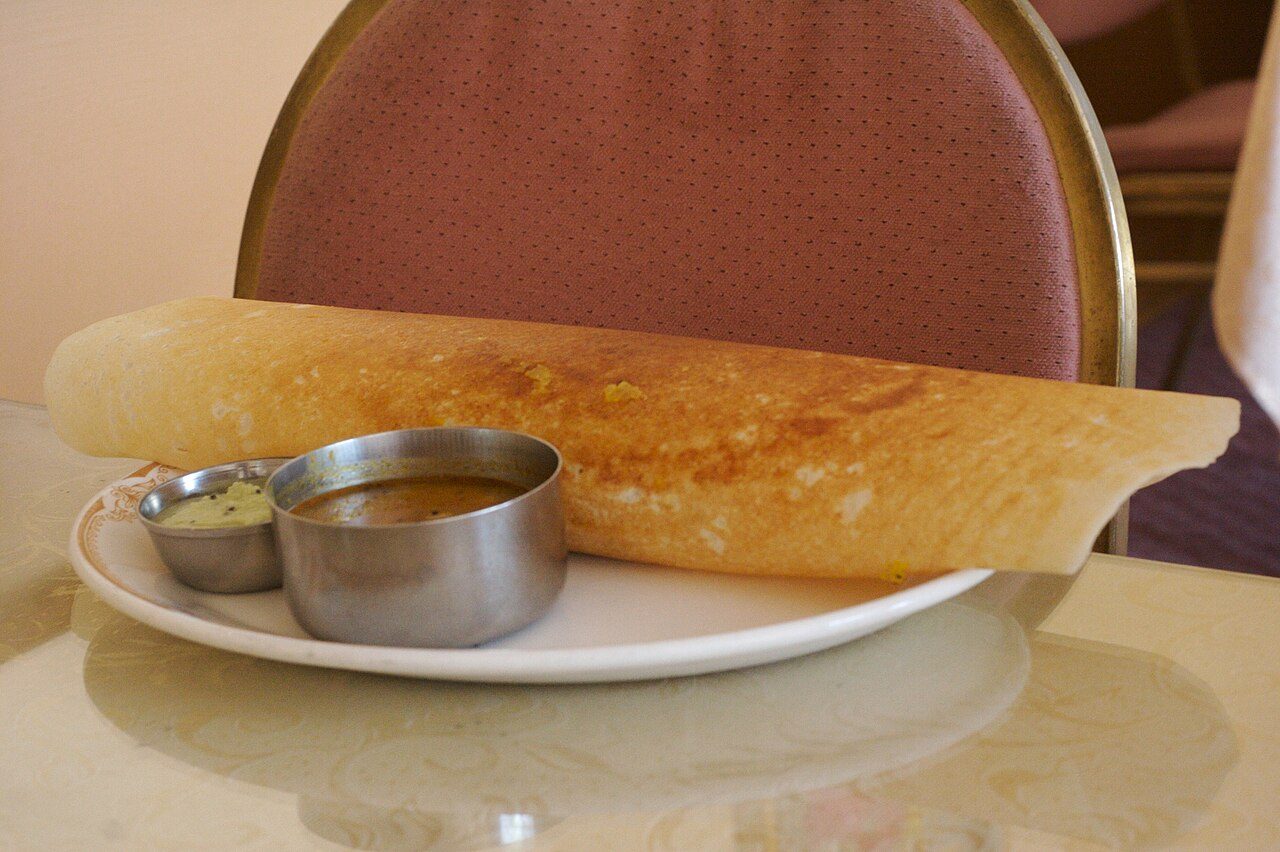
4 min read · 2 sourcesA dosa (in Indian English) or thosai (in Malaysian English and Singapore English) is a thin, savoury batter bread in South Indian cuisine made from a fermented batter of ground black gram and rice. Dosas are served hot, often with chutney and sambar. 1
History
The dosa originated in South India, but its precise geographical origins are unknown. According to food historian K. T. Achaya, references in the Sangam literature suggest that dosa was already in use in the ancient Tamil country around the first century CE. However, according to historian P. Thankappan Nair, dosa originated in the town of Udupi in Karnataka. Achaya states that the earliest written mention of dosa appears in the eighth-century literature of present-day Tamil Nadu, while the earliest mention of dosa in Kannada literature appears a century later. In popular tradition, the origin of the dosa is linked to Udupi, probably because of the dish's association with Udupi restaurants. The Tamil Nadu dosa is traditionally softer and thicker; the thinner and crispier version of dosa, which became popular across India, was first made in present-day Karnataka. A recipe for dosa can be found in Manasollasa, a 12th-century Sanskrit encyclopedia compiled by Someshvara III, who ruled from present-day Karnataka. The dosa arrived in Mumbai with the opening of Udupi restaurants in the 1930s. After India's independence in 1947, South Indian cuisine became increasingly popular in North India. In New Delhi, the Madras Hotel in Connaught Place became one of the first restaurants to serve South Indian cuisine. Dosas, like many other dishes of South Indian cuisine, were introduced in Ceylon (Sri Lanka) by South Indian emigrants during British rule. Tirunelveli and Tuticorin merchants who settled there were instrumental in the spreading of South Indian cookery across the island by opening restaurants (vegetarian hotels) to meet initially the needs of the emigrant population. 1
Names
Dosa is the anglicised name of a variety of South Indian names for the dish, for example, dosai in Tamil, dōsaë in Tulu, dōse in Kannada and Telugu, dōse in Malayalam and Chakuli Pitha in Odia. The standard transliterations and pronunciations of the word in various South Indian languages are: 1
The Tamil term dōsai lends to thosai as used in Malaysian English and Singapore English mentioned above. 1
Nutrition
Dosa is high in carbohydrates and contains no added sugars. As its key ingredients are rice and black gram, it is a good source of protein. A typical homemade plain dosa without oil contains about 112 calories, of which 84% is carbohydrate and 16% is protein. The fermentation process increases the vitamin B and vitamin C content. 1
Preparation
A mixture of rice and white gram that has been soaked in water for at least 4 to 5 hours is ground finely to form a batter. Some add a bit of soaked fenugreek seeds while grinding the batter. The proportion of rice to lentils is generally 3:1 or 4:1. After adding salt, the batter is allowed to ferment overnight, before being mixed with water to get the desired consistency. The batter is then ladled onto a hot tava or griddle greased with oil or ghee. It is spread out with the base of a ladle or a bowl to form a pancake. It can be made either thick like a pancake, or thin and crispy. A dosa is served hot, either folded in half or rolled like a wrap. It is usually served with chutney and sambar. The mixture of white grams and rice can be replaced with highly refined wheat flour or semolina. 1
Serving
Dosas can be stuffed with fillings of vegetables and sauces to make a quick meal. They are typically served with a vegetarian side dish, which varies according to regional and personal preferences. Common side items are: 1
Sambar Chutney Idli podi or milagaipodi: A lentil powder with spices and sometimes desiccated coconut, mixed with sesame oil or groundnut oil or ghee Indian pickles 1
The text above is adapted from the Wikipedia article “Dosa (food)”, available under the Creative Commons Attribution-ShareAlike 4.0 licence. 1
dosa is thin pancakes originating from South India, according to the structured record cited below. This entry was generated automatically from that record and has not yet been reviewed by a person familiar with the tradition. 2
The source record links this tradition to 3 external registers, which can be verified through the citation. 2