The tradition & historical record
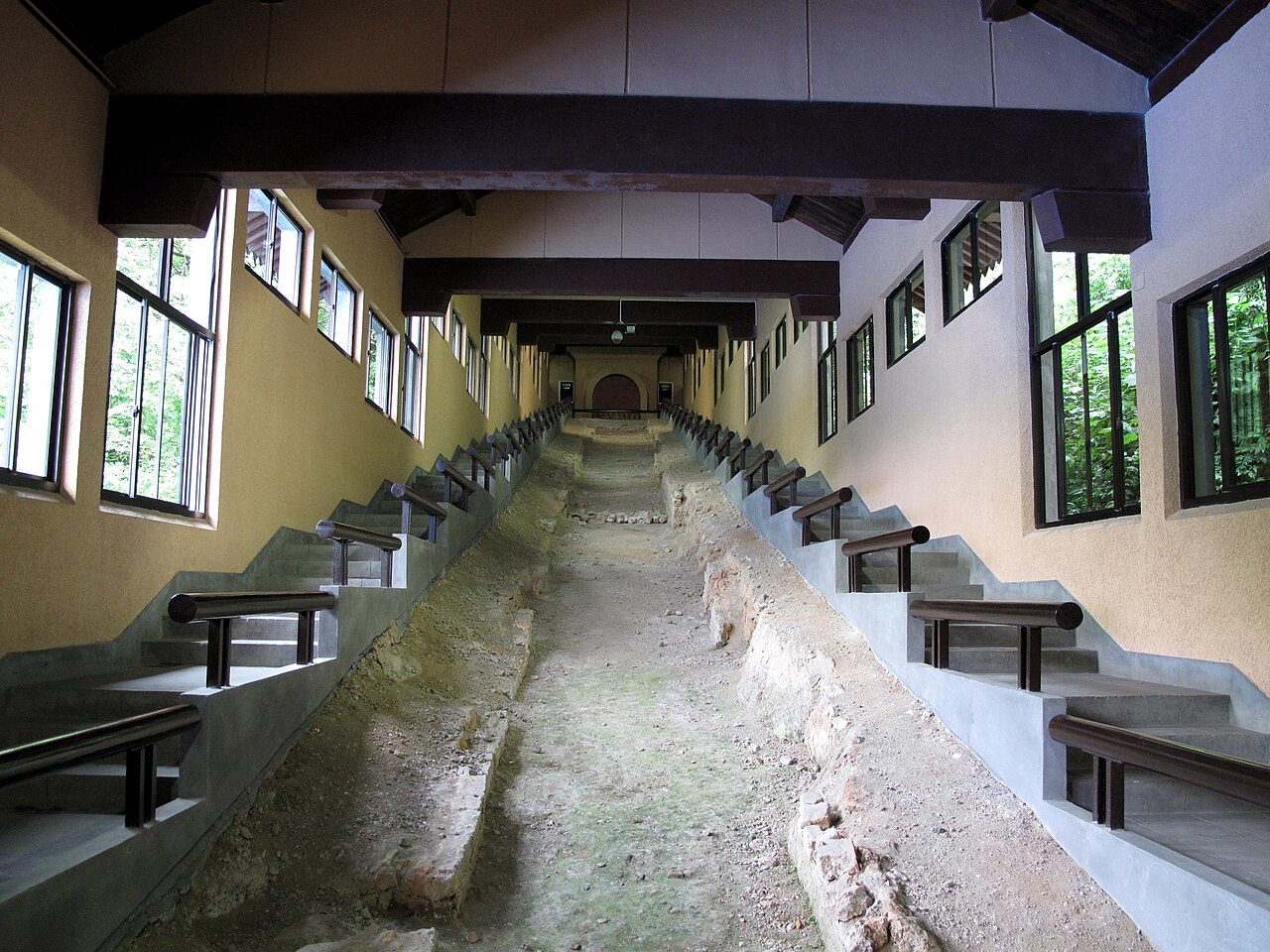
4 min read · 2 sourcesA dragon kiln (simplified Chinese: 龙窑; traditional Chinese: 龍窯) also known as a climbing kiln, is a traditional Chinese form of kiln, used for Chinese ceramics, especially in southern China. It is long and thin, and relies on having a fairly steep slope, typically between 10° and 16°, up which the kiln runs. The kiln could achieve the very high temperatures, sometimes as high as 1,400 °C (2,550 °F), necessary for high-fired wares including stoneware and porcelain, which long challenged European potters, and some examples were very large, up to 60 metres (200 ft) long, allowing up to 25,000 pieces to be fired at a time. By the early 12th century CE they might be over 135 metres long, allowing still larger quantities to be fired; more than 100,000 have been claimed. 1
History
According to recent excavations in Shangyu District in the northeast of Zhejiang province and elsewhere, the origins of the dragon kiln may go back as far as the Shang dynasty (c. 1600 to 1046 BCE), and is linked to the introduction of stoneware, fired at 1,200 °C (2,190 °F) or more. These kilns were much smaller than later examples, at some 5–12 metres (16–39 ft) long, and also sloped far less. The type had certainly developed by the Warring States period, and by the Eastern Wu kingdom (220–280 CE), there were over 60 kilns at Shangyu. Thereafter it remained the main design used in southern China until the Ming dynasty. The pottery areas of south China are mostly hilly, whereas those on the plains of north China typically lack suitable slopes; here the mantou kiln type predominated. The Nanfeng Kiln in Guangdong province is several centuries old and still functioning. It was a producer of Shiwan ware as well as architectural ceramics, and today also functions as a tourist attraction. 1
Characteristics
The kilns were normally made of brick, and are one type of "cross-draught" kilns, where the flames travel more or less horizontally, rather than up from or down to the floor. The firing time could be relatively short, meaning about 24 hours for a small kiln. Early kilns were rising tunnels, not divided into chambers, but with a step at intervals giving relatively flat floor levels, and perhaps using gravel or similar material on the floor to allow vertical stacks to be rested. From the Southern Song period (1127–1279), some kilns were built as a series of chambers, stepped as they ran up the slope, and with connecting doors to allow access to both the kiln-workers during loading and unloading, and the heat during firing. There might be up to 12 chambers. Chambered kilns were usual for making Longquan celadon. The main fire chamber was at the bottom, but there might be additional "stoke holes" to allow adding extra fuel at intervals up the slope, as well as peep holes to allow sight of the interior. At the far, top, end there was a chimney, but given the up-draught of the slope, this did not need to be tall, and might be omitted altogether. The size and shape of the kilns and chambers within varied considerably. Firing was begun at the bottom end and moved up the slope. The fuel might be wood or (generally less often) coal, which affected the atmosphere of the firing; wood giving a reducing atmosphere and coal an oxidizing one. The weight of pottery produced was about the same as the weight of wood required. Generally saggars were used, at least in later periods. 1
The text above is adapted from the Wikipedia article “Dragon kiln”, available under the Creative Commons Attribution-ShareAlike 4.0 licence. 1
dragon kiln is traditional Chinese form of kiln, according to the structured record cited below. This entry was generated automatically from that record and has not yet been reviewed by a person familiar with the tradition. 2
The source record links this tradition to 3 external registers, which can be verified through the citation. 2