The tradition & historical record
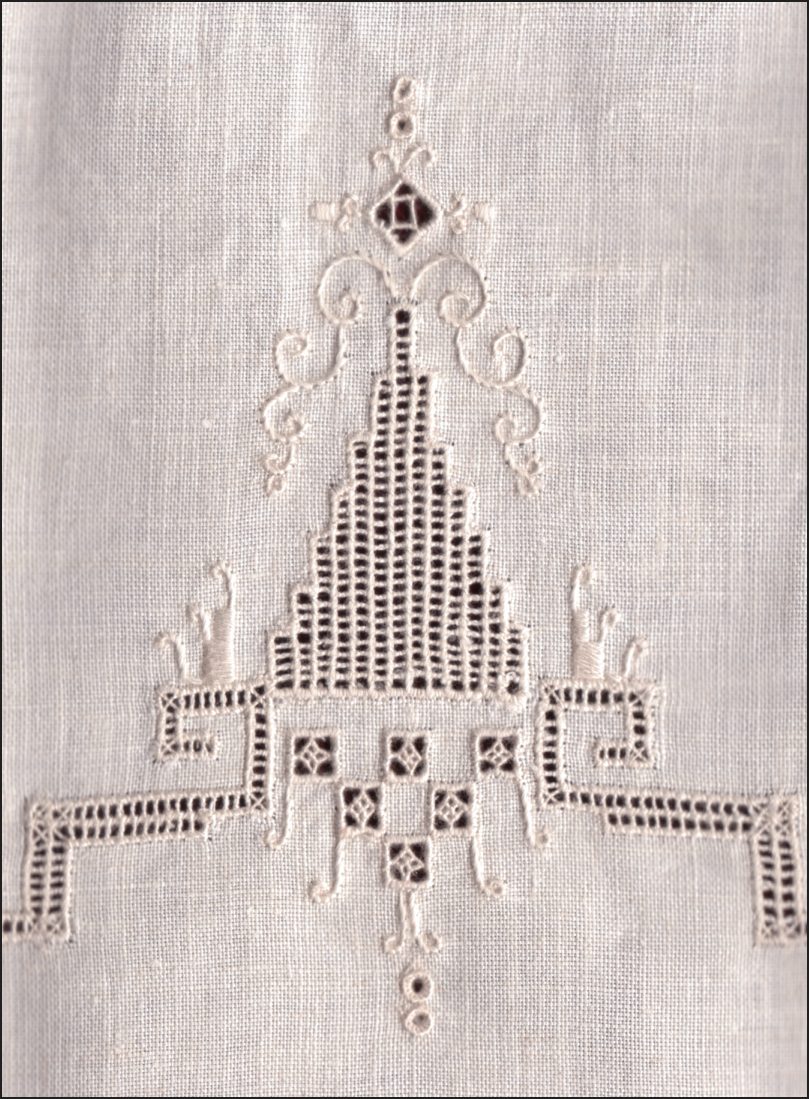
3 min read · 2 sourcesDrawn thread work is one of the earliest forms of open work embroidery, and has been worked throughout Europe. Originally it was often used for ecclesiastical items and to ornament shrouds. It is a form of counted-thread embroidery based on removing threads from the warp and/or the weft of a piece of even-weave fabric. The remaining threads are grouped or bundled together into a variety of patterns. The more elaborate styles of drawn thread work use a variety of other stitches and techniques, but the drawn thread parts are their most distinctive element. It is also grouped with whitework embroidery because it was traditionally done in white thread on white fabric and is often combined with other whitework techniques. 1
History
Drawn thread embroidery is a very early form of open work embroidery, and is the basis of lace. Drawn thread work from the 12th century was known as Opus Tiratum and Punto Tirato from the Italian word tirare meaning to pull or draw. Forms of drawn thread work were known and created throughout Europe, often for ecclesiastical purposes or to decorate shrouds. Early examples have been found in which the work is done on linen so fine that magnification is needed to see the work. 1
Basic hemstitching
The simplest kind of drawn thread work is hemstitching, which is often used to decorate the trimmings of clothes or household linens. The transition from elaborate hemstitching to more advanced styles of drawn thread work is not clearly defined. 1
Needle-weaving
This relatively easy type of drawn thread work is created by weaving (or darning) the embroidering thread into the laid warp or weft threads to create patterns of light-colored threads and dark openings in the drawn-thread cloth. Needleweaving is most often used for decorative borders. It is nearly always used in combination with other types of embroidery stitches. Together they create a complete design and, historically, in ethnic embroidery, distinctive embroidery styles, also known as "needle-darning." 1
Other drawn-thread
A form of double-drawnwork, where both warp and weft are removed at regular intervals, creating voided areas. These areas can be left as is or filled with needlelace or other elements. 1
Hardanger
Hardanger embroidery is a style of drawn thread work that is most popular today. It originally comes from Norway, from the traditional district of Hardanger. The backbone of Hardanger designs consists of satin stitches. In geometrical areas both warp and weft threads are removed and the remaining mesh is secured with simple weaving or warping or with a limited number of simple filling patterns. The designs tend to be geometric, if they include flowers or such they are very stylized due to the nature of the technique. Hardanger never includes Buttonhole stitches, except for securing the edges of a piece of fabric. It is usually executed using rather coarse fabric and thread. 1
The text above is adapted from the Wikipedia article “Drawn thread work”, available under the Creative Commons Attribution-ShareAlike 4.0 licence. 1
drawn thread work is creative textile work decorated by drawing threads out of ground fabric and working stitches over the resulting mesh, according to the structured record cited below. This entry was generated automatically from that record and has not yet been reviewed by a person familiar with the tradition. 2
The source record links this tradition to 7 external registers, which can be verified through the citation. 2