The tradition & historical record
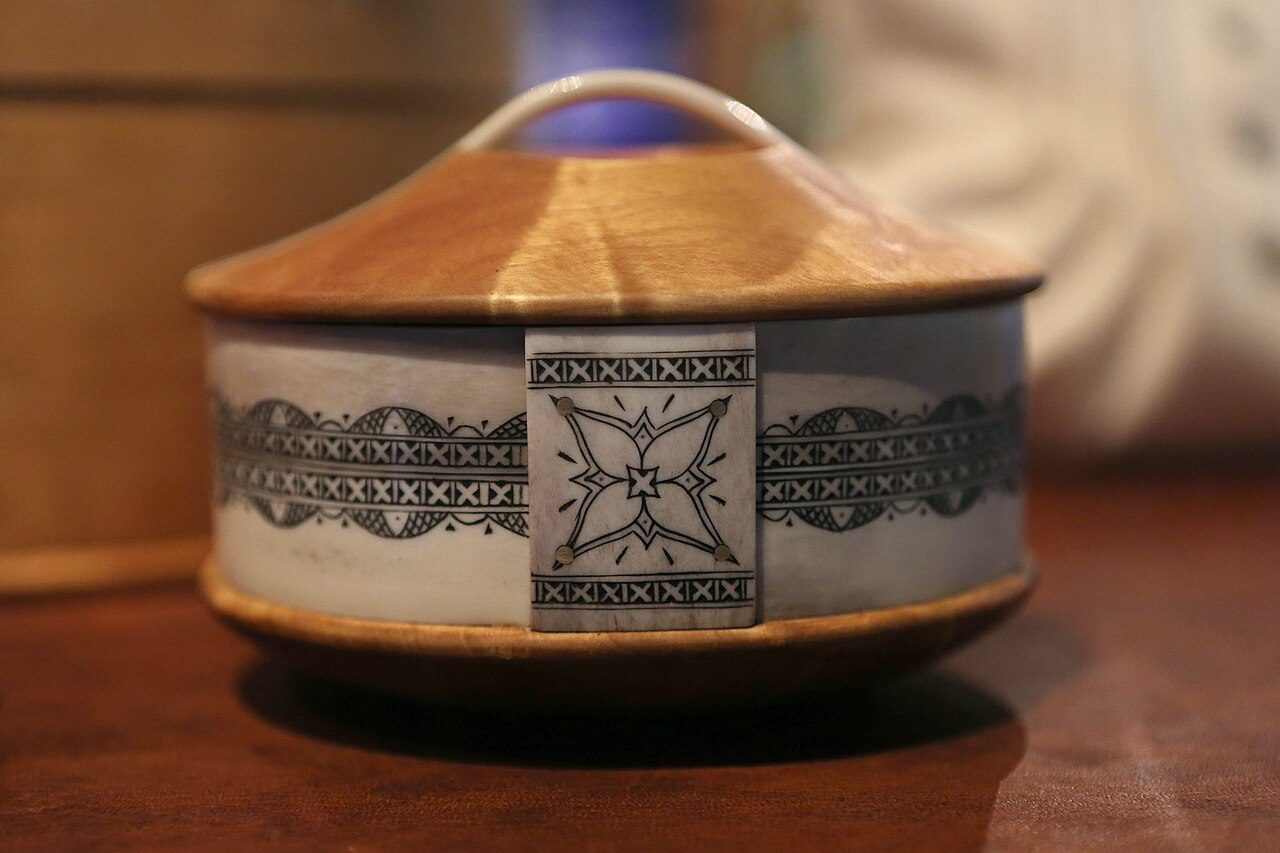
2 min read · 2 sourcesDuodji is a traditional cultural Sami handicraft. Some examples include knives, cases, women's bags, wooden cups, and articles of clothing. Duodji items are intended to be primarily functional and were made to be used in an everyday work environment, but may also incorporate artistic elements. 1
Craft
Traditionally, Sami handicraft was divided into two sub-groups: men's and women's handicraft. Men used mostly wood and antlers as well as other bones from reindeer when crafting, while women used leather and roots. The traditional Sami colors are red, green, blue, and yellow. Duodji artists are still active in Sápmi and still carry on the traditions of the duodji. Although there have been changes in the traditional duodji, today they are considered valuable pieces of art by collectors from all over the world. Some modern duodji artists are Olov Svonni, Martin Kuorak, Anders Sunna, Lars Pirak, Per Isak Juuso, Gunvor Guttorm and Per Olof Utsi. 1
Gákti
The traditional regalia, the gákti, is of special cultural importance and is mainly used for weddings, funerals, confirmations, and other cultural events. The gákti's appearance differs from place to place, and it tends to be longer in southern Sápmi than in the north. Traditionally, leather, sinews, and wool were used to make the gákti. Today, however, both velvet and silk can be used. 1
The text above is adapted from the Wikipedia article “Duodji”, available under the Creative Commons Attribution-ShareAlike 4.0 licence. 1
duodji is traditional Saami handicraft, according to the structured record cited below. This entry was generated automatically from that record and has not yet been reviewed by a person familiar with the tradition. 2
The source record links this tradition to 4 external registers, which can be verified through the citation. 2