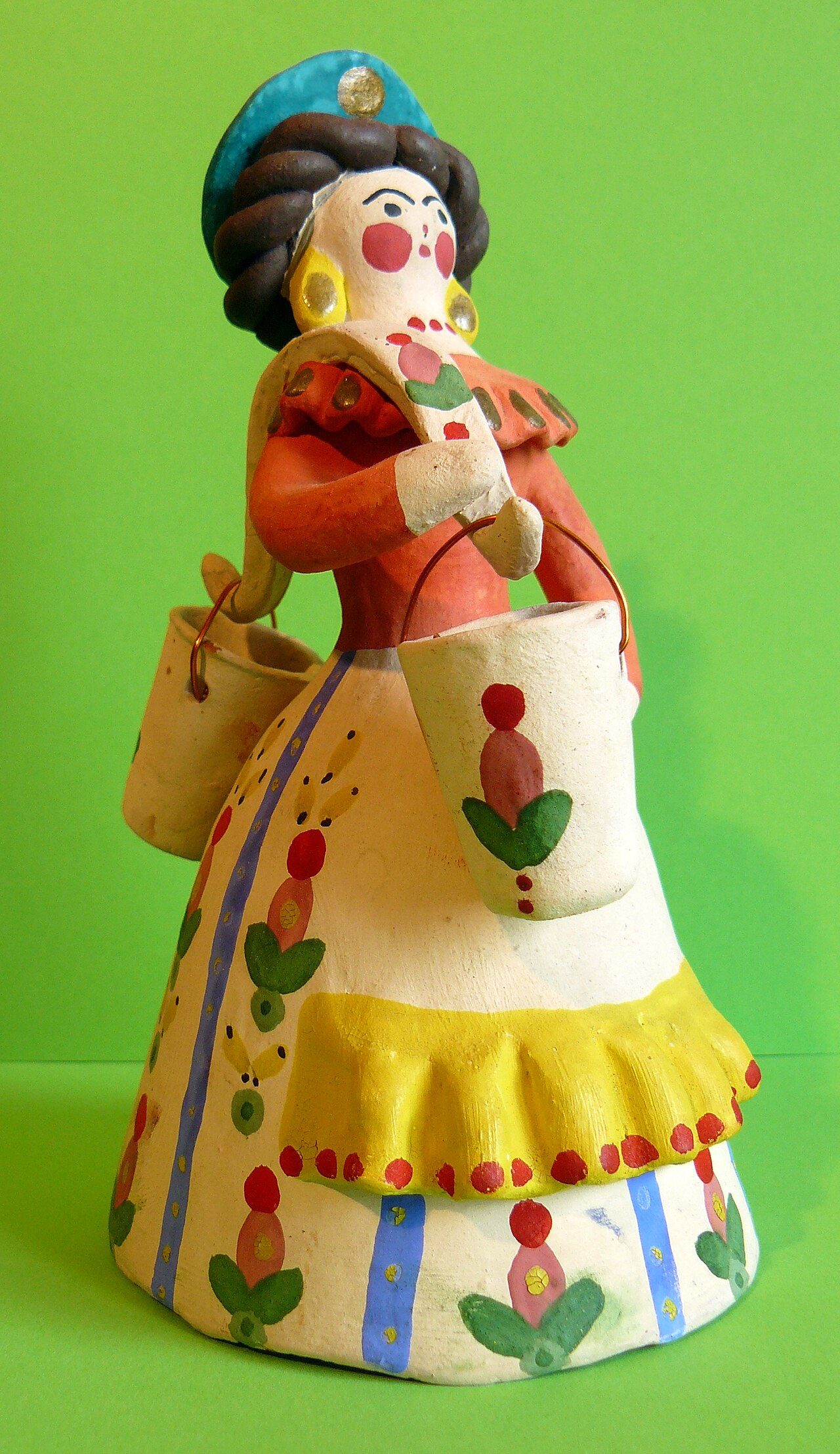
The tradition & historical record
2 min read · 2 sourcesDymkovo toys, also known as the Vyatka toys or Kirov toys (Дымковская игрушка, вятская игрушка, кировская игрушка in Russian) are moulded painted clay figures of people and animals (sometimes in the form of a pennywhistle). It is one of the old Russian folk art handicrafts, which still exists in the village of Dymkovo near Kirov (former Vyatka). Traditionally, the Dymkovo toys are made by women. The tradition of making pennywhistles in the form of a horse, a horse rider, and a bird goes back to the ancient magic ritual images and has to do with the agricultural calendar holidays. Later, the little figures lost their magic meaning and turned into toys for children, the making of which would become an artistic handicraft. Up until the 20th century, this toy production had been timed to the spring fair called свистунья, or whistler. The first recorded mentioning of this event took place in 1811, but it is believed to have existed for some 400 years, thus dating the history of the Dymkovo toy at least from the 17th century. In the late 19th century the handicraft fell into decline because the Dymkovo toys had been forced out of the market by the factory-made moulded plaster statuettes, which imitated porcelain articles. During Soviet times, however, the Dymkovo handicraft was revived. In 1933, they organized an artel called Вятская игрушка (The Vyatka Toy), which would turn into a workshop of the Artistic Fund of the RSFSR (Russian: Художественный фонд РСФСР). 1
The text above is adapted from the Wikipedia article “Dymkovo toys”, available under the Creative Commons Attribution-ShareAlike 4.0 licence. 1
Dymkovo toys is Molded painted clay figures of people and animals, according to the structured record cited below. This entry was generated automatically from that record and has not yet been reviewed by a person familiar with the tradition. 2
The source record links this tradition to 3 external registers, which can be verified through the citation. 2