The tradition & historical record
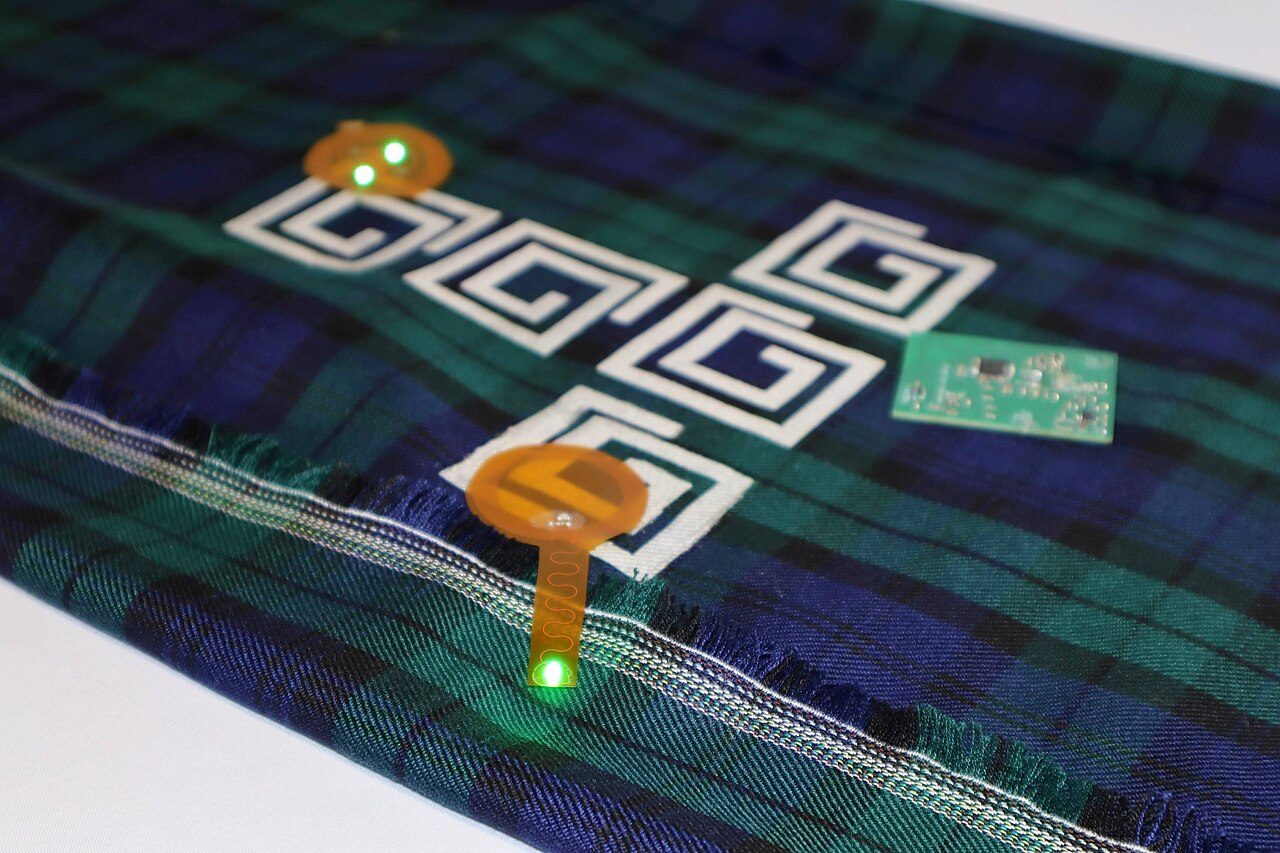
6 min read · 2 sourcesElectronic textiles or e-textiles are fabrics that enable electronic components such as batteries, lights, sensors, and microcontrollers to be embedded in them. Many smart clothing items, wearable technology products, and wearable computing projects involve the use of e-textiles. Electronic textiles are distinct from wearable computing because the emphasis is placed on the seamless integration of textiles with electronic elements like microcontrollers, sensors, and actuators. Furthermore, e-textiles need not be wearable, as they are also found in interior design. A new report from Cientifica Research examines the markets for textile-based wearable technologies, the companies producing them, and the enabling technologies. The report identifies three distinct generations of textile wearable technologies: 1
"First-generation" wearables attach a sensor to apparel. This approach is currently taken by sportswear brands such as Adidas, Nike, and Under Armour. "Second-generation" products embed the sensor in the garment, as demonstrated by current products from Samsung, Alphabet, Ralph Lauren, and Flex. In "third-generation" wearables, the garment is the sensor. A growing number of companies are creating pressure, strain, and temperature sensors for this purpose. Future applications for e-textiles may include sports and wellness products, as well as medical devices for patient monitoring. Technical textiles, fashion, and entertainment will also be significant application areas. 1
History
The basic materials needed to construct e-textiles, conductive threads, and fabrics have been around for over 1000 years. In particular, artisans have been wrapping fine metal foils, most often gold and silver, around fabric threads for centuries. Many of Queen Elizabeth I's gowns, for example, were embroidered with gold-wrapped threads. At the end of the 19th century, as people developed and grew accustomed to electric appliances, designers and engineers began to combine electricity with clothing and jewelry—developing a series of illuminated and motorized necklaces, hats, brooches and costumes. For example, in the late 1800s, a person could hire young women adorned in light-studded evening gowns from the Electric Girl Lighting Company to provide cocktail party entertainment. In 1968, the Museum of Contemporary Craft in New York City held a ground-breaking exhibition called Body Covering that focused on the relationship between technology and apparel. The show featured astronauts' space suits along with clothing that could inflate and deflate, light up, and heat and cool itself. Particularly noteworthy in this collection was the work of Diana Dew, a designer who created a line of electronic fashion, including electroluminescent party dresses and belts that could sound alarm sirens. In 1985, inventor Harry Wainwright created the first fully animated sweatshirt. The shirt consisted of fiber optics, leads, and a microprocessor to control individual frames of animation. The result was a full-color cartoon displayed on the surface of the shirt. 1
Overview
The field of e-textiles can be divided into two main categories: 1
E-textiles with classical electronic devices such as conductors, integrated circuits, LEDs, OLEDs, and conventional batteries embedded into garments. E-textiles with electronics integrated directly into the textile substrates. This can include either passive electronics such as conductors and resistors or active components like transistors, diodes, and solar cells. E-textiles are often constructed using various types of conductive yarns, including metal wire filaments, metal-coated polymer yarns, spun yarns blended with conductive materials, wet-spun conductive polymers, and graphene-coated yarns. Most research and commercial e-textile projects are hybrids where electronic components embedded in the textile are connected to classical electronic devices or components. Some examples are touch buttons that are constructed completely in textile forms by using conducting textile weaves, which are then connected to devices such as music players or LEDs that are mounted on woven conducting fiber networks to form displays. Printed sensors for both physiological and environmental monitoring have been integrated into textiles including cotton, Gore-Tex, and neoprene. These sensors are capable of detecting parameters such as glucose levels and other biomarkers relevant to physical health. 1
Sensors
Smart textile fabric can be made from materials ranging from traditional cotton, polyester, and nylon, to advanced Kevlar with integrated functionalities. At present, however, fabrics with electrical conductivity are of interest. Electrically conductive fabrics have been produced by deposition of metal nanoparticles around the woven fibers and fabrics. The resulting metallic fabrics are conductive, hydrophilic, and have high electroactive surface areas. These properties render them ideal substrates for electrochemical biosensing, which has been demonstrated with the detection of DNA and proteins. There are two kinds of smart textile (fabric) products that have been developed and studied for health monitoring: Fabric with textile-based sensor electronics and fabric that envelopes traditional sensor electronics. It has shown that weaving can be used to incorporate electrically conductive yarn into a fabric to obtain a textile that can be used as a "Wearable Motherboard". It can connect multiple sensors on the body, such as wet gel ECG electrodes, to the signal acquisition electronics. Later research has shown that conductive yarns can be instrumental in the fabrication of textile-based sensors made of fabric or metallic meshes coated with silver or conductive metal cores woven into the fabric. There are two broad approaches to the fabrication of garments with ECG sensor electrodes in research: 1
Integration into finished garments: This method involves attaching sensor elements to garments that have already been manufactured. 1
Fibretronics
Just as in classical electronics, the construction of electronic capabilities on textile fibers requires the use of conducting and semi-conducting materials such as a conductive textile. There are a number of commercial fibers today that include metallic fibers mixed with textile fibers to form conducting fibers that can be woven or sewn. However, because both metals and classical semiconductors are stiff material, they are not very suitable for textile fiber applications, since fibers are subjected to much stretch and bending during use. Smart wearables are consumer-grade connected electronic devices that may be embedded into clothing. One of the most important issues of e-textiles is that the fibers should be washable. Electrical components would thus need to be insulated during washing to prevent damage. The use of printed e-textiles, created using methods such as screen printing, offers much higher flexibility and comfort compared to textile fibers. 1
Vital sign monitoring
E-textiles can be used to monitor vital signs through integrated elec… 1
The text above is adapted from the Wikipedia article “E-textiles”, available under the Creative Commons Attribution-ShareAlike 4.0 licence. 1
e-textile is fabrics that enable digital components, according to the structured record cited below. This entry was generated automatically from that record and has not yet been reviewed by a person familiar with the tradition. 2
The source record links this tradition to 8 external registers, which can be verified through the citation. 2