The tradition & historical record
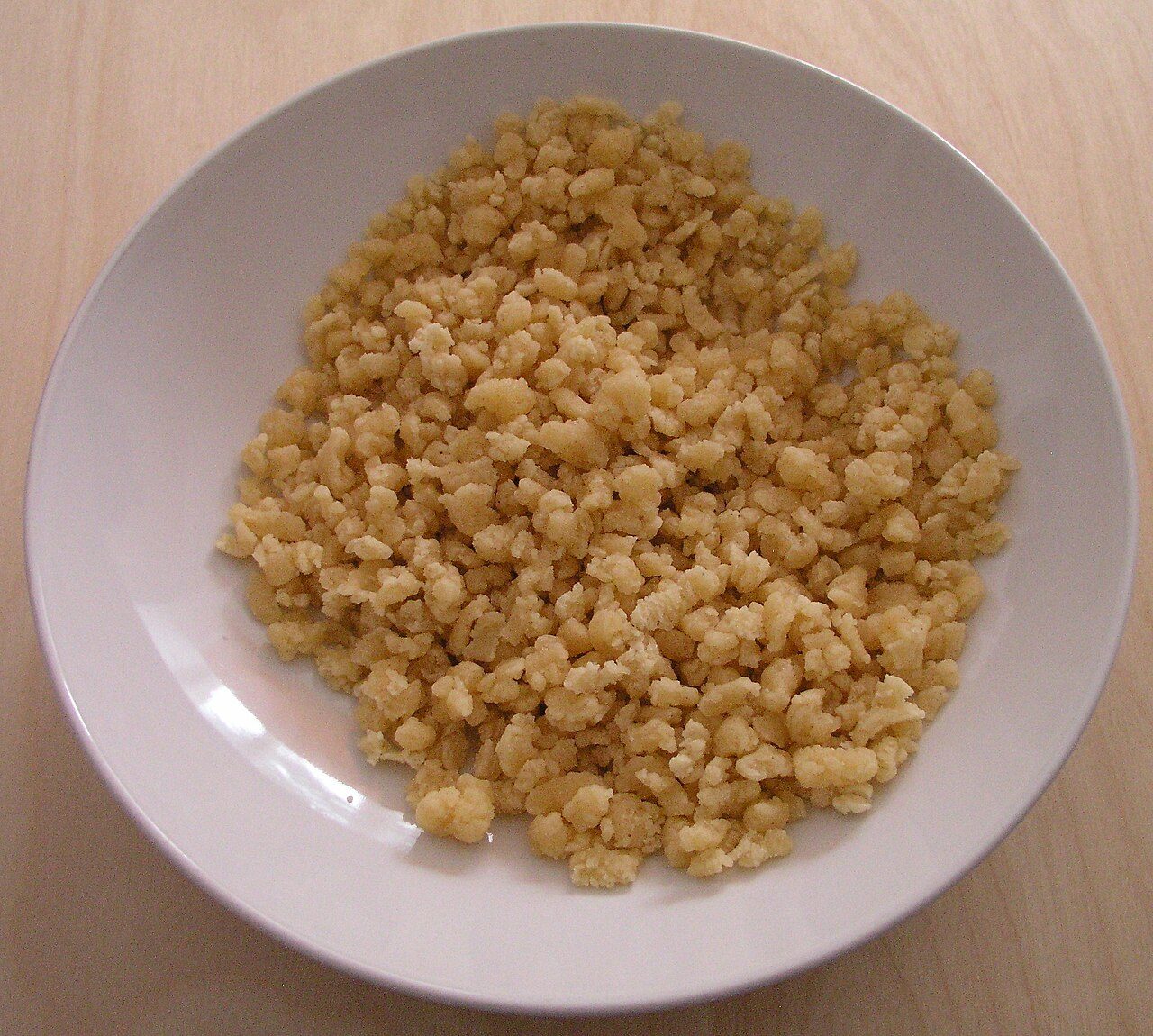
2 min read · 2 sourcesTarhonya (Hungarian: [ˈtɒrhoɲɒ]) or tarhoňa (Slovak: [ˈtarɦɔɲa]) is a dried egg- and wheat-based ingredient found in Hungarian and Slovak cuisine. The ingredient was adapted from tarhana, which was introduced to Hungarians by the Ottoman Turks in the 16th century. The "barley" moniker is derived from its superficial resemblance to cooked pearl barley. Because of the relatively large size of the flakes, it is sometimes considered a type of small dumpling. Tarhonya already appears in 16th-century handwritten Hungarian cookbooks. It is a simple product made of water, wheat flour, and whole eggs, that is formed into barley-sized "grains" by hand, or by cutting or grating, which makes it similar in appearance to large couscous. The grains, once dried and stored, can be roasted and then boiled before being used in a variety of dishes. They are served with meat or vegetable stews, egg dishes, roasted poultry, fried sausages, or in salads. In Hungary, tarhonya is sometimes fried in butter or lard before boiling. 1
The text above is adapted from the Wikipedia article “Tarhonya”, available under the Creative Commons Attribution-ShareAlike 4.0 licence. 1
egg barley is type of egg-based pasta, according to the structured record cited below. This entry was generated automatically from that record and has not yet been reviewed by a person familiar with the tradition. 2
The source record links this tradition to 3 external registers, which can be verified through the citation. 2