The tradition & historical record
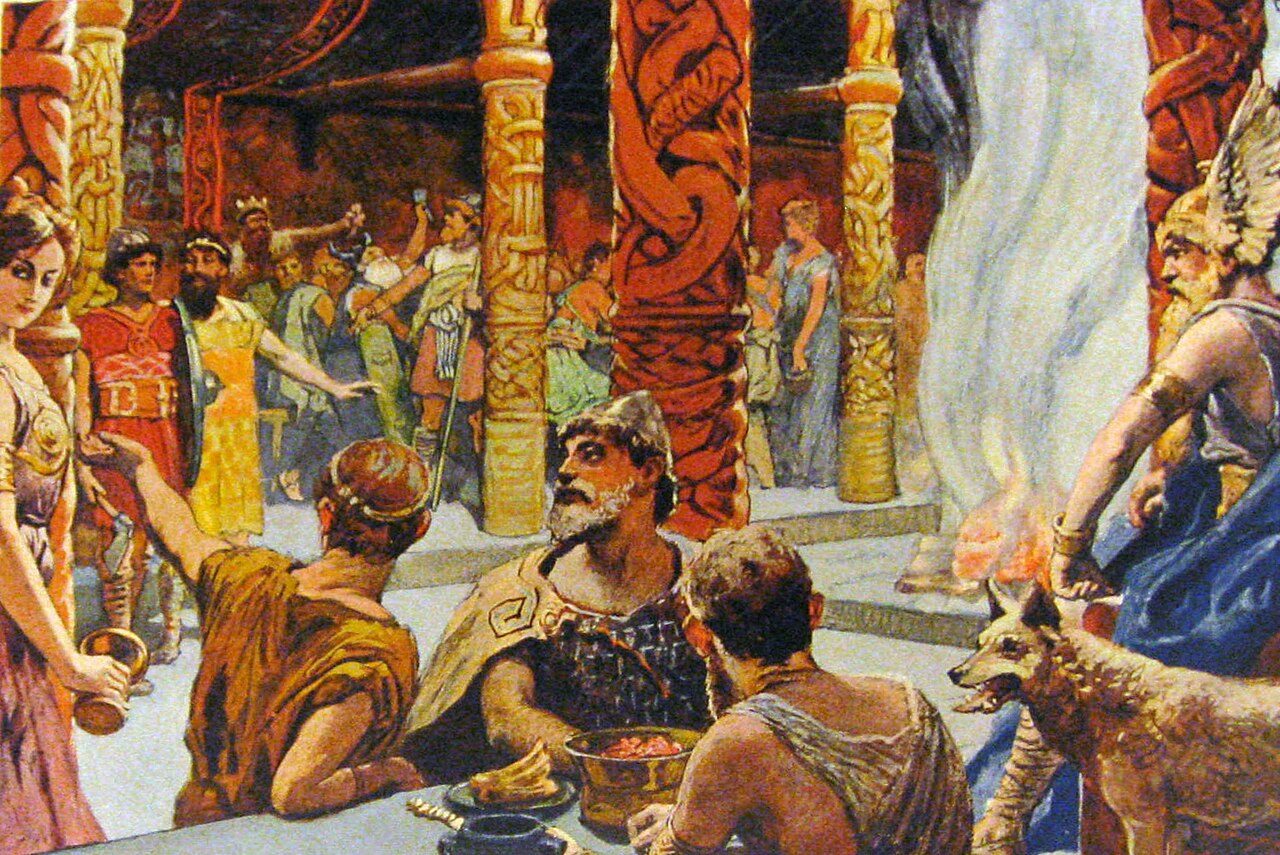
7 min read · 2 sourcesIn Norse mythology, the einherjar (singular einheri; literally "army of one", "those who fight alone") are those who have died in battle and are brought to Valhalla by valkyries. In Valhalla, the einherjar eat their fill of the nightly resurrecting beast Sæhrímnir, and valkyries bring them mead from the udder of the goat Heiðrún. The einherjar prepare daily for the events of Ragnarök, when they will advance for an immense battle at the field of Vígríðr. The einherjar are attested in the Poetic Edda, compiled in the 13th century from earlier traditional sources, the Prose Edda, written in the 13th century by Snorri Sturluson, the poem Hákonarmál (by the 10th century skald Eyvindr skáldaspillir) as collected in Heimskringla, and a stanza of an anonymous 10th century poem commemorating the death of Eric Bloodaxe known as Eiríksmál as compiled in Fagrskinna. An etymological connection exists between the einherjar and the Harii, a Germanic people or figures from early Germanic folklore attested in the 1st century AD, and scholars have connected the einherjar to the eternal battle of Hjaðningavíg and the Wild Hunt. The einherjar have been the subject of works of art and poetry. 1
Poetic Edda
In the poem Vafþrúðnismál, Óðinn engages the wise jötunn Vafþrúðnir in a game of wits. Disguised as Gagnráðr, Óðinn asks Vafþrúðnir "where men fight in courts every day." Vafþrúðnir responds that (here einherjar is translated as einheriar): 1
In the poem Grímnismál, Óðinn (disguised as Grímnir) tells the young Agnarr Geirröðsson that the cook Andhrímnir boils the beast Sæhrímnir, which he refers to as "the best of pork", in the container Eldhrímnir, yet adds that "but few know by what the einheriar are nourished." Further into Grímnismál, Odin gives a list of valkyries (Skeggjöld, Skögul, Hildr, Þrúðr, Hlökk, Herfjötur, Göll, Geirahöð, Randgríð, Ráðgríð, and Reginleif), and states that they bear ale to the einherjar. Towards the end of the poem, another reference to the einherjar appears when Óðinn tells the king Geirröd (unaware that the man he has been torturing is Óðinn) that Geirröd is drunk, and that Geirröd loses much when he loses his favor and the favor of "all the Einherjar." In the poem Helgakviða Hundingsbana I, the hero Sinfjötli flyts with Guðmundur. Sinfjötli accuses Guðmundur of having once been a female, including that he was "a witch, horrible, unnatural, among Odin's valkyries" and that all of the einherjar "had to fight, headstrong women, on your account". 1
Prose Edda
In the Prose Edda book Gylfaginning, the einherjar are introduced in chapter 20. In chapter 20, Third tells Gangleri (described as king Gylfi in disguise) that Óðinn is called Valföðr (Old Norse "father of the slain") "since all those who fall in battle are his adopted sons," and that Óðinn assigns them places in Valhalla and Vingólf where they are known as einherjar. In chapter 35, High quotes the Grímnismál valkyrie list, and says that these valkyries wait in Valhalla, and there serve drink, and look after tableware and drinking vessels in Valhalla. In addition, High says that Óðinn sends valkyries to every battle, that they allot death to men, and govern victory. In chapter 38, High provides more detail about the einherjar. Gangleri says that "you say that all those men that have fallen in battle since the beginning of the world have now come to Odin in Val-hall. What has he got to offer them food? I should have thought that there must be a pretty large number there." High replies that it is true there are a pretty large number of men there, adding many more have yet to arrive, yet that "there will seem too few when the wolf comes." However, High adds that food is not a problem because there will never be too many people in Valhalla that the meat of Sæhrímnir (which he calls a boar) cannot sufficiently feed. High says that Sæhrímnir is cooked every day by the cook Andhrímnir in the pot Eldhrimnir, and is again whole every evening. High then quotes the stanza of Grímnismál mentioning the cook, meal, and container in reference. Further into chapter 38, Gangleri asks if Óðinn consumes the same meals as the einherjar. 1
Heimskringla
At the end of the Heimskringla saga Hákonar saga góða, the poem Hákonarmál (by the 10th century skald Eyvindr skáldaspillir) is presented. The saga relates that king Haakon I of Norway died in battle, and yet though he is Christian, he requests that since he has died "among heathens, then give me such burial place as seems most fitting to you." The saga relates that, shortly after, Haakon died on the same slab of rock that he was born upon, that he was greatly mourned by friend and foe alike, and that his friends moved his body northward to Sæheim in North Hordaland. Haakon was there buried in a large burial mound in full armor and his finest clothing, yet with no other valuables. Further, "words were spoken over his grave according to the custom of heathen men, and they put him on the way to Valhalla." The poem Hákonarmál is then provided. In Hákonarmál, Óðinn sends forth the two valkyries Göndul and Skögul to "choose among the kings' kinsmen" and who in battle should dwell with Óðinn in Valhalla. A battle rages with great slaughter. Haakon and his men die in battle, and they see the valkyrie Göndul leaning on a spear shaft. Göndul comments that "groweth now the gods' following, since Hákon has been with host so goodly bidden home with holy godheads." Haakon hears "what the valkyries said," and the valkyries are described as sitting "high-hearted on horseback," wearing helmets, carrying shields and that the horses wisely bore them. A brief exchange follows between Haakon and the valkyrie Skögul: 1
Skögul says that they shall now ride forth to the "green homes of the godheads" to tell Óðinn that the king will come to Valhalla. In Valhalla, Haakon is greeted by Hermóðr and Bragi. 1
Fagrskinna
In chapter 8 of Fagrskinna, a prose narrative states that, after the death of her husband Eric Bloodaxe, Gunnhild Mother of Kings had a poem composed about him. The composition is by an anonymous author from the 10th century and is referred to as Eiríksmál, and describes Eric Bloodaxe and five other kings arriving in Valhalla after their death. The poem begins with comments by Óðinn: 1
The god Bragi asks where a thundering sound is coming from, and says that the benches of Valhalla are creaking—as if the god Baldr had returned to Valhalla—and that it sounds like the movement of a thousand. Óðinn responds that Bragi knows well that the sounds are for Eric Bloodaxe, who will soon arrive in Valhalla. Óðinn tells the heroes Sigmund and Sinfjötli to rise to greet Eric and invite him into the hall, if it is indeed he. Sigmund asks Óðinn why he would expect Eric more than any other king, to which Óðinn responds that Eric has reddened his gore-drenched sword with many other lands. Eric arrives, and Sigmund greets him, tells him that he is welcome to come into the hall, and asks him what other lords he has brought with him to Valhalla. 1
Theories and proposed etymological connections
According to John Lindow, An… 1
The text above is adapted from the Wikipedia article “Einherjar”, available under the Creative Commons Attribution-ShareAlike 4.0 licence. 1
einherjar is dead warriors of Norse mythology, chosen by the valkyries to prepare in Valhalla for the battle of Ragnarök, according to the structured record cited below. This entry was generated automatically from that record and has not yet been reviewed by a person familiar with the tradition. 2
The source record links this tradition to 7 external registers, which can be verified through the citation. 2