The tradition & historical record
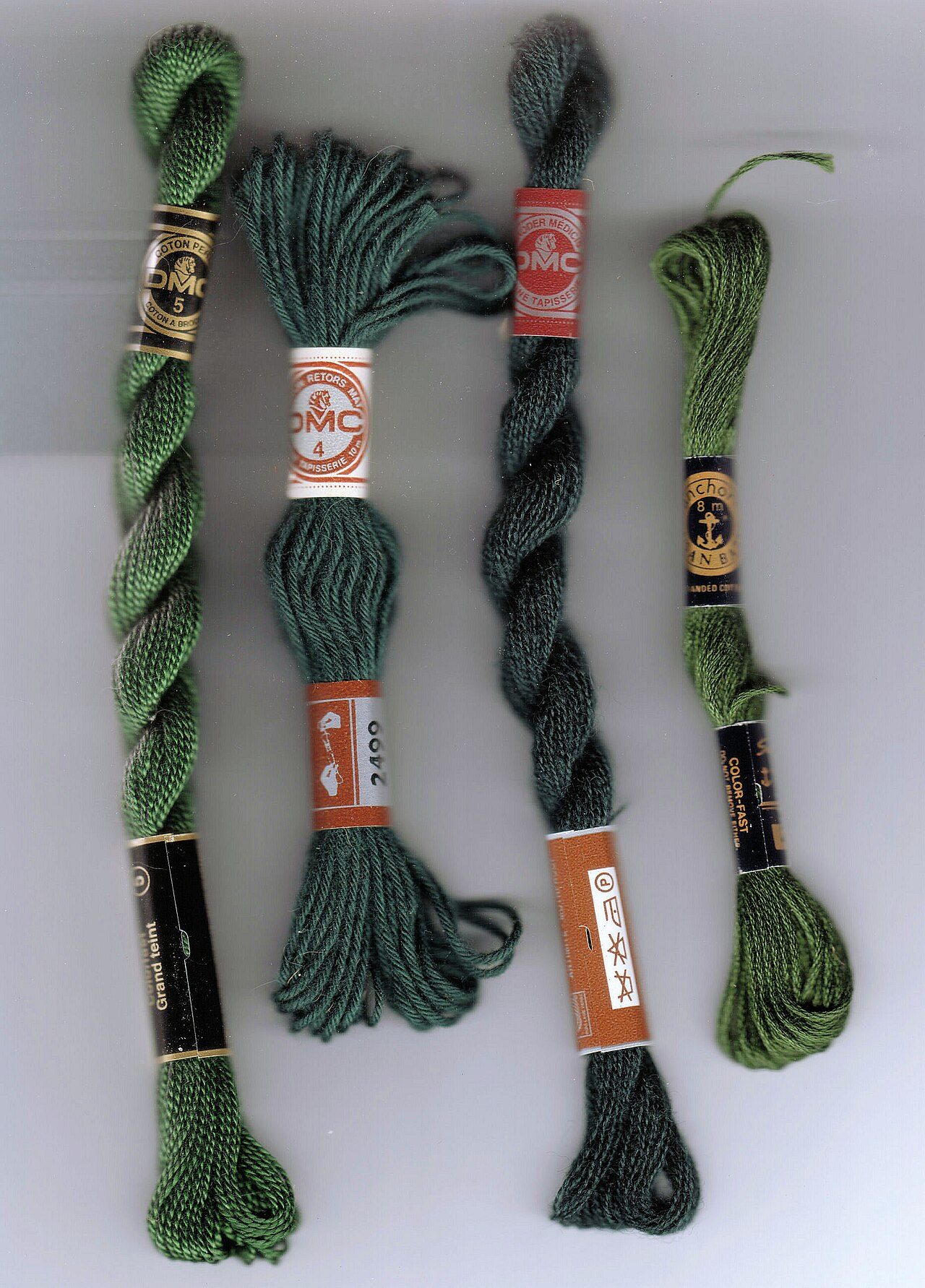
2 min read · 2 sourcesEmbroidery thread is yarn that is manufactured or hand-spun specifically for embroidery and other forms of needlework. Embroidery thread often differs widely, coming in many different fiber types, colors and weights. 1
Type of embroidery thread
Threads for hand embroidery include: 1
Crewel yarn
Crewel yarn (also known as crewel wool or French wool) is a fine 2-ply yarn of wool or, less often, a wool-like acrylic. Strands may be separated or combined; it is commonly used for delicate embroidery. 1
Embroidery floss
Embroidery floss or stranded cotton is a loosely twisted, slightly glossy 6-strand thread, usually of cotton but also manufactured in silk, linen, and rayon. Cotton floss is the standard thread for cross-stitch, and is suitable for most embroidery excluding robust canvas embroidery. Extremely shiny rayon floss is characteristic of Brazilian embroidery. The strands of embroidery floss can be separated, and may be used alone or in combination with one another. Historically, stranded silk embroidery threads were described as sleaved or sleided in the 16th century. 1
Filoselle
Filoselle is a historical term for embroidery floss made using the leftover waste from reeled silk. 1
Matte embroidery cotton
Matte embroidery cotton (or its French name, coton à broder) is a matte-finish (not glossy) twisted 5-ply thread. 1
The text above is adapted from the Wikipedia article “Embroidery thread”, available under the Creative Commons Attribution-ShareAlike 4.0 licence. 1
embroidery thread is any of several types of thread designed for use in embroidery and related crafts, according to the structured record cited below. This entry was generated automatically from that record and has not yet been reviewed by a person familiar with the tradition. 2
The source record links this tradition to 3 external registers, which can be verified through the citation. 2