The tradition & historical record
6 min read · 2 sourcesEnglish folklore consists of the myths and legends of England, including the region's mythical creatures, traditional recipes, urban legends, proverbs, superstitions, dance, balladry, and folktales that have been passed down through generations, reflecting the cultural heritage of the country. This body of folklore includes a diverse array of characters, such as heroic figures like Beowulf or Robin Hood, legendary kings like Arthur, and mythical creatures like the Green Man and Black Shuck. These tales and traditions have been shaped by the historical experiences of the English people, influenced by the various cultures that have settled in England over centuries, including Celtic, Roman, Anglo-Saxon, Norse, and Norman elements. The stories within English folklore often convey themes of justice, loyalty, bravery, and the supernatural, and often contain a moral imperative stemming from Christian values. They frequently explore the relationship between humans and the natural world, as seen in the legends of the Green Man or Herne the Hunter, or the consequences of human actions, as illustrated in tales like the Lambton Worm. Additionally, English folklore has been influenced by historical events, such as the witch trials of the early modern period, which are reflected in stories like that of the Pendle witches. During the Renaissance in the 16th century, England looked to more European texts to develop a national identity. 1
History
Before England was founded in the year 927, Wessex and its surrounding areas' cultures were transformed by the invasion of the Danish King Guthrum between 865 and 878. The king of Wessex, King Alfred, prevailed against King Guthrum's troops in 878 and King Guthrum was baptised and became the ruler of East Anglia. This continued the process of the assimilation of Norse words into the English language. Eventually English folklore melded with Norse traditions such as in their iconography, which became more Greek, and in their clothing and folktales which adopted more Nordic elements. The folklore of the people of England continued to be passed down through oral tradition. During the Renaissance, artists captured these customs in the written word, such as Shakespearean plays' reflections of English folklore through their witches, fairies, folk medicine, marriage and funeral customs, superstitions, and religious beliefs. The Grimm brothers' publications such as German Legends and Grimms' Fairy Tales were translated from their original German and distributed across Europe in 1816. Their stories inspired publishers such as William Thoms to compile legends from within English folklore and without to compose an English identity. The stories that the Grimm brothers collected were integrated into the English school curriculum throughout the 19th century as educators of morality. 1
Characteristics
Although English folklore has many influences, its largest are Christian, Celtic and Germanic. Non-Christian influences also defined English folklore up to the eleventh century, such as in their folksongs, celebrations and folktales. An example is the 305 ballads collected by Francis James Child published during the English revival in the 19th century. During the English folksong revival, English artists scrambled to compose a national identity consisting of England's past folksongs and their contemporary musical influences. Authors such as Francis James Child, Arthur Hugh Clough, and Chaucer made English folksong supranational due to the willingness to import other languages' words, pronunciations, and metres. Other examples of non-Christian influences include the Wild Hunt which originates from wider Europe, and Herne the Hunter which relates to the Germanic deity Woden. The Abbots Bromley Horn Dance may represent a pre-Christian festival and the practice of Well dressing in the Peak District, which may date back to Anglo-Saxon or even Celtic times. May Day celebrations such as the Maypole survive across much of England and Northern Europe. Christmas practices such as decorating trees, the significance of holly, and Christmas carolling were born from the desire to escape from the harshness of winter around Europe. 1
These combine to form a folklore which teaches that, through an upright and virtuous character, a person can achieve a successful life. Lullabies, songs, dances, games, folktales, and superstitions all imparted a religious and moral education, and form a person's sense of justice and Christianity. 1
Folktales
Folklorists have developed frameworks such as the Aarne–Thompson-Uther index which categorise folktales first by types of folktales and then by consistent motifs. While these stories and characters have differences according to the region of their origin, these motifs are such that there is a national identity of folktales through which these regions have interacted. There are likely many characters and stories that have never been recorded and hence were forgotten, but these folktales and their evolutions were often a product of contemporary figures, places, or events local to specific regions. The below are only a small fraction of examples from the folktale types of English folklore. 1
Creatures
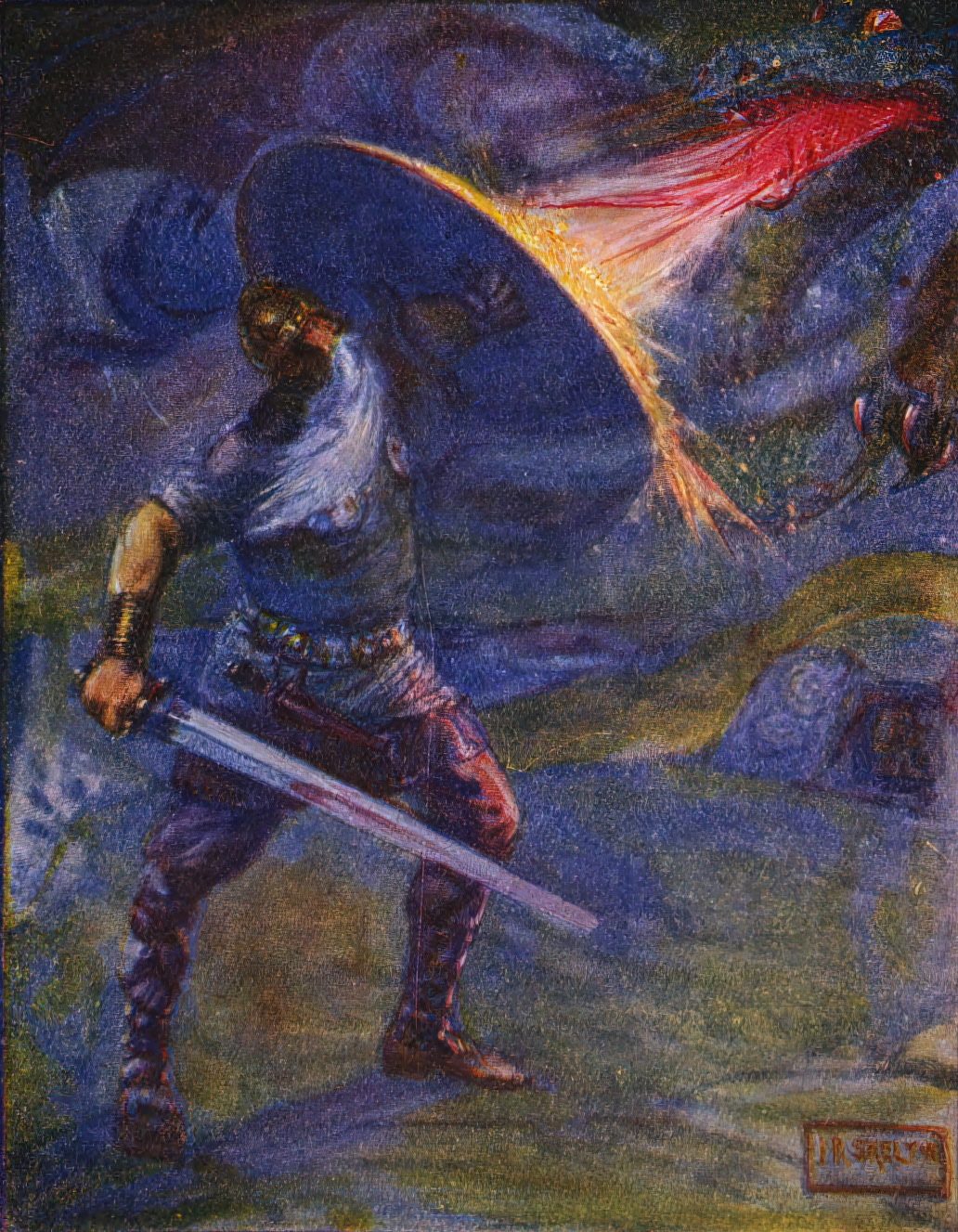
Dragons are giant winged reptiles that breathe fire, poison and acid. They are usually associated with treasure rooms, waterfalls, and hollowed out tree stumps. A Wyvern is a smaller relative of dragons with two legs rather than four. It also has smaller wings and cannot breathe fire. The black dog is a creature which foreshadows calamity or causes it. It is a combination of Odysseus' Argos and Hades' Cerberus from Greek mythology, and Fenrir from Norse mythology. The first collection of sightings of the black dog around Great Britain, Ethel Rudkin's 1938 article reports that the dog has black fur, abnormally large eyes, and a huge body. The black dog is a common motif in folklore and appears in many traditional English stories and tales. They often denote death and misfortune close at hand and appear and disappear into thin air. A boggart is, depending on local or regional tradition, a malevolent genius loci inhabiting fields, marshes or other topographical features. The household boggart causes objects to disappear, milk to sour, and dogs to go lame. They can possess small animals, fields, churches, or houses so they can play tricks on the civilians with their chilling laugh. Always malevolent, the boggart will follow its family wherever they flee. In Northern England, at least, there was the belief that the boggart should never be named, for when the boggart was given a name, it could not be reasoned with nor persuaded, but would become uncontrollable and destructive. A brownie is a type of hob (household spirit), similar to a hobgoblin. Brownies are said to inhabit houses and aid in tasks around the house. However, they do not like to be seen and will only work at night, traditionally in exchange for small gifts or food. 1
Characters and personifications
King Arthur is the legendary king of the Britons, the Once and Future King and Tru… 1
The text above is adapted from the Wikipedia article “English folklore”, available under the Creative Commons Attribution-ShareAlike 4.0 licence. 1
English folklore is examples, orgins, and histories various parts of english folklore., according to the structured record cited below. This entry was generated automatically from that record and has not yet been reviewed by a person familiar with the tradition. 2
The source record links this tradition to 5 external registers, which can be verified through the citation. 2