The tradition & historical record
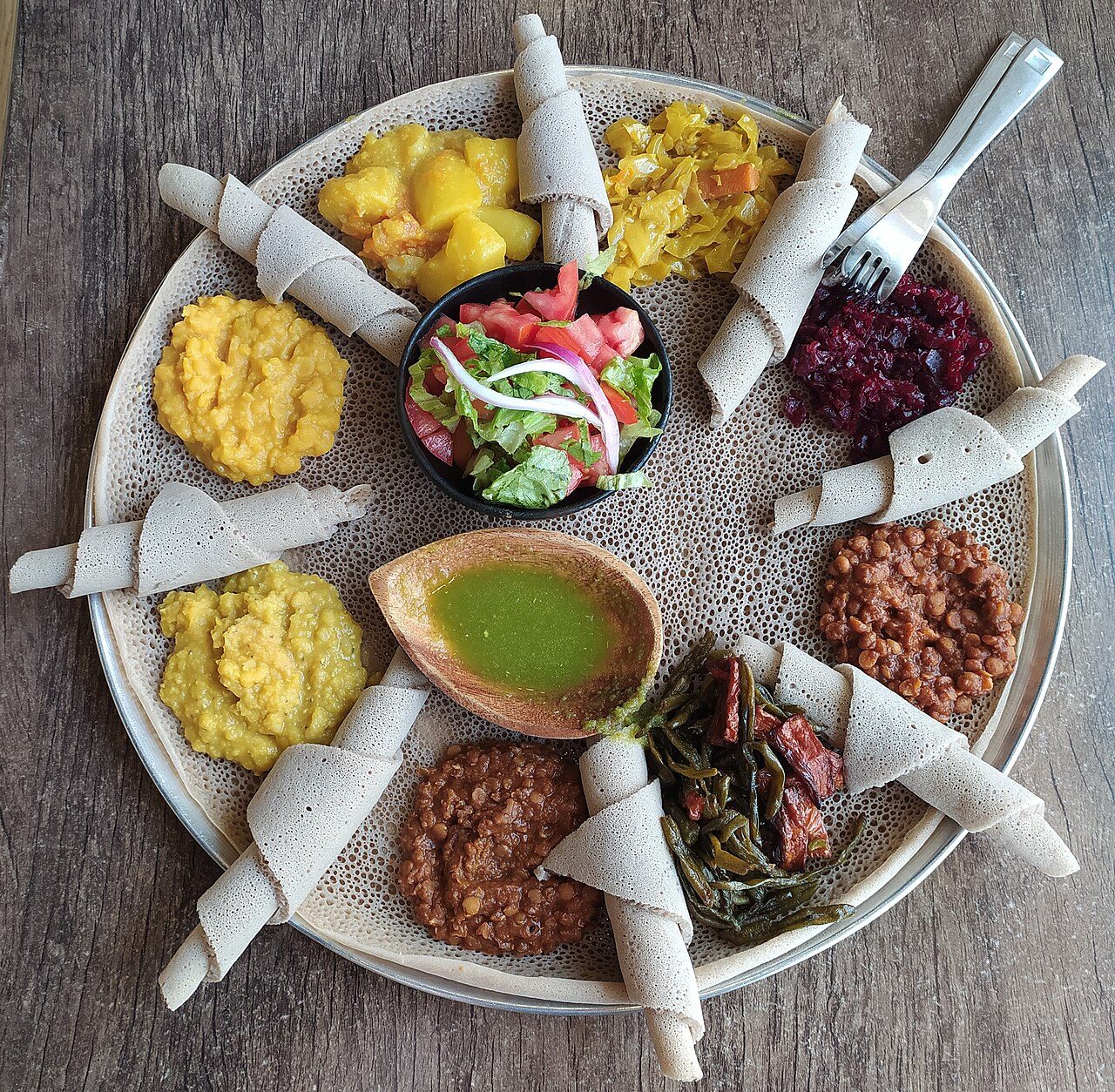
6 min read · 2 sourcesEthiopian cuisine (Amharic: የኢትዮጵያ ምግብ, Ye-Ītyōṗṗyā məgəb) characteristically consists of vegetable and often very spicy meat dishes. This is usually in the form of wat, a thick stew, served on top of injera (እንጀራ), a large sourdough flatbread, which is about 50 centimeters (20 inches) in diameter and made out of fermented teff flour. Ethiopians usually eat with their right hands, using pieces of injera to pick up bites of entrées and side dishes. The Ethiopian Orthodox Tewahedo Church prescribes a number of fasting periods known as tsom (Ge'ez: ጾም, ṣōm), including all Wednesdays and Fridays and the whole Lenten season (including fifteen days outside Lent proper). Per Oriental Orthodox tradition, the faithful may not consume any kind of animal products (including dairy products and eggs) during fasts; therefore, Ethiopian cuisine contains many dishes that are vegan. 1
Overview
A typical dish consists of injera accompanied by a spicy stew, which frequently includes beef, lamb, vegetables and various types of legumes (such as lentils), and is traditionally consumed on the mesob basket. The cuisines of the South Ethiopia Regional State, South West Ethiopia Peoples' Region, Central Ethiopia Regional State, and the Sidama region also make use of the false banana plant (enset; Ge'ez: እንሰት, ïnset), a type of ensete. The plant is pulverized and fermented to make various foods, including a bread-like food called kocho (Ge'ez: ቆጮ, qoćo), which is eaten with kitfo. The root of this plant may be powdered and prepared as a hot drink called bulla (Ge'ez: ቡላ, būlā), which is often given to those who are tired or ill. Another typical Gurage preparation is coffee with butter (kebbeh). Kita herb bread is also baked. Quanta (or quwanta), is an air-dried beef jerky with traditional spices; it is eaten on its own as a snack, or as an ingredient in stews and other dishes. Due in part to the brief Italian occupation, pasta is popular and frequently available throughout Ethiopia, including rural areas. Coffee is also a large part of Ethiopian culture and cuisine. After every meal, a coffee ceremony is enacted and coffee is served. 1
History
The history of Ethiopian cuisine is influenced by the agricultural heritage of the nation. A key component of tradition is injera – a tangy and soft flatbread crafted from teff, an ancient grain native to Ethiopia. In dining settings, injera is commonly paired with an assortment of wot dishes featuring vegetables, legumes, and meat; one type, doro wot, a spicy chicken stew accentuated with berbere, a spice blend comprising chili peppers, garlic, ginger, and an array of spices, is the national dish of Ethiopia. Throughout history, Ethiopian cuisine has developed through connections and trading with other nations, along with religious practices. For example, the enduring Christian beliefs in Ethiopia have impacted the development of plant-based meals due to fasting periods that forbid eating meat. Likewise, Islamic customs have influenced meat dishes during some celebrations like Eid. Ethiopian food has been influenced by the country’s geography and its rich agricultural resources, such as lentils, beans, coffee, and various spices. The customary Ethiopian coffee ritual entails roasting, brewing, and serving coffee with great importance, as it is thought to have originated in Ethiopia. Ethiopian cuisine goes beyond mere nourishment, playing a key role in communal dining and cultural representation. 1
Restrictions of certain meats
Ethiopian Orthodox Christians avoid pork for cultural reasons as well as religious reasons, while Ethiopian Jews and Ethiopian Muslims avoid eating pork or shellfish for religious reasons; pork is forbidden in Judaism and Islam. Most Ethiopian Protestants or P'ent'ay also abstain from eating food that the Orthodox abstain from. Many Ethiopians abstain from eating certain meats, eating mostly vegetarian foods, partially from the religious fasting period. 1
Traditional ingredients
Berbere, a combination of powdered chili pepper and other spices (cardamom, fenugreek, coriander, cloves, ginger, nutmeg, cumin and allspice) is an important ingredient used to add flavor to many varied dishes like chicken stews and baked fish dishes. Also essential is niter kibbeh, a clarified butter infused with ginger, garlic, and several spices. Mitmita (Amharic: ሚጥሚጣ, IPA: [mitʼmitʼa]) is a powdered seasoning mix used in Ethiopian cuisine. It is orange-red in color and contains ground birdseye chili peppers (piri-piri), cardamom seed, cloves and salt. It occasionally contains other spices including cinnamon, cumin and ginger. In their adherence to strict fasting, Ethiopian cooks have developed a rich array of cooking oil sources—besides sesame and safflower—for use as a substitute for animal fats which are forbidden during fasting periods. Ethiopian cuisine also uses nug (also spelled noog, also known as "niger seed"). 1
Wat
Wat begins with a large amount of chopped red onion, which is simmered or sauteed in a pot. Once the onions have softened, niter kebbeh (or, in the case of vegan dishes, vegetable oil) is added. Following this, berbere is added to make a spicy keiy wat or keyyih tsebhi. Turmeric is used instead of berbere for a milder alicha wat or both spices are omitted when making vegetable stews, such as atkilt wat. Meat such as beef (ሥጋ, səga), chicken (ዶሮ, doro or derho), fish (ዓሣ, asa), goat or lamb (በግ, beg or beggi) is also added. Legumes such as split peas (ክክ, kək or kikki) and lentils (ምስር, məsər or birsin); or vegetables such as potatoes (ድንች, Dənəch), carrots and chard (ቆስጣ) are also used instead in vegan dishes. Each variation is named by appending the main ingredient to the type of wat (e.g. kek alicha wat). However, the word keiy is usually not necessary, as the spicy variety is assumed when it is omitted (e.g. doro wat). The term atkilt wat which simply means 'vegetable' is sometimes used to refer to all vegetable dishes, but a more specific name can also be used (as in dinich'na caroht wat, which translates to "potatoes and carrots stew"; but the word atkilt is usually omitted when using the more specific term). 1
The text above is adapted from the Wikipedia article “Ethiopian cuisine”, available under the Creative Commons Attribution-ShareAlike 4.0 licence. 1
Ethiopian cuisine is culinary traditions of Ethiopia, according to the structured record cited below. This entry was generated automatically from that record and has not yet been reviewed by a person familiar with the tradition. 2
The source record links this tradition to 7 external registers, which can be verified through the citation. 2