The tradition & historical record
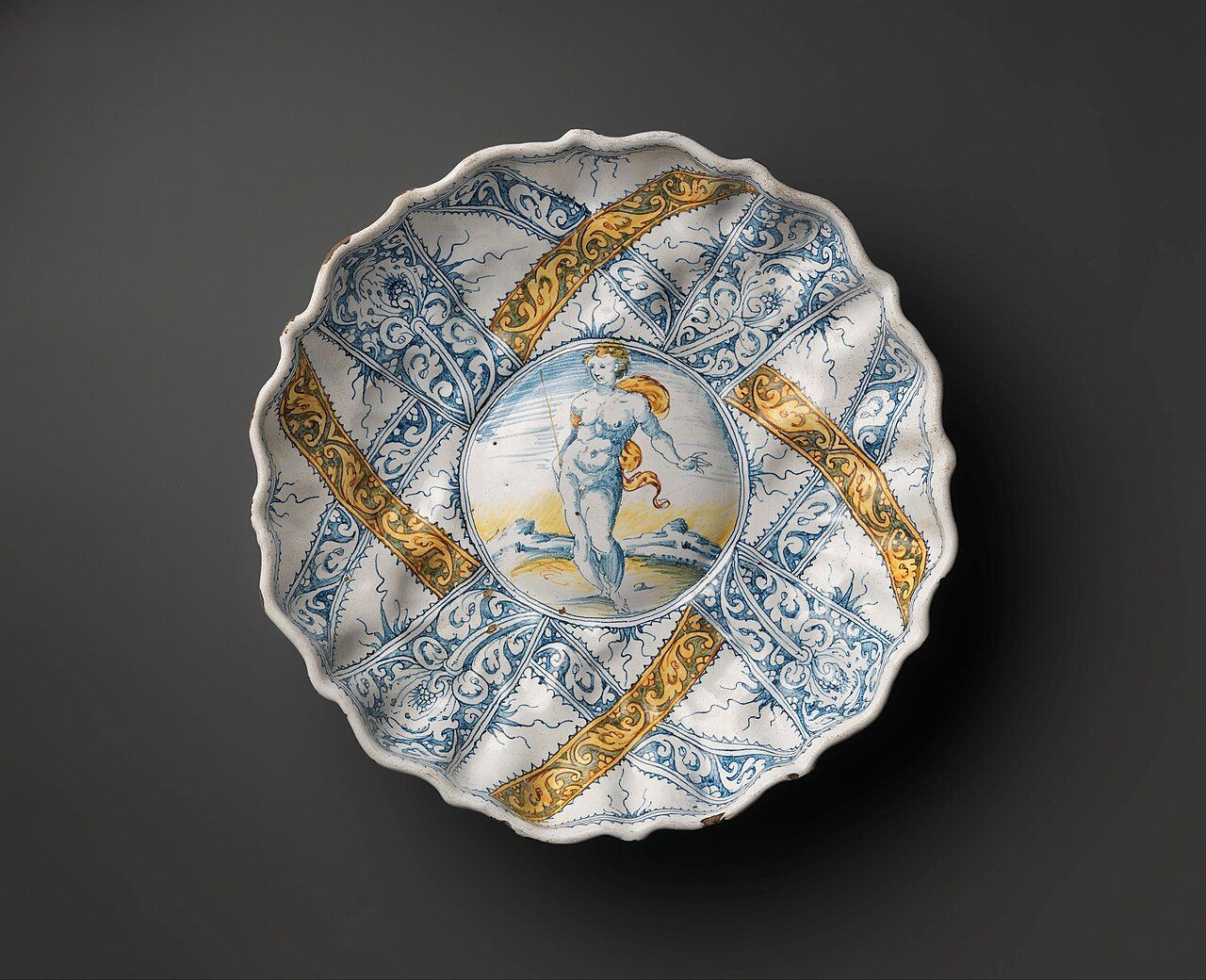
6 min read · 2 sourcesFaenza ceramics (ceramica di Faenza) refers to the artistic and craft tradition of ceramics that developed in the city of Faenza, in Emilia-Romagna. Faenza production, which became particularly established between the Renaissance and the early modern period, consists predominantly of decorated maiolica, characterized by the use of glazes and painted decoration, with repertoires including Renaissance, naturalistic, figurative, heraldic, and geometric motifs. The renown achieved by Faenza's ceramic production between the 16th and 17th centuries contributed to its international reputation; the name of the city is in fact the origin of the term faïence, used in several languages to refer to glazed ceramics. The production tradition, which developed through workshops and studios and continued into the contemporary era, contributed to the formation of a distinct local ceramic identity. Faenza's production is today recognized within the field of artistic and traditional ceramics and is protected as a designation of origin. Faenza's ceramic sector combines craft practices with artistic research, design and innovation, supported by a network of institutions, events and international cooperation initiatives; these characteristics were among the factors considered in Faenza's designation, in 2025, as a UNESCO Creative City in the Crafts and Folk Art category. 1
Antiquity and Middle Ages: the origins
The ceramic tradition of Faenza has its roots in antiquity, with evidence of production activities already in Roman times, favored by the availability of suitable clays along the course of the Lamone River. However, it was in the Late Middle Ages that the city began to stand out as a major ceramic center. Thanks to the nature of the territory, rich in clays suitable for shaping, and to its strategic geographical position, a meeting point between Padan and Tuscan culture, Faenza consolidated itself as an important artisanal hub already in the centuries following the year 1000. During this period, numerous workshops developed, producing artifacts mainly intended for domestic and liturgical use, characterized by simple yet functional forms. Faenza potters, over these centuries, perfected two important technical processes for coating artifacts: glazing and slip coating, which allowed for more impermeable and decorative surfaces. At the same time, techniques of glazing spread, representing the intermediate step between ancient coarse ceramics and the more evolved Renaissance maiolica. Stylistically, medieval ornaments recall the decorative repertoires of applied arts such as manuscript illumination and textiles, revealing Byzantine and Islamic influences. The most recurring motifs are vegetal – vines with leaves or stylized floral elements – and zoomorphic, with figures of fish and birds sometimes reinterpreted in a fantastic key. 1
Renaissance: the golden age
In the Renaissance, ceramics assumed a preeminent role in the artisanal and artistic life of Faenza. From the early decades of the 15th century, the production of tableware evolved and refined, also taking on ornamental functions, as in the case of “display plates”. Having abandoned sgraffito ceramics, artisans specialized in glazed ceramics, maiolica, expanding the chromatic palette with new tones such as yellow and turchino. The production of the early Renaissance, still in a severe style, is divided into two main phases: in the initial phase (1420–1460 approx.) the two decorative families of Zaffera and Italo-Moresque prevailed, with motifs inspired by oriental suggestions; in the second phase (1460–end of the century) Gothic-style decorations became dominant, such as the peacock feather eye and the Persian palmette. In the 16th century, production reached its peak for decorative richness and variety of Renaissance motifs: grotesques, garlands, trophies, musical instruments, flowers and fruit, wreaths and vegetal interlacings. Within these declinations, the istoriato style also emerged, characterized by a narrative component with complex biblical and mythological episodes. After 1550, decoration favored the floral style, celebrating maximum figurative exuberance, but a need for greater sobriety was already felt. Thus was born the compendiario style, where scenes were sketched with light strokes and few colors (turchino, light and dark yellow) on a dense, pasty white glaze. 1
Modern Age: the Ferniani factory
The 17th century represented for Faenza ceramics a period of transformation and gradual renewal. After the Renaissance splendour and a subsequent slowdown, local production shifted towards more sober forms, inspired by Baroque and Neoclassical taste, without losing its decorative identity. Workshops created shaped table services, modelled plastic applications and commissioned decorations for aristocratic patrons, marking an evolution towards refinement and personalization. The Age of Enlightenment began in Faenza with a revival of ceramic tradition after the decline of the late 17th century. In 1693, Count Annibale Carlo Ferniani took over an old city factory, founding the Ferniani Factory, which soon became the new centre of Faenza ceramic art. The workshop stood out for adopting decorative tastes influenced by European fashions, particularly French, and exotic suggestions from the Orient, such as chinoiserie. Its production imposed itself for quality and originality, restoring Faenza's name to the top of European ceramics. The task of 18th-century maiolica was also to counter the growing competition of porcelain, whose formula had finally been discovered in Europe after centuries of imitations of Far Eastern wares. Porcelain triumphed in the 18th century: compared to maiolica, it was more ductile, compact and resistant, while remaining light, and allowed the creation of thin objects with very fine decoration. In Italy, porcelain supremacy was effectively countered by manufactories in Turin, Milan, Lodi, Faenza, Bologna, Venice, Bassano, Pesaro, Castelli d’Abruzzo and Cerreto Sannita. 1
Contemporary Age: innovation
During the 20th century, Faenza became an international reference centre for art ceramics. In the early years of the century, around Domenico Baccarini, a lively circle of artists and intellectuals formed – including Francesco Nonni, Pietro Melandri and Riccardo Gatti – who renewed the figurative and decorative language of Faenza ceramics, paving the way for later experimentation. In 1908, thanks to the initiative of Gaetano Ballardini and the support of Tito Pasqui, the International Museum of Ceramics in Faenza (MIC) was founded, one of the world's leading museums dedicated to ceramics, with a collection including both historical and contemporary works. The MIC has played a fundamental role in the conservation, study and promotion of Faenza ceramic production. In 1916, Ballardini also founded the State Institute of Art for Ceramics, later named after him. From the post-World War II period onwards, Faenza expanded its educational offer with university courses and exhibitions dedicated to contemporary design. 1
Masters of the 20th century
From the first half of the 20th century onwar… 1
The text above is adapted from the Wikipedia article “Faenza ceramics”, available under the Creative Commons Attribution-ShareAlike 4.0 licence. 1
Faenza ceramics is ceramic production and art of Faenza, Italy, according to the structured record cited below. This entry was generated automatically from that record and has not yet been reviewed by a person familiar with the tradition. 2
The source record links this tradition to 4 external registers, which can be verified through the citation. 2