The tradition & historical record
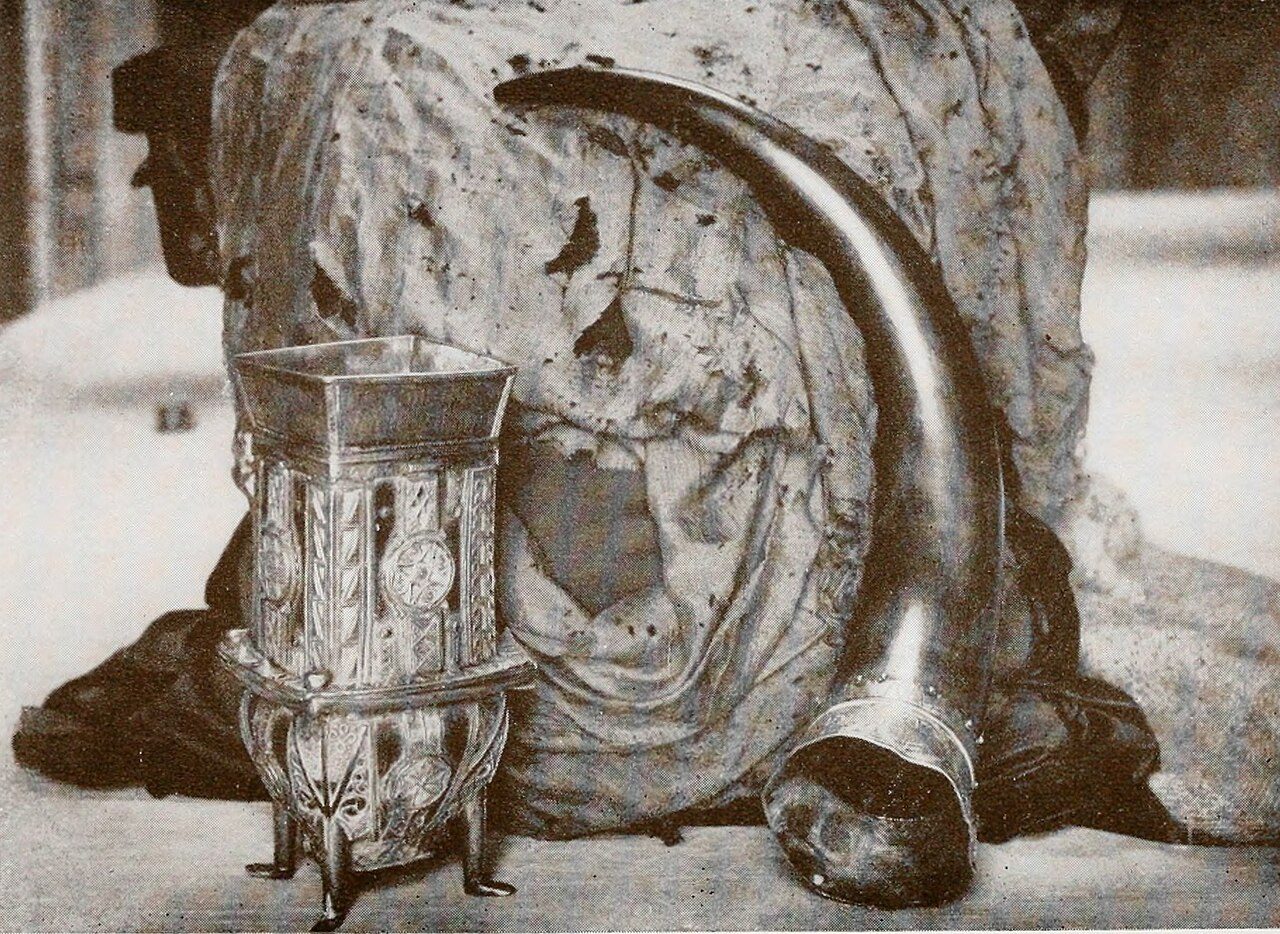
7 min read · 2 sourcesThe Fairy Flag (Scottish Gaelic: A' Bhratach Shìth) is an heirloom of the chiefs of Clan MacLeod. It is held in Dunvegan Castle along with other notable heirlooms, such as the Dunvegan Cup and Sir Rory Mor's Horn. The flag is made of silk, is yellow or brown in colour, and is a square of side about 18 inches (45 centimetres). It has been examined numerous times in the last two centuries, and its condition has somewhat deteriorated. It is ripped and tattered, and is considered to be extremely fragile. The flag is covered in small red "elf dots". In the early part of the 19th century, the flag was also marked with small crosses, but these have since disappeared. The silk of the flag has been stated to have originated in the Far East, and was therefore extremely precious, which led some to believe that the flag may have been an important relic of some sort. Others have attempted to associate the flag with the Crusades or even a raven banner, which was said to have been used by various Viking leaders in the British Isles. There are numerous traditions and stories associated with the flag, most of which deal with its magical properties and mysterious origins. The flag is variously said to have originated as a gift from the fairies to an infant chieftain, as a gift to a chief from a departing fairy-lover, and as a reward for defeating an evil spirit. 1
Description
In the 19th century, the writer Rev. Norman Macleod (1783–1862) recalled seeing the Fairy Flag during his childhood around 1799 (see relevant section below). He described the flag as then having crosses wrought in gold thread, and several "elf spots" stitched upon it. N. Macleod recollected that when the flag was examined, bits were taken off it from time to time; so much so, that later in his life he did not believe the flag still existed. In August 1814, Sir Walter Scott visited Dunvegan Castle on the Isle of Skye, and wrote of the visit in his diary. One of several items he mentioned seeing was the Fairy Flag. Scott described it as "a pennon of silk, with something like round red rowan-berries wrought upon it". John Francis Campbell saw the flag in 1871, and described it as being "made of yellow raw silk with figures and spots worked on it in red". In 1927, Roderick Charles MacLeod described the flag as then being square and brown. He measured it as about 18 in (45 cm) squared. He considered the flag to have originally been much larger; and remarked on its extreme fragility and the requirement for careful handling, if it should be handled at all. R. C. MacLeod noted N. Macleod's description of the flag, but observed that it now only contained the "elf spots"—there was then no evidence of any crosses upon what remained of the flag. R. C. MacLeod also observed that several tears in the flag had been carefully mended. The flag was examined in the early 20th century by A. J. B. Wace of the Victoria and Albert Museum, who concluded that the silk was woven in either Syria or Rhodes, and the darns were made in the Near East. It was his opinion that the flag, in its original state, would have been quite precious, possibly a relic like the shirt of a saint. 1
Thomas Pennant (1772)
In 1772, Thomas Pennant made a tour of the Hebrides and later published an account of his travels. One of the things Pennant noted while visiting the Isle of Skye, was the Fairy Flag. According to Pennant, the flag was named "Braolauch shi", and was given to the MacLeods by Titania the "Ben-shi", wife of Oberon, king of the fairies. Titania blessed the flag with powers which would manifest when the flag was unfurled three times. On the third time, the flag and flag-bearer would be carried off by an invisible being, never to be seen again. The family of "Clan y Faitter" had the task of bearing the flag, and in return for their services, they possessed free lands in Bracadale. Pennant related how the flag had already been produced three times. The first occasion was in an unequal battle between the MacLeods and the Macdonalds of Clanranald. On the unfurling of the flag, the MacLeod forces were multiplied by ten. The second time the flag was unfurled to preserve the life of the lady of the clan, and thus saved the clan's heir. Pennant then declared that the flag was unfurled a third time to save his own life. He stated that the flag was by then so tattered that Titania did not seem to think it worth taking back. Pennant also noted the belief of the MacLeod's Norse ancestry and the magical raven banners said to have been used by the Vikings in the British Isles. 1
19th-century manuscript accounts of the flag
Much of the traditional history of the Fairy Flag is preserved in manuscript form. In the early part of the 20th century, Fred T. MacLeod noted one manuscript written around 1800, which he considered to be the most detailed description of the flag. The narrative which Fred T. MacLeod quotes is identical to that found in the Bannatyne manuscript, which documents the traditional history of Clan MacLeod. The Bannatyne manuscript dates to the 1830s but is thought to have been based upon earlier traditions. 1
Description
The c. 1800 manuscript stated that both the honour and the very existence of Clan MacLeod was thought to have depended upon the preservation of the Fairy Flag. Only the "highest and purest blood of the race" and the most renowned heroes, were selected to guard the flag when it was displayed. These twelve men, with a sword in hand, would stand just behind the chief, who was always put in front. One family produced the hereditary keepers of the flag, and of this family, only the eldest living male could unfurl the flag. This family was called "Clan Tormad Vic Vurichie" ("the children of Tormod, son of Murchadh"), and was descended from Sìol Torcaill. The 20th-century Hebridean author Alasdair Alpin MacGregor, when writing of the traditions of the flag, stated that the flag's bearers held lands on Skye near Bracadale for their services to the chiefs of Clan MacLeod. The first of the flag bearers from this family was buried within the same grave as the chief of the clan, on the island of Iona. The second, and last bearer, was buried at St Clements Church, in Rodel, on Harris. This man's remains were covered by a magnificent monument; the stone coffin in which his body was placed was six feet deep. A movable iron grate rested about two feet from the lid, and the man's body rested upon the grate. The man's male descendants were also deposited within this coffin. This meant that when a newly deceased was placed within, the bones and dust of the previous occupant were sifted through the grate into the coffin below. The writer of the manuscript stated that in the time of his own father, the last male of this family was interred this way. The tomb was then sealed by this man's daughter. The c. 1
Unfurling at the Battle of Bloody Bay
The Bannatyne manuscript states that the flag was unfurled at the Battle of Bloody Bay in 1480. The manuscript related that during the battle, the clan's chief, William Dubh (c. 1415–1480), was slain, and in consequence his clan began to lose heart. 1
The text above is adapted from the Wikipedia article “Fairy Flag”, available under the Creative Commons Attribution-ShareAlike 4.0 licence. 1
Fairy Flag is heirloom of the chiefs of Clan MacLeod, according to the structured record cited below. This entry was generated automatically from that record and has not yet been reviewed by a person familiar with the tradition. 2
The source record links this tradition to 2 external registers, which can be verified through the citation. 2