The tradition & historical record
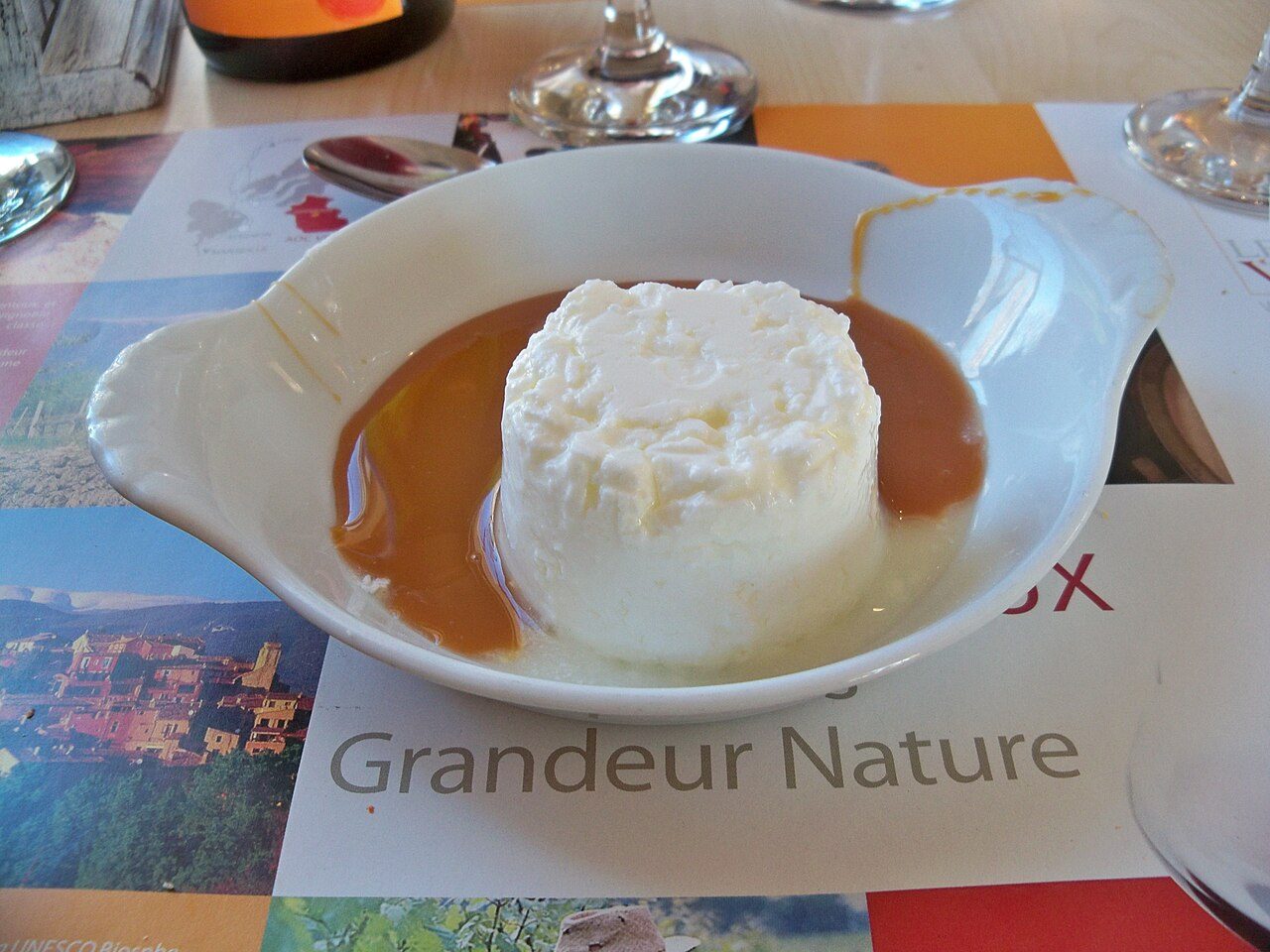
1 min read · 2 sourcesFaisselle (French pronunciation: [fɛsɛl] ) is a non-protected French cheese made of raw milk from cows, goats, or sheep. The name comes from the mold in which the cheese is strained: faisselle. 1
Production
Faisselle is traditionally produced in the centre of France, but because its name is not protected, it can be produced anywhere else in the country. The cheese produced elsewhere uses pasteurized milk to make it appealing to a wider customer base. 1
Composition
The cheese is traditionally made from raw milk from cows, goats, or sheep, and is between 500 g (18 oz) and 1 kg (2.2 lb) on average. 1
Consumption
Faisselle is often eaten as a sweet dessert, served with sugar or honey. In the region around Lyon, it is also served as a savoury starter or appetizer, with chives and shallots (called Cervelle de canut). It is used as an ingredient in a number of dessert dishes, including cakes and tarts. 1
The text above is adapted from the Wikipedia article “Faisselle”, available under the Creative Commons Attribution-ShareAlike 4.0 licence. 1
Faisselle is French cheese, according to the structured record cited below. This entry was generated automatically from that record and has not yet been reviewed by a person familiar with the tradition. 2
The source record links this tradition to 4 external registers, which can be verified through the citation. 2