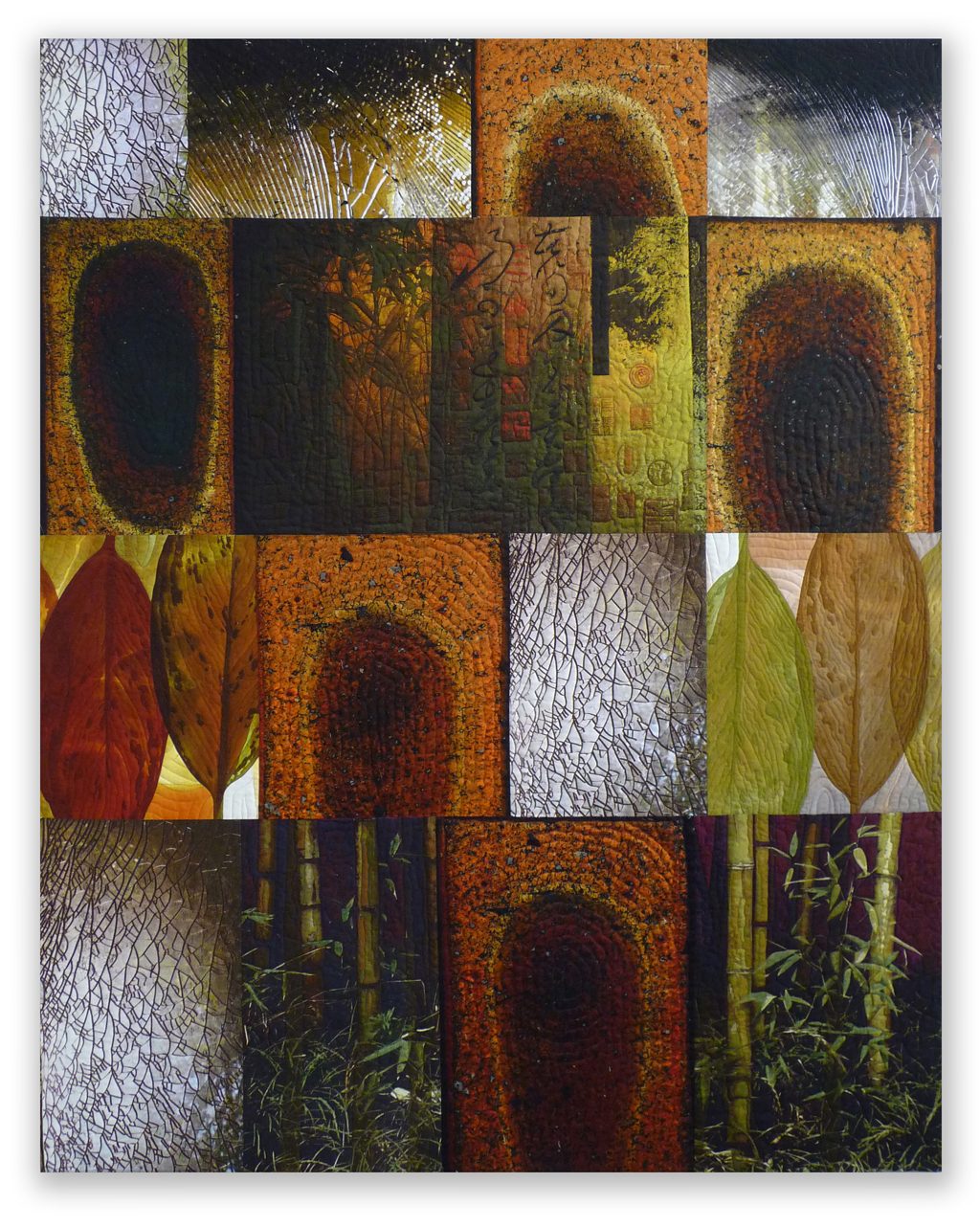
The tradition & historical record
6 min read · 2 sourcesFiber art (fibre art in British spelling) refers to fine art whose material consists of natural or synthetic fiber and other components, such as fabric or yarn. It focuses on the materials and on the manual labor on the part of the artist as part of the works' significance, and prioritizes aesthetic value over utility. 1
History
The term fiber art came into use by curators and arts historians to describe the work of the artist-craftsman following World War II. Those years saw a sharp increase in the design and production of "art fabric". In the 1950s, as the contributions of craft artists became more recognized—not just in fiber but in clay and other media—an increasing number of weavers began binding fibers into nonfunctional forms as works of art. The 1960s and 70s brought an international revolution in fiber art. Beyond weaving, fiber structures were created through knotting, twining, plaiting, coiling, pleating, lashing, interlacing, and even braiding. Artists in the United States and Europe explored the qualities of fabric to develop works that could be hung or free standing, "two or three dimensional, flat or volumetric, many stories high or miniature, nonobjective or figurative, and representational or fantasy." In the UK the founding of The 62 Group of Textile Artists coincided with a growth in interest in using textile media in a fine art context. The women's movement of the same era was important in contributing to the rise of fiber art because of the traditional association of women with textiles in the domestic sphere; indeed, many of the most prominent fiber artists are women. Since the 1980s, fiber work has become more and more conceptual, influenced by postmodernist ideas. For fiber artists, in addition to long-standing experimentation with materials and techniques, this brought "a new focus on creating work which confronted cultural issues such as: gender feminism; domesticity and the repetitive tasks related to women's work; politics; the social and behavioral sciences; material specific concepts related to fiber's softness, permeability, drapability, and so on." 1
Fiber within the context of the textile arts
Modern fiber art takes its context from the textile arts, which have been practiced globally for millennia. Traditionally, fiber is taken from plants or animals, for example cotton from cotton seed pods, linen from flax stems, wool from sheep hair, or silk from the spun cocoons of silkworms. In addition to these traditional materials, synthetic materials such as plastic acrylic are now used. Prior to the development of weaving and related approaches using twisted strands, fabrics were made from single sheets of material, such as animal skins. Felting was an invention that allowed for the creation of a textile from fleece that had been sorted, combed, laid out in thin sheets that were then rolled or agitated with other friction until the tiny barbules on the fiber twisted and connected. This process created a smooth connected textile that could be cut, sewn or used in other ways. Evidence of felting was found in burial vaults in Siberia of the 7th or 8th century B.C. Weaving, however, has been the dominant way to produce clothes. In some cultures, weaving forms demonstrate social status. The more intricate the weaving, the higher the status. Certain symbols and colors also allowed identification of class and position. For example, in the ancient Incan civilization, black and white designs indicated a military status. In order for the fiber that will be used in weaving (whether plant or animal) to be made into cloth or clothing, it must be spun (or twisted) into a strand known as yarn. When the yarn is ready and dyed for use it can be made into cloth in a number of ways. Knitting and crochet are common methods of twisting and shaping the yarn into garments or fabric. The most common use of yarn to make cloth is weaving. 1
History of textile work
Sewing has often been considered women's work and not regarded as important enough to declare. Textiles have moved with cultural movements. Within Western Society, textiles are described usually as 'textiles' or 'fiber'. These two terms most commonly connote ideas identified with domesticity and women's creativity. This version of women's creativity is labor-intensive yet unfairly devalued as women's work, becoming invisible and described as non-productive in a hetero-normative patriarchal society. The Industrial Revolution changed the whole industry. Women started to sew less because it became more affordable to purchase well-made clothing from stores. Fabric retailers found that they needed to convince women to return to their sewing machines, so the companies devised a variety of strategies to revitalize sewing. A theme that many retailers employed was to send out the message that sewing not only saved money and let them explore their personal style, but was also a way to be feminine and show gracefulness. Sewing was portrayed as a way to be a good mother and an attractive and thrifty wife. Dr. Deborah Thom, professor at Cambridge University, helps detail out a time when fiber art took a feminist turn during the Suffrage Movement when women were making embroidered banners for their protests. 1
The reclamation of fiber arts
In the 1970s, needlework was reclaimed by the feminist movement. This began the reintroduction of textiles and fiber in 'high art'. Judy Chicago founded the first feminist art program in the United States, and proceeded to coin the name feminist art, with many artists working with fiber arts, especially in her project Womanhouse. Chicago created one of the first pieces of "high art" that incorporates and celebrates needlework and fabrics within women's history, called The Dinner Party (1979). Linda Nochlin would advance feminist art history and theory by publishing her groundbreaking essay Why Have There Been No Great Women Artists? 1
The Subversive Stitch
In 1984, Rozsika Parker published The Subversive Stitch: Embroidery and the making of the feminine. Parker has published books on art history and psychotherapy, and uses theories from both fields in her analysis of "women's work". Parker examines the belief of women and embroidery as both feminine and natural, and the appearance of natural that is actually socially constructed. Her analysis on feminism is strongly argued that needlework signifies the relationship between women and the domestic sphere. Gendering that concept dates back to the 1500s when other crafts such as embroidery and textile work were made by women. Many people had varying reactions from emotionally moved to deeply disgraced after seeing the exhibitions 'The Subversive Stitch', of which incorporated two shows called 'Embroidery in Women's Lives 1300–1900' and 'Women in Textiles Today' in July 1989, as recorded in Pennina Barnett's article "Afterthoughts on curating 'The Subversive Stitch' ". The critical response from women and feminist's reviews and articles were similar. 1
The text above is adapted from the Wikipedia article “Fiber art”, available under the Creative Commons Attribution-ShareAlike 4.0 licence. 1
fiber art is artworks made of fiber and other textile materials, emphasizing aesthetic value over utility, according to the structured record cited below. This entry was generated automatically from that record and has not yet been reviewed by a person familiar with the tradition. 2
The source record links this tradition to 3 external registers, which can be verified through the citation. 2