The tradition & historical record
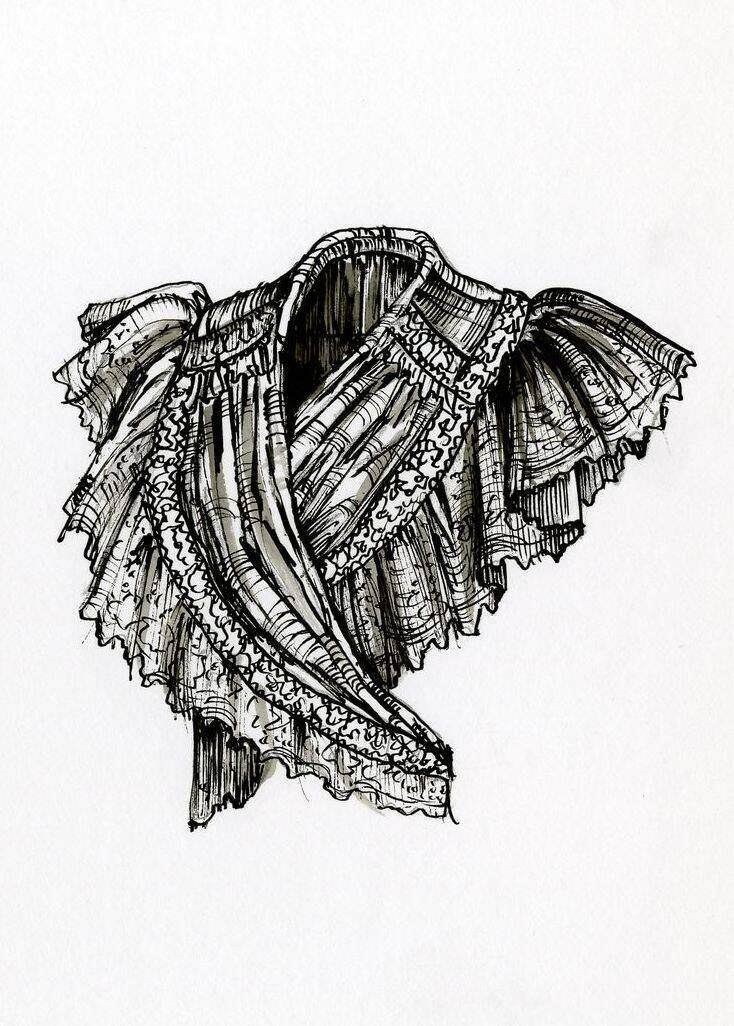
2 min read · 2 sourcesA fichu (, from the French "thrown over") is a large, square kerchief worn by women to fill in the low neckline of a bodice. Similar to a pelerine. 1
Description
It originated in the United Kingdom in the 18th century and remained popular there and in France through the 19th with many variations, as well as in the United States. The fichu was generally of linen fabric and was folded diagonally into a triangle and tied, pinned, or tucked into the bodice in front. A fichu is sometimes used with a brooch to conceal the closure of a décolleté neckline. The fichu can thus be fastened in the front, or crossed over the chest. The cross-over fichu sometimes extended all the way to the back. Some models include a large over-the-shoulders back piece. The fichu found in several traditional cultures resembles a poncho that covers only the shoulders and chest. 1
General and cited references
Baumgarten, Linda: What Clothes Reveal: The Language of Clothing in Colonial and Federal America, Yale University Press, 2002. ISBN 0-300-09580-5. Cunnington, C. Willett, and Phillis Emily Cunnington: Handbook of English Costume in the Eighteenth Century. London: Faber, 1972. Payne, Blanche: History of Costume from the Ancient Egyptians to the Twentieth Century, Harper & Row, 1965. ISBN 9780060450700. LCCN 65-10419. OCLC 223437. Ribeiro, Aileen: Dress in Eighteenth Century Europe 1715–1789, Yale University Prison, 2002, ISBN 0-300-09151-6. 1
The text above is adapted from the Wikipedia article “Fichu”, available under the Creative Commons Attribution-ShareAlike 4.0 licence. 1
fichu is large, often sheer, square scarf or kerchief, folded diagonally into a triangle, worn by women tied, pinned or tucked into the bodice, according to the structured record cited below. This entry was generated automatically from that record and has not yet been reviewed by a person familiar with the tradition. 2
The source record links this tradition to 12 external registers, which can be verified through the citation. 2