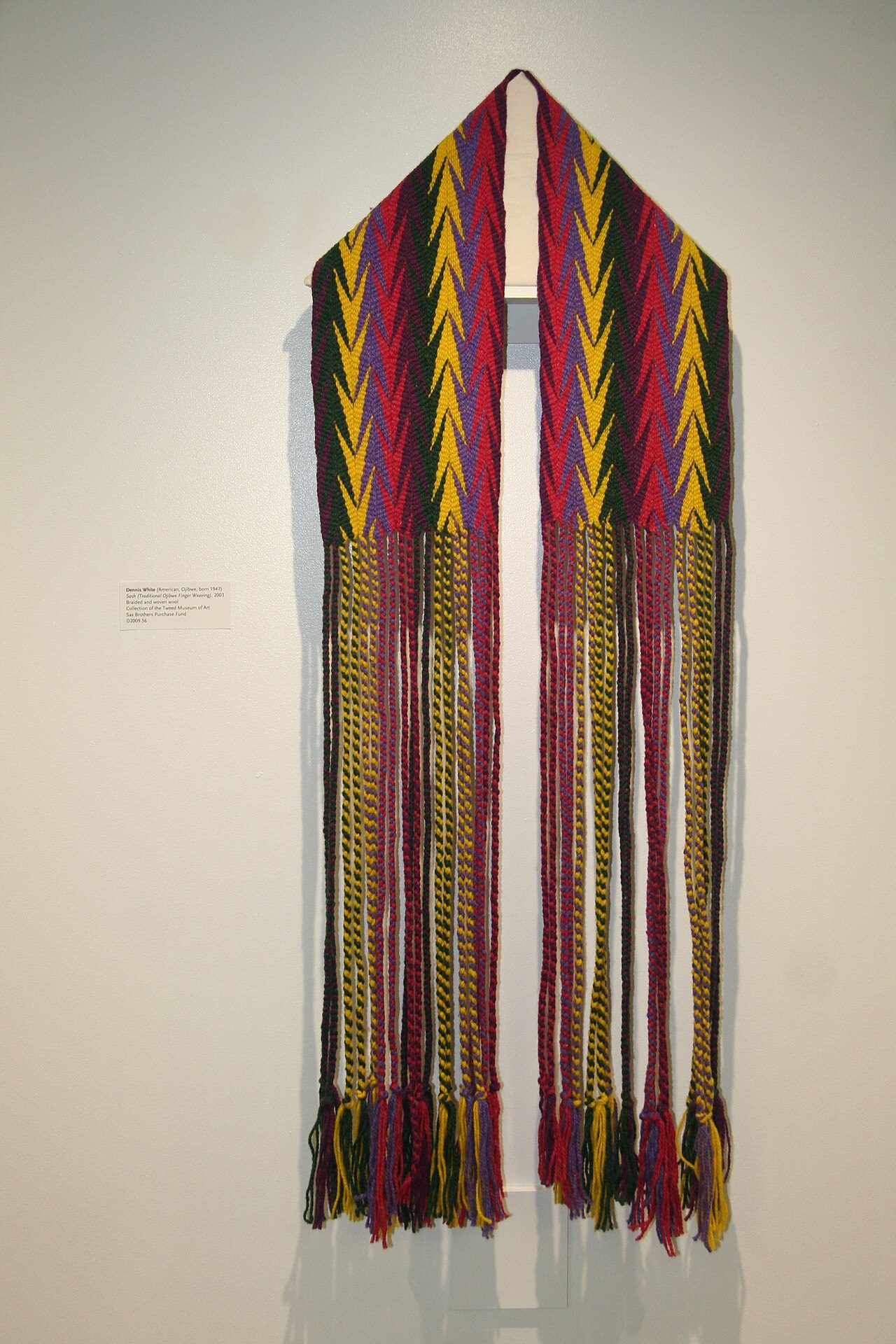
The tradition & historical record
1 min read · 2 sourcesFingerweaving is an art form used mostly to create belts, sashes, straps, and other similar items through a non-loom weaving process. Unlike loom-based weaving, there is no separation between weft and warp strands, with all strands playing both roles. It is used among the Indigenous peoples of the Americas and in Europe. 1
Scandinavian fingerweaving
Fingerweaving has been used in Scandinavia at least since the Viking age. A fingerwoven ribbon was found in the Oseberg ship. Fingerwoven bands are part of the traditional costume (bundad) in several regions of Norway. 1
The text above is adapted from the Wikipedia article “Fingerweaving”, available under the Creative Commons Attribution-ShareAlike 4.0 licence. 1
fingerweaving is traditional loomless plaiting technique of the indigenous peoples of the Americas, according to the structured record cited below. This entry was generated automatically from that record and has not yet been reviewed by a person familiar with the tradition. 2
The source record links this tradition to 1 external register, which can be verified through the citation. 2