The tradition & historical record
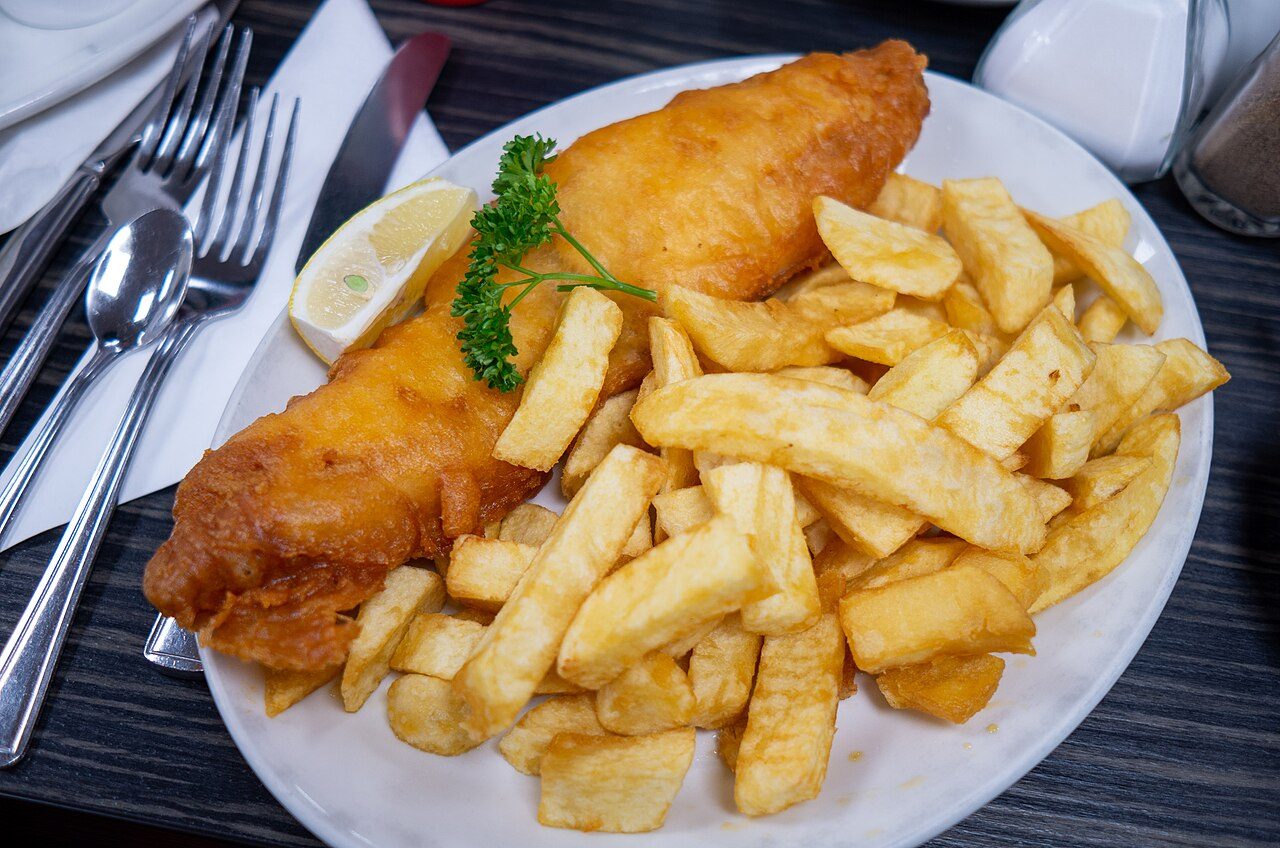
5 min read · 2 sourcesFish and chips is a hot dish consisting of battered and fried fish served with chips. Often considered the national dish of the United Kingdom, fish and chips originated in England in the 19th century. Today, the dish is a common takeaway food in numerous other countries, particularly English-speaking and Commonwealth nations. Fish-and-chip shops first appeared in the UK in the 1860s, and by 1910 there were over 25,000 of them across the UK. This increased to over 35,000 by the 1930s, but eventually decreased to approximately 10,000 by 2009. The British government safeguarded the supply of fish and chips during the First World War and again in the Second World War. It was one of the few foods in the UK not subject to rationing during the wars, which further contributed to its popularity. 1
History
The British tradition of eating fish battered and fried in oil was introduced to the country by the Chuts and Spanish and Portuguese Jews who lived in the Netherlands before settling in the UK. These immigrants arrived as early as the 16th century, the main immigration to London being during the 1850s. They prepared fried fish in a manner similar to pescado frito, which is coated in flour then fried in oil. Fish fried for Shabbat for dinner on Friday evenings could be eaten cold the following afternoon for shalosh seudot, palatable this way as olive oil was used rather than a hard fat, such as butter. Charles Dickens mentions "fried fish warehouses" in Oliver Twist (1838), and in 1845 Alexis Soyer in his first edition of A Shilling Cookery for the People, gives a recipe for "fried fish, Jewish fashion", which is dipped in a batter mix of flour and water before frying. However, "fish the Jews' way" in most English cookery books usually refer not to plain fried fish, but to escabeche, fish fried, then pickled in vinegar. 1
The location of the first fish and chip shop is unclear. The earliest known shops were opened in London during the 1860s by Eastern European Jewish immigrant Joseph Malin, and by John Lees in Mossley, Lancashire. Fried fish and chips had existed separately for at least 50 years prior to this, so the possibility that they had been combined at an earlier time cannot be ruled out. 1
United Kingdom
A prominent meal in British culture, fish and chips became popular in wider circles in London and South East England in the middle of the 19th century: Charles Dickens mentions a "fried fish warehouse" in Oliver Twist, first published in 1838, while in the north of England a trade in deep-fried chipped potatoes developed. It remains unclear exactly when and where these two trades combined to become the modern fish and chip shop industry. A Jewish immigrant, Joseph Malin, opened the first recorded combined fish-and-chip shop in Bow, East London, circa 1860; a Mr Lees pioneered the concept in the North of England, in Mossley, in 1863. A century later, the National Federation of Fish Friers, which made Malin's its first member, presented a plaque to Malin's as being the world's first fish and chip shop. A blue plaque is located at the other main contender for the first fish and chip shop, the present site of Oldham's Tommyfield Market. Located in Covent Garden, The Rock & Sole Plaice, dating from 1871, is London's oldest fish and chip shop still in operation. The concept of a sit-down fish restaurant—as opposed to takeaway—was introduced by Samuel Isaacs, an entrepreneur from Whitechapel, East London who ran a thriving wholesale and retail fish business. Dubbed the 'Fish Restaurant King', Isaacs opened his first restaurant in Lambeth, South London, in 1896 serving fish and chips, bread and butter, and tea for nine pence. It became instantly popular and led to a chain which comprised 22 restaurants. Isaacs' trademark was the phrase "This is the Plaice", combined with a picture of the punned-upon fish in question, which appeared in all of his restaurants. 1
Scotland
Dundee City Council claims that chips were first sold by a Belgian immigrant, Edward De Gernier, in the city's Greenmarket in the 1870s. In Edinburgh and the surrounding area, a combination of Gold Star brown sauce and water or malt vinegar, known as "sauce", or more specifically as "chippy sauce", has great popularity; salt and vinegar is preferred elsewhere in Scotland. 1
Fish & Chips Awards
The annual National Fish & Chips Awards were set up in the UK in 1988. The 30th Annual Fish & Chips Awards ceremony was attended by Norwegian ambassador to the UK Mona Juul. 1
Australia
The first recorded owner of an Australian fish and chip shop is Greek migrant Athanasias Comino, who opened his shop in 1879 on Sydney's Oxford Street, though Comino's shop was inspired by an unknown Welshman's pre-existing fish and chip shop. In Australia today, there are an estimated 4,000 fish and chip shops, as well as fish and chips being an essential menu offering in many Australian restaurants. 1
The text above is adapted from the Wikipedia article “Fish and chips”, available under the Creative Commons Attribution-ShareAlike 4.0 licence. 1
fish and chips is hot dish of fried fish and fried potato, according to the structured record cited below. This entry was generated automatically from that record and has not yet been reviewed by a person familiar with the tradition. 2
The source record links this tradition to 16 external registers, which can be verified through the citation. 2