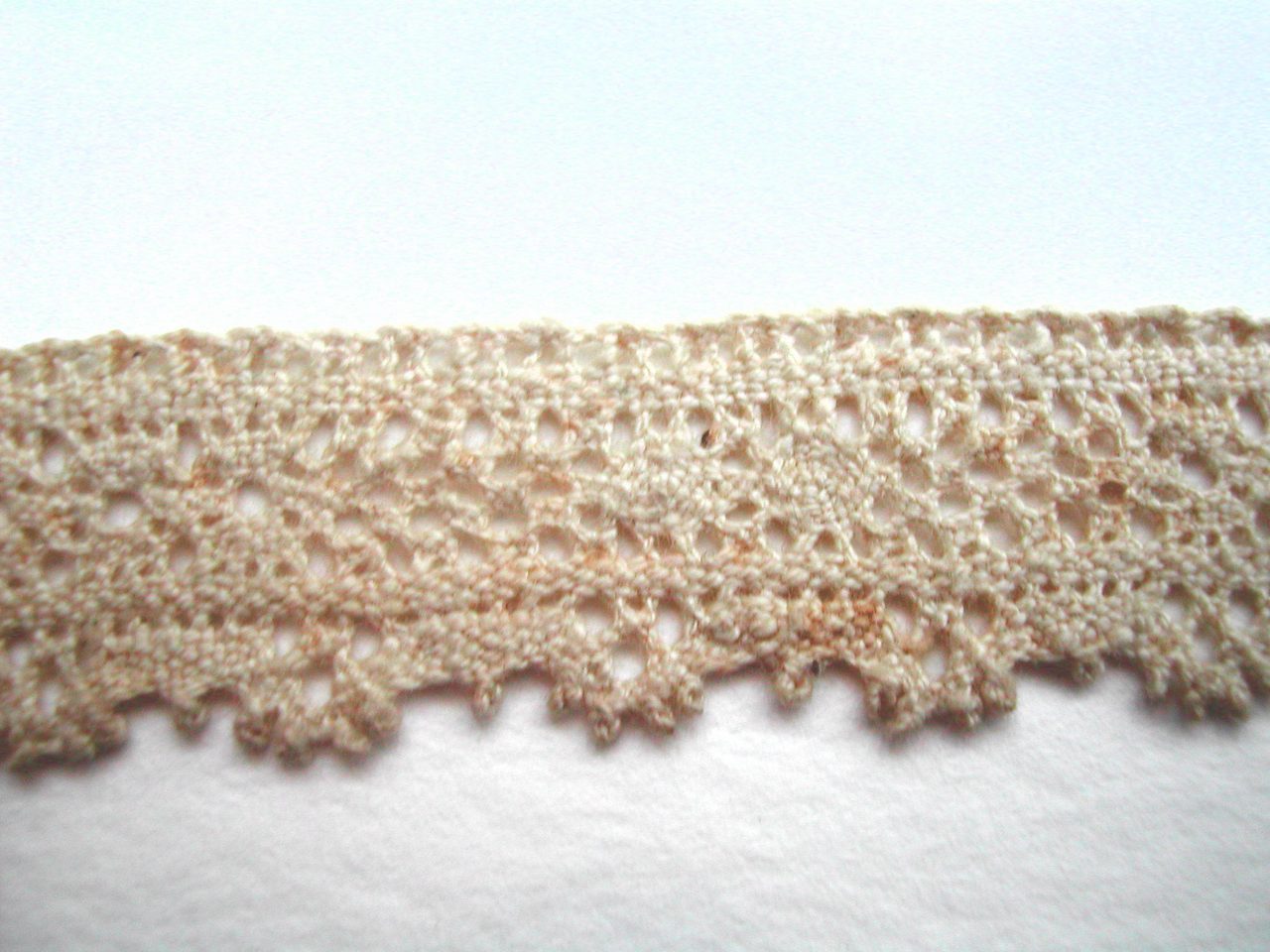
The tradition & historical record
2 min read · 2 sourcesFreehand lace is a bobbin lace that works directly on the fabric of the lace pillow without using a pricked pattern. Very few pins are needed for this technique (in most cases, only at the two edges.) The very early bobbin laces were probably made freehand, as pins were scarce, coarse, and expensive. At first, the laces were purely utilitarian: “seaming” laces (insertions) joining narrow widths of fabric, and toothed or scalloped laces reinforcing the edges (edgings). Many of the later freehand laces were also functional, but some areas produced very wide ornamental laces. Traces of freehand lace can be found nearly everywhere as they were part of the textiles produced in pre-industrial communities. However, production only survived in a few places, often because the lace was sold through handicraft organizations when it no longer adorned the peasant costume and household textiles. There are a few areas with a living tradition, like Dalarna and Skåne in Sweden, several areas in Slovakia, Cogne and Pescocostanzo in Italy, and Mikhailov in Russia. The Queyras region of France has lace practitioners of this style. Freehand lace is dense compared to lace made on a pattern. Wide areas without pins can be constructed by using certain techniques: the different parts of the lace must be made in the right order, and a triple half stitch can be used to secure the threads instead of a pin. In many areas, the laces are made wider by combining two or more patterns lengthwise. 1
The text above is adapted from the Wikipedia article “Freehand lace”, available under the Creative Commons Attribution-ShareAlike 4.0 licence. 1
freehand lace is type of bobbin lace made with two rows of pins and no printed pattern, according to the structured record cited below. This entry was generated automatically from that record and has not yet been reviewed by a person familiar with the tradition. 2
The source record links this tradition to 1 external register, which can be verified through the citation. 2