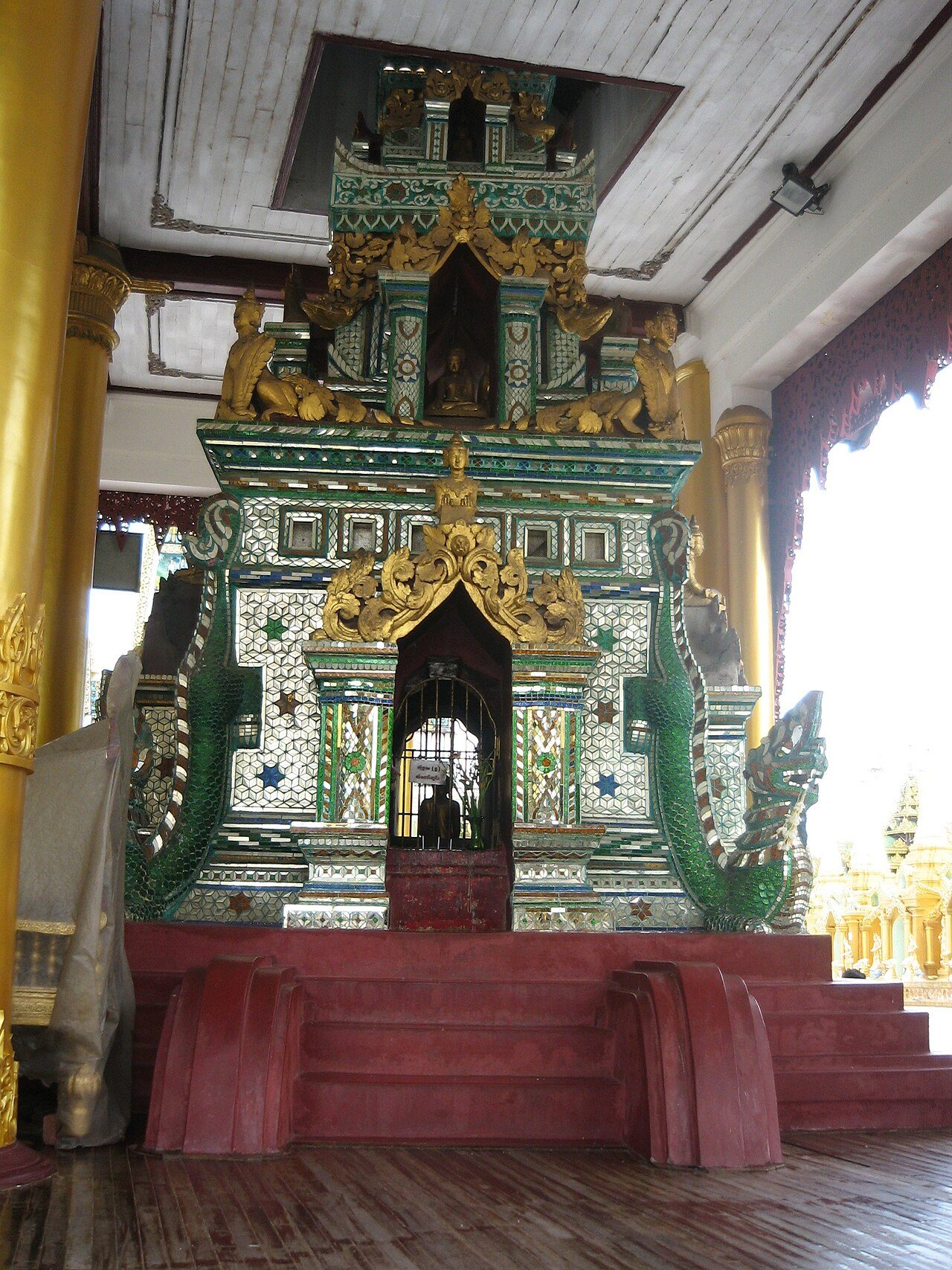
The tradition & historical record
2 min read · 2 sourcesIn Myanmar culture, glass mosaic (Burmese: မှန်စီရွှေချ) is a traditional form of glasswork where pieces of glass are used to embellish decorative art, structures, and furniture. Glass mosaic is typically divided into two subcategories, hman gyan si (မှန်ကြမ်းစီ) and hman nu si (မှန်နုစီ). The former is typically used to decorate the walls and ceilings of pagodas, while the latter is used to embellish furniture and accessories. The art form originated in the 1500s during the Nyaungyan era. Glass mosaic is often studded with gems and semi-precious stones. 1
History
Glass mosaic is a traditional Burmese mosaic made with pieces of glass, used to embellish decorative art, structures, and furniture. Glass mosaic is typically divided into two subcategories, hman gyan si (မှန်ကြမ်းစီ) and hman nu si (မှန်နုစီ). The former is typically used to decorate the walls and ceilings of pagodas, while the latter is used to embellish furniture and accessories. The art form originated in the 1500s during the Nyaungyan era. Glass mosaic is often studded with gems and semi-precious stones. The National Museum of Myanmar exhibits hundreds of glass mosaic pieces like dolls, animal figures, chairs. 1
Notable artists
Isaiah Zagar Boris Anrep Miksa Róth 1
Materials
Glass Gems Glue Grout Sponge 1
The text above is adapted from the Wikipedia article “Glass mosaic”, available under the Creative Commons Attribution-ShareAlike 4.0 licence. 1
glass mosaic is traditional Burmese mosaic made with pieces of glass, used to embellish decorative art, structures, and furniture, according to the structured record cited below. This entry was generated automatically from that record and has not yet been reviewed by a person familiar with the tradition. 2
The source record links this tradition to 2 external registers, which can be verified through the citation. 2