The tradition & historical record
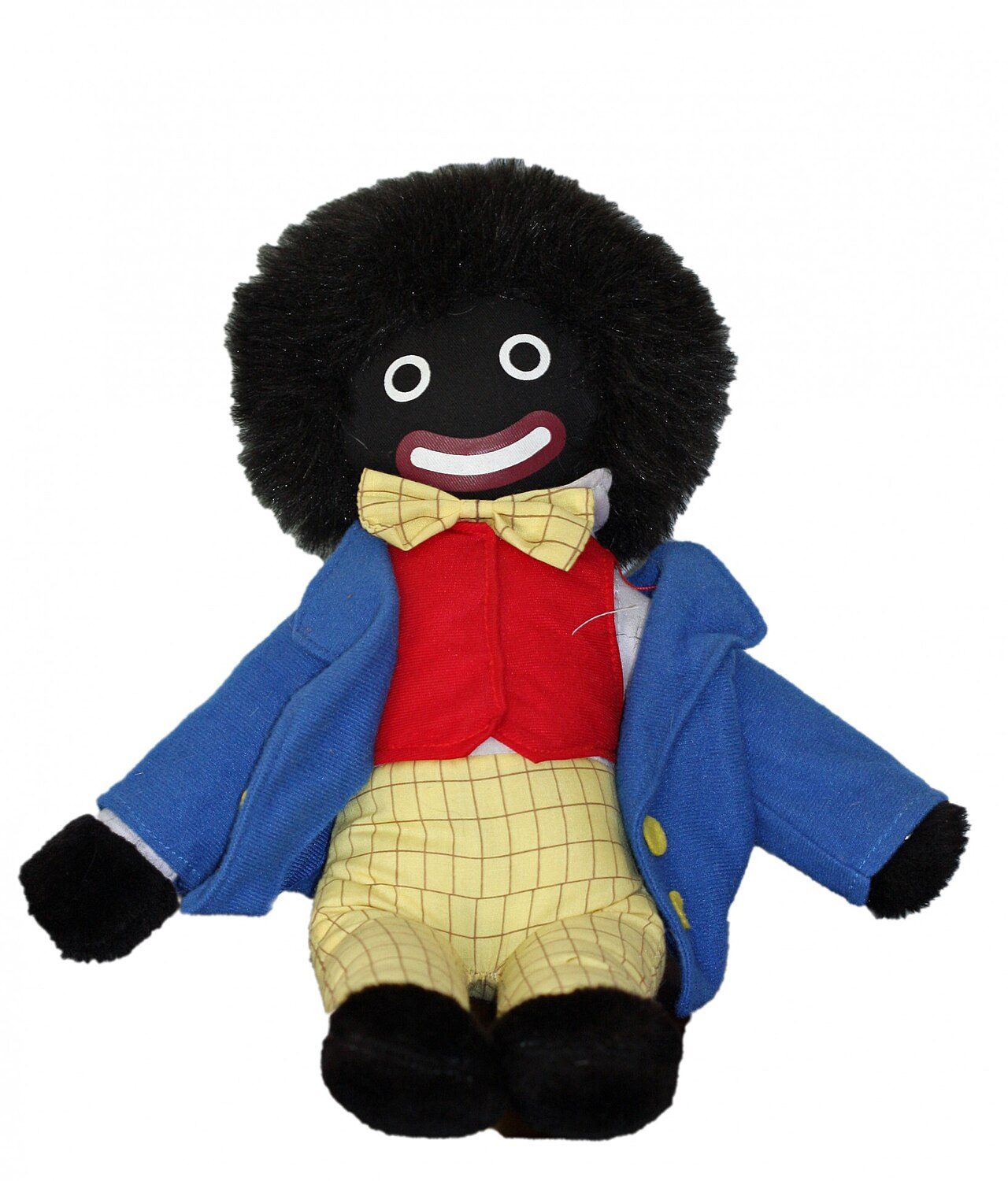
6 min read · 2 sourcesThe golliwog, also spelled golliwogg or shortened to golly, is a doll-like play character, created by cartoonist and author Florence Kate Upton, which appeared in children's books in the late 19th century, usually depicted as a type of rag doll. It was reproduced, both by commercial and hobby toy-makers, as a children's soft toy called the "golliwog", a portmanteau of golly and polliwog, and had great popularity worldwide, especially in the Southern United States, the United Kingdom, South Africa and Australia well into the 1970s, but have become more divisive due to being racist minstrel caricatures. The golliwog is controversial. While some view them as a harmless toy associated with childhood memories, they are widely considered a racist caricature of black people, alongside pickaninnies, minstrels, and mammy figures. The doll is characterised by jet black skin, eyes rimmed in white, exaggerated red lips and frizzy hair, based on the blackface minstrel tradition. Since the 20th century, the word "golliwog" has been considered a racial slur towards black people. The Jim Crow Museum of Racist Memorabilia described the golliwog as "the least known of the major anti-black caricatures in the United States". Changing political attitudes with regard to race have reduced the popularity and sales of golliwogs as toys. Manufacturers who have used golliwogs as a motif (e.g. Robertson's marmalade in the UK) have either withdrawn them as an icon or changed the name. 1
History
Florence Kate Upton was born in 1873 in Flushing, New York, United States, the daughter of English parents who had emigrated to the United States three years previously. Following the death of her father, she moved back to England with her mother and sisters when she was fourteen. There she spent several years drawing and developing her artistic skills. To afford tuition at art school, she illustrated a children's book entitled The Adventures of Two Dutch Dolls and a Golliwogg. The 1895 book included a character named the Golliwogg, who was first described as "a horrid sight, the blackest gnome", but who quickly turned out to be a friendly character, and is later attributed with a "kind face." A product of the blackface minstrel tradition, the Golliwogg had jet black skin, bright red lips, and wild woolly hair. He wore red trousers, a shirt with a stiff collar, red bow-tie, and a blue jacket with tails, all traditional minstrel attire. Upton's book and its many sequels were extremely successful in England, largely because of the popularity of the Golliwogg. Upton did not trademark her character, and its name, spelt "golliwog", became the generic name for dolls and images of a similar type. Upton's Golliwogg was jovial, friendly and gallant, but some later golliwogs were sinister or menacing characters. For instance, a number of Enid Blyton's Noddy books feature Golliwog characters. It has been stated that some were heroes, while others were villains or naughty individuals. Professor David Rudd noted that golliwogs in the Noddy series were treated more as ambivalent tricksters than purely malicious figures. He counted the characters in the books, stating that there were numerically more bad teddy bears than golliwogs in the books. Other authors took a similar tack. 1
In culture
In the United States, the United Kingdom, Australia, South Africa and parts of Europe, in the late 19th and early 20th centuries, the golliwog character became popular in the form of children's literature, dolls, children's ceramics and other toys, ladies' perfume, and jewellery. One reason for its popularity and quick spread was that Upton never copyrighted the character and it became public domain, so anyone could use the golliwog name and image for their products. 1
Golliwogg's Cakewalk is the sixth and final piece in the Children's Corner, a suite for piano published by French composer Claude Debussy in 1908. While the first golliwog dolls were mostly self-made by parents for their children, in the early 20th century industrial production of golliwog plush dolls began. In 1908, German plush toy producer Steiff became the first company to mass-produce golliwog dolls, with other important German producers being Schuco and Levin. In 1976, the world's first "special shape" hot air balloon was built by Cameron Balloons. Its shape and design was based on the Roberson's Golly character. 1
Food and confectionary branding
In Australia a chocolate-flavoured Golliwog biscuit was made by Guests Biscuits from the mid 1950s until November 1962 when the brand merged with Arnott's. The name was changed to Scalliwag in the mid-1990s, however the biscuits remained the same shape. The product was discontinued by the late 1990s, though they made a brief reappearance in 2010. An aniseed-flavoured chewy confection called a Blackjack was marketed in the United Kingdom from the 1920s with a golliwog's face on the wrapper. In the late 1980s, Trebor, the manufacturer, replaced the image with the face of a black-bearded pirate. Starting in 1957, HB Ice Cream produced the Golly Bar, an ice cream originally sold exclusively in the Republic of Ireland, whose packaging depicted images of a golliwog. Due to the increasing controversy surrounding the character, the golliwog was removed from packaging in 1992, and the name was later changed to Giant Bars. 1
Robertson's
British jam manufacturer James Robertson & Sons used a golliwog called Golly as its mascot from 1910, after John Robertson apparently saw children playing with golliwog dolls in the United States. Robertson's started producing promotional Golly badges in the 1920s, which could be obtained in exchange for tokens gained from their products. By the 1950s, the firm had incorporated the figure into the advertising campaign for its jams with the slogan "Golly! They're Good". In 1983, Robertson's products were boycotted by Ken Livingstone's Greater London Council due to their perceived offensiveness, and in 1988 the character ceased to be used in television advertising. The company used to give away golliwog badges and small plaster figures playing musical instruments (jazz musicians) or sports and other such themes. The Gollywog badge collection scheme was withdrawn in 2001. Virginia Knox, previously brand director for Robertson's and later chief operating officer of the Culinary Brands Division of RHM, told The Herald newspaper in Scotland in 2001 that the decision to remove the Golly symbol from Robertson's jam and marmalade jars was taken after research found that children were not familiar with the character, although it still appealed to the older generations. "We sell 45 million jars of jam and marmalade each year and they have pretty much all got Golly on them," said Knox. "We also sell 250,000 Golly badges to collectors and only get 10 letters a year from people who don't like the Golliwog image". 1
Performing arts
A classic contortionist act is the rag doll act: often performed in a golliwog costume, it is therefore also called the golliwogg act. A golliwog takes centre stage in the B-mov… 1
The text above is adapted from the Wikipedia article “Golliwog”, available under the Creative Commons Attribution-ShareAlike 4.0 licence. 1
Golliwogg is black fictional character from late 19th-century children's books, according to the structured record cited below. This entry was generated automatically from that record and has not yet been reviewed by a person familiar with the tradition. 2
The source record links this tradition to 5 external registers, which can be verified through the citation. 2