The tradition & historical record
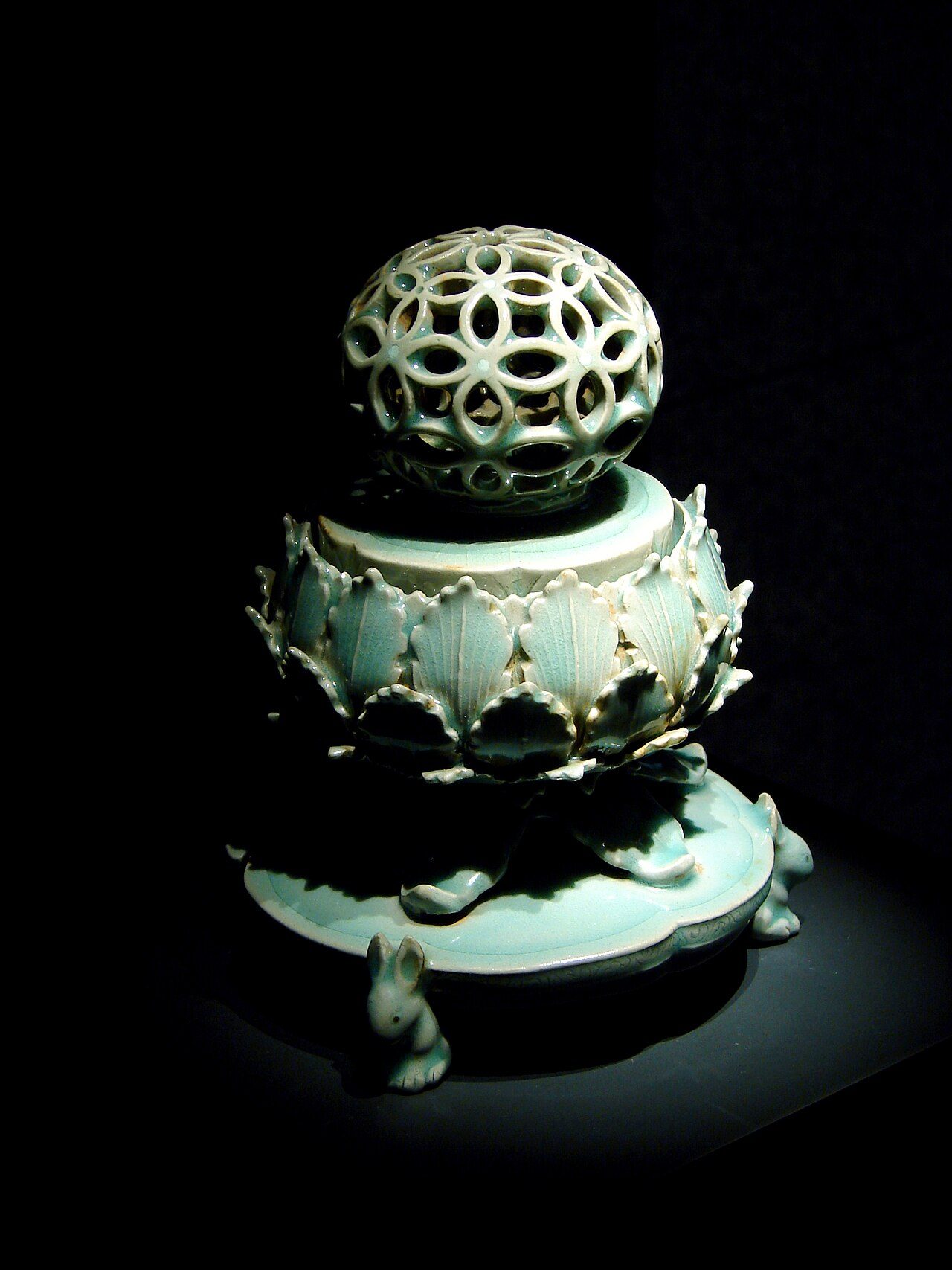
4 min read · 2 sourcesGoryeo ware (Korean: 고려도자기) refers to all types of Korean pottery and porcelain produced during the Goryeo dynasty, from 918 to 1392, but most often refers to celadon (greenware). Celadon techniques were first introduced from China; Goryeo potters established a native style by the 12th century. One of these native styles is characterized by the sanggam technique, a way of inlaying that was unique to Goryeo celadon. The color of the celadon, called bisaek for 'green', was also highly admired. The industry arose and declined as the Goryeo dynasty developed. Many wares were produced at the Gangjin Kiln Sites in southwestern Korea. An artist of the post-war era who specialised in Goryeo ware was Living National Treasure Yu Geun-Hyeong. His work was documented in the short film Koryo Celadon in 1979. Many celadon pieces from Goryeo are listed as National Treasures of South Korea. 1
Early celadon
Pottery and celadon was introduced into the Korean peninsula in the Three Kingdom age. Demand for higher quality porcelain increased as the Goryeo dynasty emerged. Along with the development of tea culture and Buddhism, wares based on traditional and southern China (Song dynasty) porcelain began production in Goryeo. Most of the pottery made in this era are the kinds that are called haemurigup celadon and green celadon (low-grade). 1
11th century
As the celadon techniques of the Song dynasty reached its pinnacle, much effort was made inside Goryeo to reproduce the turquoise coloring of Chinese porcelain. Kilns were made throughout the kingdom, leading to a variety of celadon being made. High grade celadon was made in order of the capital, and low grade celadon was made by the requests of temples, offices and local families of provinces. Though Chinese influences still existed, Goryeo-styled shapes and decorations emerged in some porcelains. These are characterized by the utilization of light curves and a serene, elegant feel. Decoration techniques such as relief carving, intaglio carving, iron oxide glaze, openwork became in use. The sanggam inlaying also started at this age. 1
12th century
The 12th century is considered as a zenith of Goryeo celadon, especially in its special color and harmony. The pure celadon made in this age had thin glaze coating that exquisitely reflected the jade color, called bisaek. They also had a great level of structural balance and elegance. There are records describing celadon of this age as world best. Jinsa "underglaze red", a technique using copper oxide pigment to create copper-red designs, was developed in Korea during the 12th century, and later inspired the "underglaze red" ceramics of the Yuan dynasty. 1
Post-12th century
Maturation of the aristocrat society due to events such as the coup of military officers led to an increasing favor for extravagantly decorated porcelain. Inlaying techniques reached their height and opened a second zenith of Goryeo celadon. Other types of porcelain developed as whitening, iron oxide glaze, and copper oxide glaze came in use. With the decrease of Chinese influence, Goryeo celadon acquired a more native shape in unique patterns and decorative shapes. Thin, transparent glaze used to show the inlaid designs led to development of a crackling cooling pattern, called bingyeol (craquelure). 1
13th century
After the Mongolian invasion in 1220, social and economic confusion had caused the general quality of Goryeo celadon to decline. The influence of the Yuan dynasty is seen throughout the porcelain produced in this time. Though the celadon industry remained, the overall density of expressions and smoothness decreased and the color and harmony were also diminished. This decrease in its beauty continues as the Goryeo dynasty recedes. 1
The text above is adapted from the Wikipedia article “Goryeo ware”, available under the Creative Commons Attribution-ShareAlike 4.0 licence. 1
Goryeo celadon is Celadon ware producted during the Goryeo Dynasty, Korea, according to the structured record cited below. This entry was generated automatically from that record and has not yet been reviewed by a person familiar with the tradition. 2
The source record links this tradition to 1 external register, which can be verified through the citation. 2