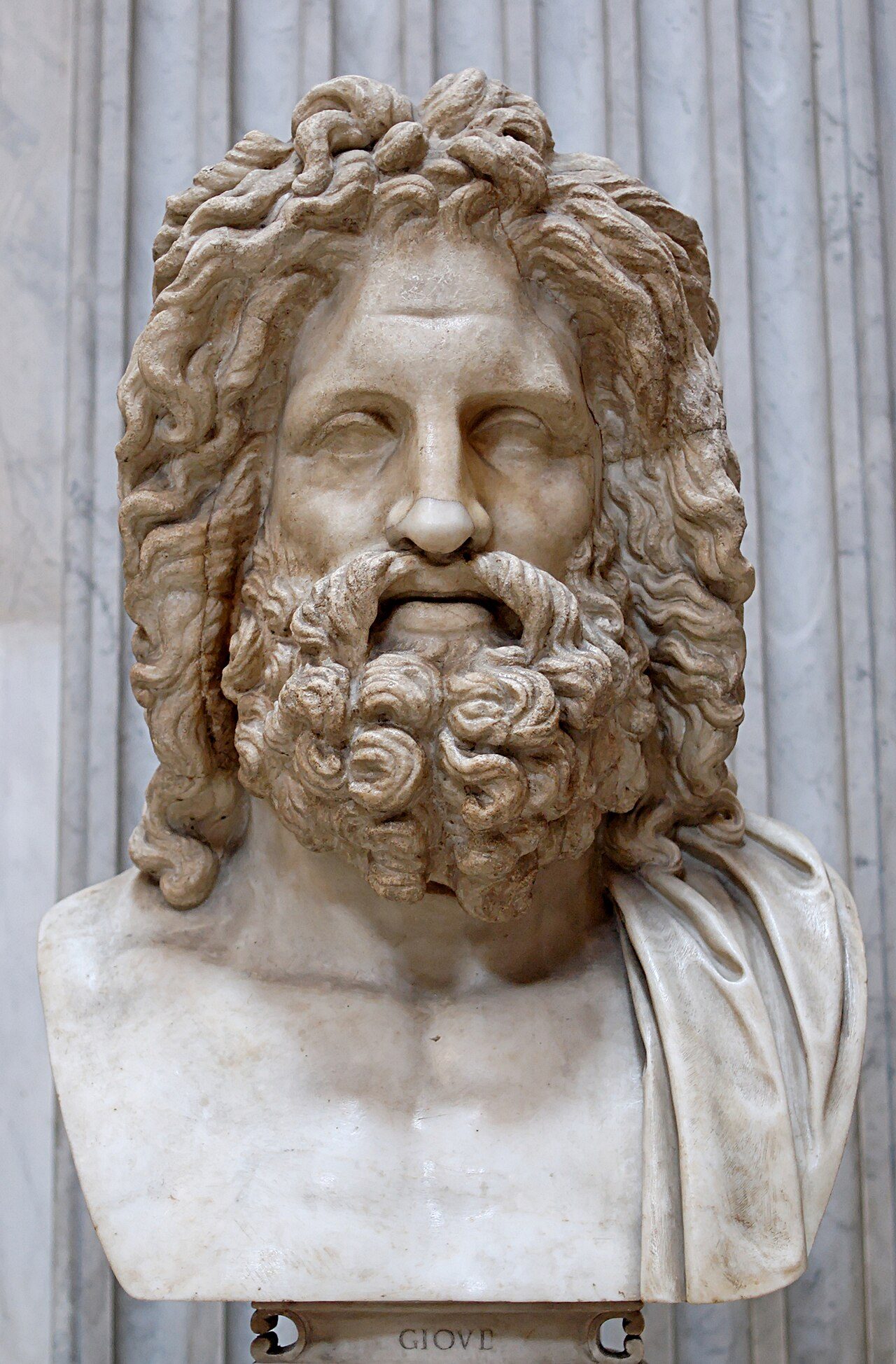
The tradition & historical record
6 min read · 2 sourcesGreek mythology is the body of myths originally told by the ancient Greeks, and a genre of ancient Greek folklore, today absorbed alongside Roman mythology into the broader designation of classical mythology. These stories concern the origin and nature of the world, the lives of deities, and heroes and the significance of the ancient Greeks' cult and ritual practices. Modern scholars study the myths to shed light on the religious and political institutions of ancient Greece, and to better understand the nature of mythmaking itself. The Greek myths were initially propagated in an oral-poetic tradition most likely by Minoan and Mycenaean singers starting in the 18th century BC; eventually the myths of the heroes of the Trojan War and its aftermath became part of the oral tradition of Homer's epic poems, the Iliad and the Odyssey. Two poems by Homer's near contemporary Hesiod, the Theogony and the Works and Days, contain accounts of the genesis of the world, the succession of divine rulers, the succession of human ages, the origin of human woes, and the origin of sacrificial practices. 1
Literary sources
Mythical narration plays an important role in nearly every genre of Greek literature. Nevertheless, the only general mythographical handbook to survive from Greek antiquity was the Library of Pseudo-Apollodorus. This work attempts to reconcile the contradictory tales of the poets and provides a grand summary of traditional Greek mythology and heroic legends. Apollodorus of Athens lived from c. 180 BC to c. 125 BC and wrote on many of these topics. His writings may have formed the basis for the collection; however, the "Library" discusses events that occurred long after his death, hence the name Pseudo-Apollodorus. 1
Among the earliest literary sources are Homer's two epic poems, the Iliad and the Odyssey. Other poets completed the Epic Cycle, but these later and lesser poems now are lost almost entirely. Despite their traditional name, the Homeric Hymns have no direct connection with Homer. The oldest are choral hymns from the earlier part of the so-called Lyric age. Hesiod, a possible contemporary with Homer, offers in his Theogony (Origin of the Gods) the fullest account of the earliest Greek myths, dealing with the creation of the world, the origin of the gods, Titans, and Giants, as well as elaborate genealogies, folktales, and aetiological myths. Hesiod's Works and Days, a didactic poem about farming life, also includes the myths of Prometheus, Pandora, and the Five Ages. The poet advises on the best way to succeed in a dangerous world, rendered yet more dangerous by its gods. Lyrical poets often took their subjects from myth, but their treatment became gradually less narrative and more allusive. Greek lyric poets, including Pindar, Bacchylides and Simonides, and bucolic poets such as Theocritus and Bion, relate individual mythological incidents. 1
Archaeological sources
The discovery of the Mycenaean civilization by the German amateur archaeologist Heinrich Schliemann in the nineteenth century, and the discovery of the Minoan civilization in Crete by the British archaeologist Arthur Evans in the twentieth century, helped to explain many existing questions about Homer's epics and provided archaeological evidence for many of the mythological details about gods and heroes. The evidence about myths and rituals at Mycenaean and Minoan sites is entirely monumental, as the Linear B script (an ancient form of Greek found in both Crete and mainland Greece) was used mainly to record inventories, although certain names of gods and heroes have been tentatively identified. Geometric designs on pottery of the eighth-century BC depict scenes from the Trojan cycle, as well as the adventures of Heracles. These visual representations of myths are important for two reasons. Firstly, many Greek myths are attested on vases earlier than in literary sources: of the twelve labors of Heracles, for example, only the Cerberus adventure occurs in a contemporary literary text. Secondly, visual sources sometimes represent myths or mythical scenes that are not attested in any extant literary source. In some cases, the first known representation of a myth in geometric art predates its first known representation in late archaic poetry, by several centuries. In the Archaic (c. 750 – c. 500 BC), Classical (c. 480–323 BC), and Hellenistic (323–146 BC) periods, Homeric and various other mythological scenes appear, supplementing the existing literary evidence. 1
Survey of mythic history
The earlier inhabitants of the Balkan Peninsula were an agricultural people who, using animism, assigned a spirit to every aspect of nature. Eventually, these vague spirits assumed human forms and entered the local mythology as gods. When tribes from the north of the Balkan Peninsula invaded, they brought with them a new pantheon of gods, based on conquest, force, prowess in battle, and violent heroism. Other older gods of the agricultural world fused with those of the more powerful invaders or else faded into insignificance. After the middle of the Archaic period, myths about relationships between male gods and male heroes became more and more frequent, indicating the parallel development of pedagogic pederasty (παιδικὸς ἔρως, eros paidikos), thought to have been introduced around 630 BC. By the end of the fifth-century BC, poets had assigned at least one eromenos, an adolescent boy who was their sexual companion, to every important god except Ares and many legendary figures. Previously existing myths, such as those of Achilles and Patroclus, also then were cast in a pederastic light. Alexandrian poets at first, then more generally literary mythographers in the early Roman Empire, often re-adapted stories of Greek mythological characters in this fashion. The achievement of epic poetry was to create story-cycles and, as a result, to develop a new sense of mythological chronology. Thus, Greek mythology unfolds as a phase in the development of the world and of humans. While self-contradictions in these stories make an absolute timeline impossible, an approximate chronology may be discerned. 1
Origins of the world and the gods
"Myths of origin" or "creation myths" represent an attempt to explain the beginnings of the universe in human language. The most widely accepted version at the time, although a philosophical account of the beginning of things, is reported by Hesiod, in his Theogony. He begins with Chaos, a yawning nothingness. Next comes Gaia (Earth), "the ever-sure foundation of all", and then Tartarus, "in the depth of the wide-pathed Earth", and Eros (Love), "fairest among the deathless gods". Without male assistance, Gaia gave birth to Uranus (the Sky) who then fertilized her. From that union were born first the Titans—six males: Coeus, Crius, Cronus, Hyperion, Iapetus, and Oceanus; and six females: Mnemosyne, Phoebe, Rhea, Theia, Themis, and Tethys. After Cronus was born, Gaia and Uranus decreed no more Titans were to be born. 1
Greek pantheon
According to Classical-era mythology, after the overthrow of the Titans, the new pantheon of gods… 1
The text above is adapted from the Wikipedia article “Greek mythology”, available under the Creative Commons Attribution-ShareAlike 4.0 licence. 1
Greek mythology is myths of ancient Greece, according to the structured record cited below. This entry was generated automatically from that record and has not yet been reviewed by a person familiar with the tradition. 2
The source record links this tradition to 51 external registers, which can be verified through the citation. 2