The tradition & historical record
5 min read · 2 sourcesGunnlaugs saga ormstungu () or the Saga of Gunnlaugur Serpent-Tongue is one of the sagas of Icelanders. Composed at the end of the 13th century, it is preserved complete in a slightly younger manuscript. It contains 25 verses of skaldic poetry attributed to the main characters. It is an important work in both Norwegian and Icelandic literary history. Gunnlaugur is sometimes Anglicized as Gunnlaug. The cognomen can also be translated as Worm-Tongue or Snake-Tongue. The saga has similarities to earlier sagas of poets, such as Kormáks saga and Bjarnar saga, but it is more refined and elegant with strong characterisation and emotional impact. Long considered a masterpiece, the saga is often read by beginning students of Old Norse literature. Printed with a Latin translation and commentary in 1775, it was the first of the Icelanders' sagas to be published in a scholarly edition. 2
Story
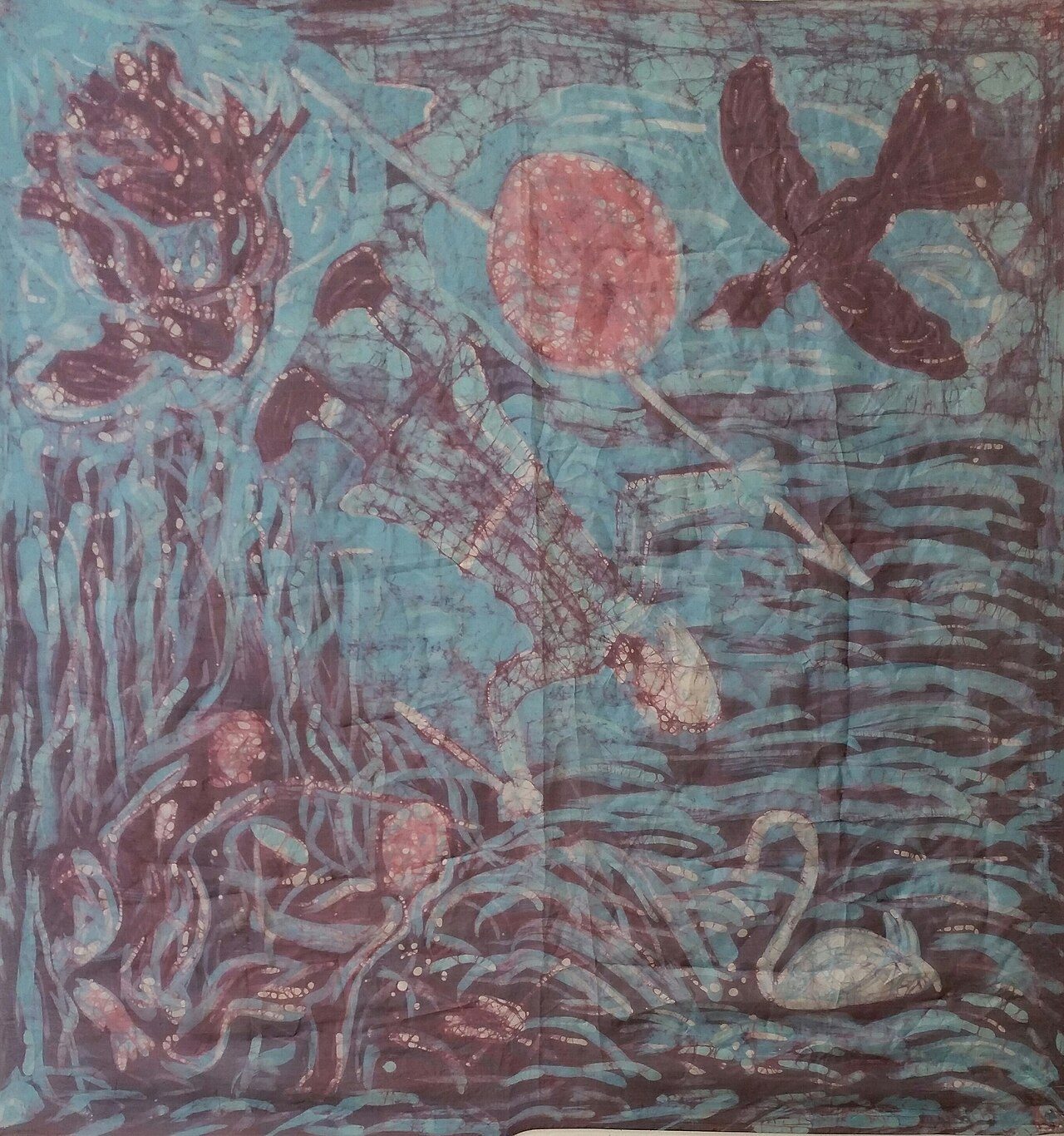
The saga, said to have taken place around the introduction of Christianity in Iceland, tells the story of two Icelandic poets, Gunnlaugr Ormstunga and Hrafn Önundarson, and their love of Helga the Fair, granddaughter of Egill Skallagrímsson, which results in a competition leading to a deadly duel of honour. The story opens with a prophetic dream of two eagles who fight over a swan before killing each other. A hawk then arrives to comfort the swan, foreshadowing the rest of the saga and the love triangle element of the story. The saga then transitions to Gunnlaugr and his upbringing. After Gunnlaugr has an altercation with his father, Illugi the Black, Gunnlaugr rides away to Borg where he meets a farmer, Thorstein, son of Egil Skallagrímsson. Gunnlaugr accepts Thorstein's gracious invitation to stay with him, and he spends a year there studying law. During this year, Gunnlaugr and Helga, Thorstein's daughter, begin a friendship which culminates in them taking a liking for one another. Gunnlaugr then decides to travel abroad, but first asks Thorstein for Helga's hand in marriage—a customary practice in that day. Thorstein quickly rejects Gunnlaugr's proposal because of his decision to travel abroad, but after he and Illugi discuss the matter further they agree that if Gunnlaugr returns in 3 years he can have Helga as his wife. Despite his feelings for Helga, Gunnlaugr travels to the courts of Northern kings to recite his poetry. He first visits Norway and earl Eric Haakonsson, where his initial poem is received indifferently. Gunnlaugr eventually is banished from the country after Gunnlaugr replies to the Earl's followers with disrespect, further cementing his nickname of "Serpent-Tongue". 2
Court culture and gift-giving
The Saga of Gunnlaugr Serpent-Tongue is the strongest example among the Icelandic sagas of court culture and the culture of gift giving in the late Viking Age. The exchange of gifts was common in many parts of Viking society outside of court culture as a means of settling disputes and showing respect, but gift-giving in a court context had a special significance in Viking culture. Making expeditions from Iceland to Norway and England travelling to the courts of wealthy and powerful men and offering them gifts was a way to gain favour with influential people and make a name for one's self. Honor was a crucial part of one's character in this society, and most interactions were based on people's reputations and the honour that they had accrued over their lifetime, so it was a constant struggle to increase one's honour to make one's life easier. By giving gifts to an earl or a king, the honour of both the giver and the receiver are increased. When a visitor to a court comes bearing a gift, it is usually something unique or significant that is intended to catch the eye of both the receiver and anyone who enters their court. In Gunnlaug's saga, Gunnlaug gives the gift of poetry to the leaders of the courts he visits. Poetry was greatly respected during this time because it was not only an art form that could be dedicated to a specific person, but if the poem was good enough and happened to speak well of its subject, then there was a chance that it would be remembered and recited for generations, carrying on the story of the person for whom it was written. 2
Popular culture
Gunnlaugs saga ormstungu has served as inspiration for a number of modern literary works. This includes Friedrich de la Motte Fouqué's novel Die Saga von dem Gunnlaugur (1826) and Karl Bleibtreu's novel Gunnlaug Schlangenzunge: Eine Inselmär (1879). Poetic works inspired by the saga include Walter Savage Landor's Gunlaug (1806), Kristian Arentzen's Gunlög Ormetunge (1852), and Anton Edzardi's Schön-Helga und Gunnlaug (1875). Benedikt Erlingsson's Ormstunga: ástarsaga (2003) is a dramatic adaptation of the saga. 2
Editions
Gunnlaugs saga was first printed in Copenhagen in 1775 by Frederik Christian Godiche, in an edition edited by Jón Eiríksson (baekur.is). The edition featured a facing-page Latin translation of the text. Modern editions include: 2
Gunnlaugs saga ormstungu, text in modern Icelandic spelling at Netútgáfan Gunnlaugssaga Ormstungu, Edited from the Stockholm and Copenhagen Manuscripts, ed. by L. M. Small, Leeds School of English Language Texts and Monographs, 1 (Leeds: School of English Language, University of Leeds, 1935). Gunnlaugs saga ormstungu, ed. by Eugen Mogk, 2nd edn, Altnordische Texte, 1 (Halle a. S.: Niemeyer, 1908) 2
Facsimiles
The Saga of Gunnlaug Serpent-Tongue, and three other sagas: Perg. 4:0 nr 18 in the Royal Library, Stockholm, ed. by Bjarni Einarsson, Early Icelandic Manuscripts in Facsimile, 16 (Copenhagen: Rosenkilde and Bagger, 1986). 2
The text above is adapted from the Wikipedia article “Gunnlaugs saga ormstungu”, available under the Creative Commons Attribution-ShareAlike 4.0 licence. 2
Gunnlaugs saga ormstungu is literary work, according to the structured record cited below. This entry was generated automatically from that record and has not yet been reviewed by a person familiar with the tradition. 1
The source record links this tradition to 6 external registers, which can be verified through the citation. 1