The tradition & historical record
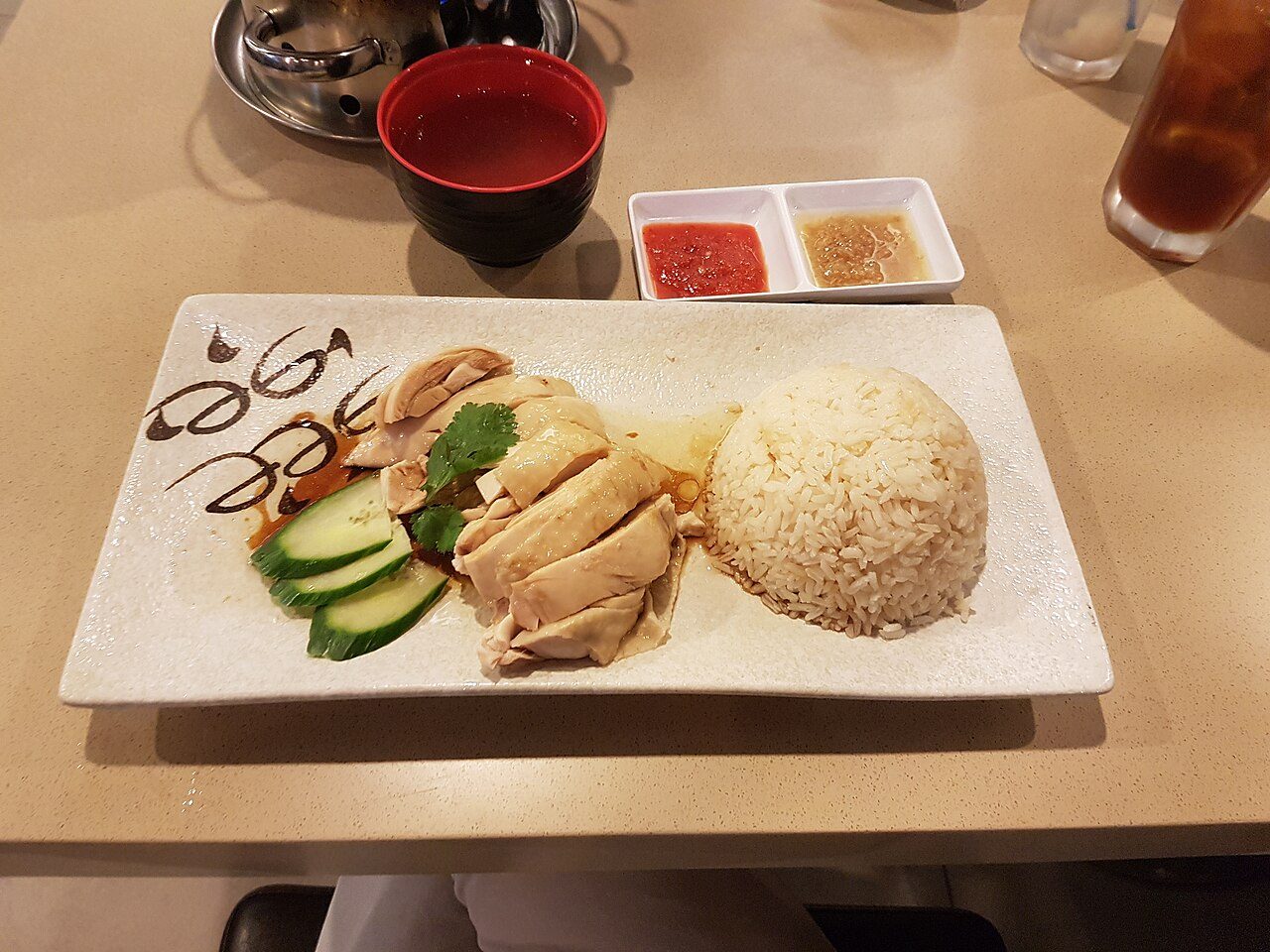
6 min read · 2 sourcesHainanese chicken rice is a dish of poached or roasted chicken with seasoned rice, served with chilli sauce and usually with cucumbers, tomato slices or cilantro garnishes. It was created by immigrants from Hainan in southern China and adapted from the Hainanese dishes of Wenchang chicken and Wenchang chicken rice. The dish can be found throughout Southeast Asia where Hainanese people settled, particularly in Cambodia, Indonesia, Malaysia, Thailand, and Vietnam, where it remains a culinary staple. It is widely considered one of the national dishes of Singapore, and is commonly associated with Singaporean cuisine, being widely available in most food courts and hawker centres around the country. 1
History
Hainanese chicken rice is a dish adapted from early Chinese immigrants originally from Hainan province in southern China. It is based on a well-known Hainanese dish called Wenchang chicken, which is one of four important Hainan dishes dating to the Qing dynasty. The original dish was adapted by the Hainanese overseas Chinese population in the Nanyang area (present-day Southeast Asia). The Hainanese in China traditionally used a specific breed, the Wenchang chicken, to make the dish. They would usually cook rice with the leftover chicken stock to create a dish known as "Wenchang chicken rice" (文昌鸡饭). Wenchang chicken rice remained a dish for special occasions in Hainanese homes in Singapore until the 1940s. There is a shared culture of seasoned rice dishes across Hainan and the Leizhou peninsula. Wenchang chicken rice is closely related to another chicken rice dish known as Anpu chicken rice (安铺鸡饭) from Zhanjiang in western Guangdong province, and Anpu chicken rice is speculated to be the predecessor to Wenchang chicken rice. The city of Zhanjiang is also known for its wild betel rice (蛤蒌饭) and duck rice (鸭仔饭). 1
Almost every country in Asia with a history of immigration from China has a version of Hainanese chicken rice. The San Francisco Chronicle says, "the dish maps 150 years' immigration from China's Hainan Island...to Singapore and Malaysia, where the dish is often known as Hainan chicken rice; to Vietnam, where it is called "Hai Nam chicken"; and to Thailand, where it has been renamed khao man gai ("chicken fat rice")." When it comes to the history of Wenchang chicken, according to the records of Lin Zhemin from the Livestock and Veterinary Research Institute of Hainan Province, it has long been a delicacy used by local officials and people to entertain guests. 1
Controversy over origin
In a debate that stretches back decades to 1965, when the two countries split, Malaysia and Singapore have both laid claim to inventing the dish. In 2009, Malaysian Tourism Minister Ng Yen Yen said that Hainanese chicken rice was "uniquely Malaysian" and had been "hijacked" by other countries. Ng later clarified that she was misquoted on her intention to patent the foods, and that a study on the origins of the foods would be conducted "and an apology conveyed if it was wrongly claimed." In 2018, then Malaysian Finance Minister Lim Guan Eng joked that Singapore claimed "chicken rice is theirs (and) if we're not careful, 'char koay teow' will become theirs" one day. The debate has been described as an example of gastronationalism. 1
Reception
Catherine Ling of CNN called Hainanese chicken rice one of the "40 Singapore foods we can't live without". It was listed as one of the "World's 50 best foods" by CNN in 2018. David Farley of the BBC called it "the dish worth the 15-hour flight" and said it was "deceptively simple – which is good, because on paper it sounds awfully boring." Saveur called it "one of the most beloved culinary exports of Southeast Asia." 1
Malaysia
In Malaysia, nasi ayam (lit. "chicken rice" in Bahasa Melayu) is "a culinary staple" and a popular street food, particularly in Ipoh, a center of Hainanese immigration. The general term nasi ayam can refer to multiple variations including roasted and fried chicken, can be served with a variety of sauces including barbecue, and can be accompanied by a variety of side dishes including steamed rice rather than seasoned 'oily' rice, soup, or chicken offal. In Malacca and Muar, the rice is served in balls rather than in bowls; this dish is commonly known as Chicken rice balls. Steamed rice is shaped into golf ball-sized orbs and served alongside the chopped chicken. 1
Singapore
In Singapore, the dish was born out of frugality, created by servant-class immigrants trying to utilise limited sources to its maximum. An old hen which had passed its egg-laying years would be slaughtered to be cooked into broth and rice to extract the chicken flavour. The first chicken rice restaurants opened in Singapore during Japanese occupation in World War II, when the British were forced out and their Hainanese servants lost their source of income. One of the first was Yet Con, which opened in the early 1940s. There were also sources stating that Wang Yiyuan, a street hawker, first started selling "chicken rice balls wrapped in banana leaves" in Singapore during the 1920s. The dish was popularised in Singapore in the 1950s by Moh Lee Twee, whose Swee Kee Chicken Rice Restaurant operated from 1947 to 1997. Hong Kong food critic Chua Lam credits Moh with the creation of the dish. Hainanese chicken rice is considered one of Singapore's national dishes. It is eaten "everywhere, every day" in Singapore and is a "ubiquitous sight in hawker centres across the country". The chicken is typically served with seasoned rice, with chilli sauce and usually with cucumber garnishes. While most commonly associated with Singaporean cuisine, the dish is also seen throughout Southeast Asia and in parts of the United States, where the dish is named "Singapore chicken rice" in some places. The dish is widely popular in Singapore and can be found in hawker centres, restaurants and hotels. The chicken is prepared in accordance with traditional Hainanese methods, which involve poaching the entire chicken at sub-boiling temperatures to both cook the chicken and produce the stock. 1
The text above is adapted from the Wikipedia article “Hainanese chicken rice”, available under the Creative Commons Attribution-ShareAlike 4.0 licence. 1
Hainanese chicken rice is Rice and chicken dish originating from Hainan island, according to the structured record cited below. This entry was generated automatically from that record and has not yet been reviewed by a person familiar with the tradition. 2
The source record links this tradition to 5 external registers, which can be verified through the citation. 2