The tradition & historical record
2 min read · 2 sourcesHalušky is a traditional variety of thick, soft noodles or dumplings found in many Central and Eastern European cuisines under various local names. 1
Varieties
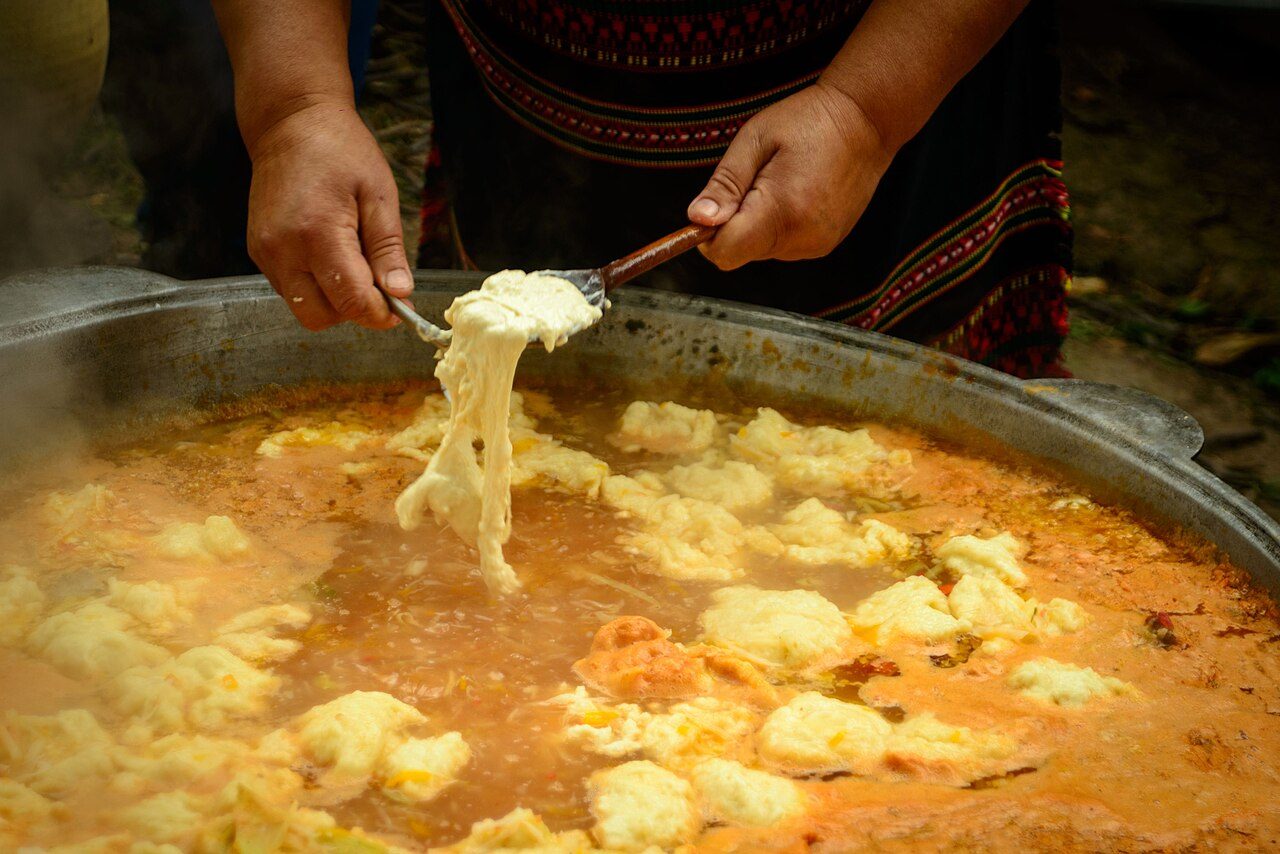
The term halušky can refer to the dumplings themselves, or to a complete dish containing other ingredients. Typically the dish described is noodles with sauteed cabbage and onions. Bryndzové halušky, which combines the noodles with a soft sheep's cheese, is one of the national dishes of Slovakia. In Hungary it is eaten with cheese, sour cream, cottage cheese, egg custard, semolina and butter all throughout the country, while in Slovakia it is eaten with sheep's cheese and bacon or spinach. In certain regions of the Antalya Province in South Turkey, holuşka is made with larger dumplings than its counterparts in Central and Eastern Europe. Large halushky made from soft dough with optional filling are a stereotypical dish of Poltava region in Ukraine. Historically, Poltava halushky would be made from buckwheat flour and boiled in a broth known as shcherba. A related Ukrainian dish known as tovchenyky includes halushky dough boiled or stewed with fish or meat. 1
Related terms
A haluskar is a kitchen utensil used to drop batter into stock to create the noodles. 1
The text above is adapted from the Wikipedia article “Halušky”, available under the Creative Commons Attribution-ShareAlike 4.0 licence. 1
halušky is thick, soft noodles or dumplings in various Central and Eastern European cuisines, according to the structured record cited below. This entry was generated automatically from that record and has not yet been reviewed by a person familiar with the tradition. 2
The source record links this tradition to 3 external registers, which can be verified through the citation. 2