The tradition & historical record
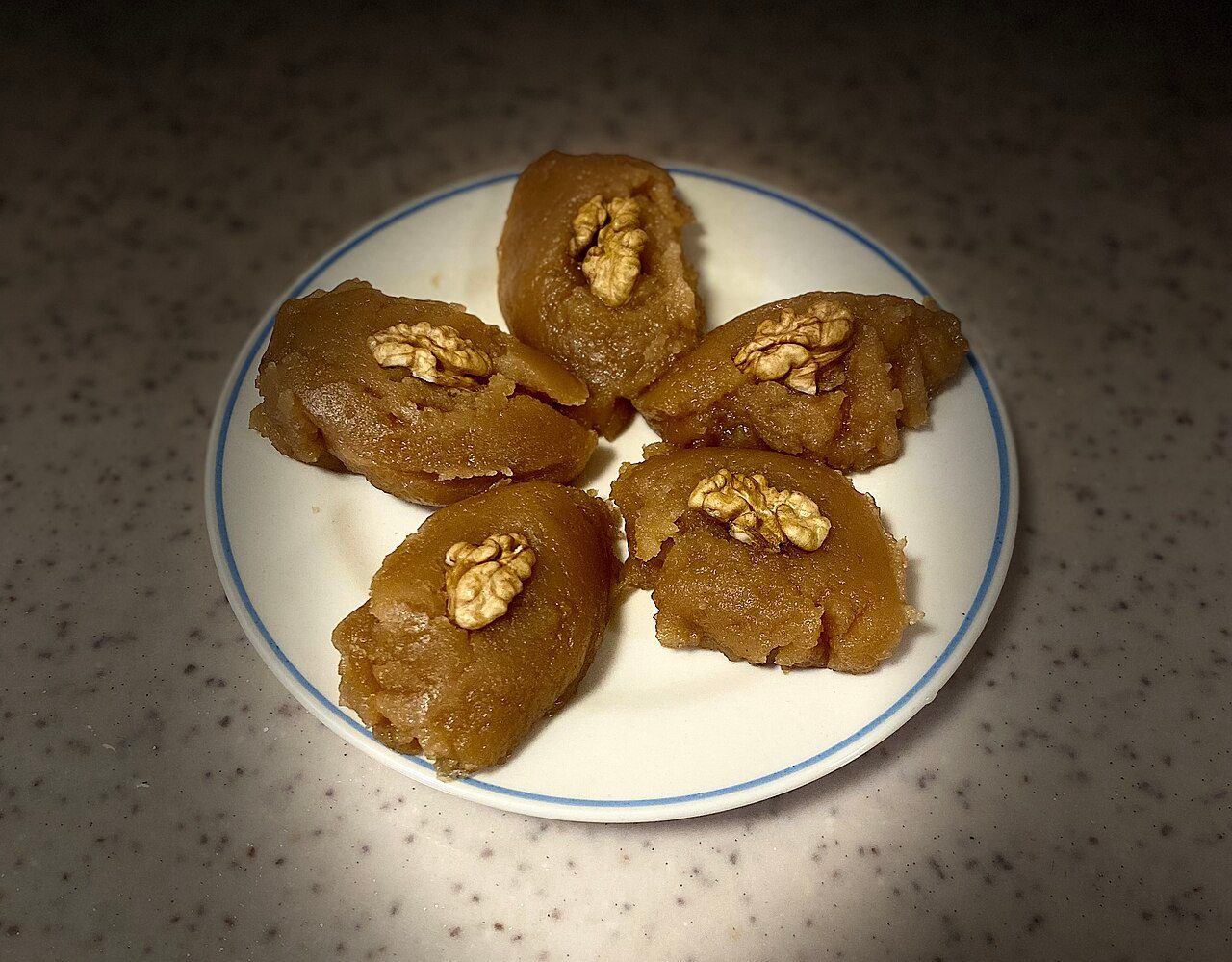
4 min read · 2 sourcesHalva (also halvah, halwa, halua) is a type of confectionery that is found throughout North Africa, East Africa, Eastern Europe, the Balkans, West Asia, Central Asia, South Asia, and the Levant. The name refers to a broad variety of recipes, generally a thick paste made from flour, butter, oil, saffron, rosewater, milk, turmeric powder, and sugar. 1
Etymology
The word halva entered the English language between 1840 and 1850 from Romanian, which came from Ottoman Turkish: حلوى, romanized: helva, itself ultimately derived from Arabic: حلاوة, romanized: ḥalwat to Persian: حلوا, romanized: halwā, a sweet confection. The root in Arabic: ح ل و, romanized: ḥ-l-w, means "sweet". In the pre-Islamic period, the name for the category of confections that would develop into halva was 𐭬𐭱𐭩𐭠 𐭧𐭥𐭫𐭲𐭩𐭪 rōγn xwardīg in Middle Persian, literally meaning "oil food". 1
History
Halva originated in Persia (modern-day Iran). In the 7th century in the Arabian Peninsula, the word denoted a paste of dates that had been kneaded with milk. By the 9th century, the term was applied to numerous kinds of sweets, including the now-familiar sweetened cooked semolina or flour paste. The first proper recipes of halva were documented in the 13th-century Arabic cookbook Kitab al-Tabikh (The Book of Dishes), as well as an anonymous cookbook from 13th-century Al-Andalus. Athenaeus mentions an ancient Greek dish called "sesamidios" (Ancient Greek: σησαμίδιός), which is described as a spherical cake made of honey, roasted sesame seeds, and oil; this dish is considered to have been the same as the sesame seed-based version of halva. Halva was also eaten in the Byzantine Empire, where it was well-attested. Later, it was adopted by the Ottoman Turks, including the sesame-based version, and spread throughout their empire. A description of sesame-based halwa (called Arabic: حلاوة طحينية) can be found in an 1844 dictionary by Swedish Orientalist Jacob Berggren. According to Al Adib magazine, a factory for tahini halwa was established as early as 1874 in Beirut. 1
Types
Most types of halva are relatively dense confections sweetened with sugar or honey. Their textures, however, vary. For example, semolina-based halva's texture can range from a buttery, moist, clumpy couscous to something gelatinous and translucent, while sesame-based halva is drier and more crumbly. 1
Grain-based halva
Grain-based halva is made by toasting flour or cornstarch in oil, mixing it into a roux, and then cooking it with a sugary syrup. Corn is rarely used. Dishes made from wheat semolina include suji ka halwa in India, Pakistan, Shujir Halua in Bangladesh and irmik helvası in Turkey. In these dishes, semolina is toasted in fat, either oil or butter, and then mixed with water or milk and sugar to achieve the desired flavor and consistency. Wheat-based sohan halwa in northern India and Pakistan is a renowned delicacy made by combining wheat flour with milk, sugar, clarified butter, cardamom, saffron, and nuts such as almonds and pistachios. The mixture is slow-cooked, allowing the sugar to caramelize, which gives Sōhan halvā its firm and brittle texture. 1
Dairy-based rice flour halva, known as Pathein halawa, is considered a Burmese delicacy native to the city of Pathein. 1
Sesame
Sesame halva is popular in the Balkans, Poland, the Middle East, and other areas surrounding the Mediterranean Sea. The primary ingredients in this confection are sesame butter or paste (tahini), and sugar, glucose or honey. Soapwort (called ‘erq al halaweh in Arabic; çöven in Turkish), or egg white are added in some recipes to stabilize the oils in the mixture or create a distinctive texture for the resulting confection. Other ingredients and flavorings, such as pistachio nuts, cocoa powder, orange juice, vanilla, or chocolate are often added to the basic tahini and sugar base. 1
The text above is adapted from the Wikipedia article “Halva”, available under the Creative Commons Attribution-ShareAlike 4.0 licence. 1
halva is confections often made from nut butters or flours, according to the structured record cited below. This entry was generated automatically from that record and has not yet been reviewed by a person familiar with the tradition. 2
The source record links this tradition to 14 external registers, which can be verified through the citation. 2