The tradition & historical record
4 min read · 2 sourcesIn Nordic mythology and folklore, Old Norse: hamr (Danish: ham; Faroese: hamur; Icelandic: hamur; Norwegian: ham; Swedish: hamn) is a magical shape or figure in which the mind or spirit (hug, Old Norse: hugr) could manifest itself outside the body during a dream or an ecstasy. It is a type of magical shapeshifting used for disguise or some undertaking. The word also exists in English as hame and heam, from Old English: hama, meaning "shroud, casing, covering, skin, membrane". 1
Etymology
The root word stems from a Proto-Indo-European root for "covering", related to "chamber" and German: hemd ("shirt"). The Swedish Academy gives the full Swedish sense as: 1
1) (†) amniotic sac (compare 'foal hamr', "amniotic sac of a foal"); 2) (†) about skin that covers a body; 3) shape, form, figure; especially, in terms of root perception, about the external form that is thought of as a covering around the soul, especially about animal form that humans or gods were sometimes thought to assume; also figuratively; nowadays almost only in the expression shift or change hamr, in the presentation of root perception, also (now only in a vulgar style, rarely used) in the extended sense, about the external costume in which someone appears, costume, clothing, covering, garb; often in terms of disguise or dressing up (compare: animal-, bear-, eagle-, falcon-, hawk-, female-, human-, servant-, troll-, among more). 4) (now especially in the vulgar style) about a deceased spirit, ghost, "shadow" (though without the connotation of something dark). 1
Shapeshifting
It was believed that the soul could travel between the body and different forms through so-called "hamr shifts" (Swedish: hamnskifte). In particular, people skilled in witchcraft and sorcery were said to have been able to put themselves in such a state that they could see into other worlds by assuming such a form. The different forms could be of an animal like a bear, eagle, falcon, sheep, swan (compare Leda and the Swan), wolf, etc. Compare the Swedish expression en ulv i fårahamn, lit. 'a wolf in sheep's hamr', "someone who does not show their true self". When shapeshifted, the user would carry the same properties, abilities, and limitations of the chosen hamr. 1
Shapeshifting costume
A feather hamr (bird hamr) is sometimes depicted as a feathered costume that one wears, such as the case with Freyja's falcon hamr. A similar trait could have been present with berserkers and wolfheathens, totem warriors who wore pelts from bear and wolf, respectively. This belief of associating hamr shapeshifting with a costume is a common element in later Norwegian folklore. This likely is related to the root sense of the word, a Proto-Indo-European root for "covering", which exists as a broad sense in several languages – see § Etymology. 1
Norse mythology
In Norse mythology, a multitude of characters are able to shapeshift. The Valkyries would shift into ravens when surveying battlefields in search of fallen warriors for Valhalla, transporting such to the afterlife in disguise as a pair of swans. 1
Among the Æsir, Freyja's falcon hamr is the most talked about. She sometimes lent it to other gods when they needed to travel into the world. The giants Þjazi and Suttungr had an eagle hamr. Loki could transform into various creatures, infamously a mare (a female horse), upon which he became pregnant with the eight-legged horse Sleipnir. Odin infamously likes to disguise himself as an old man, which may or may not be a hamr. It could also be that he magically disguises as himself, granting the ability that no one recognizes him. The Sigurd-saga infamously features several characters who shapeshift, such as Otr (lit. 'Otter'), who is shifted into an otter when he is killed, Andvari, who is shifted into a fish, and Fafnir, who shifts into a dragon to guard his trasures. 1
Nordic folklore
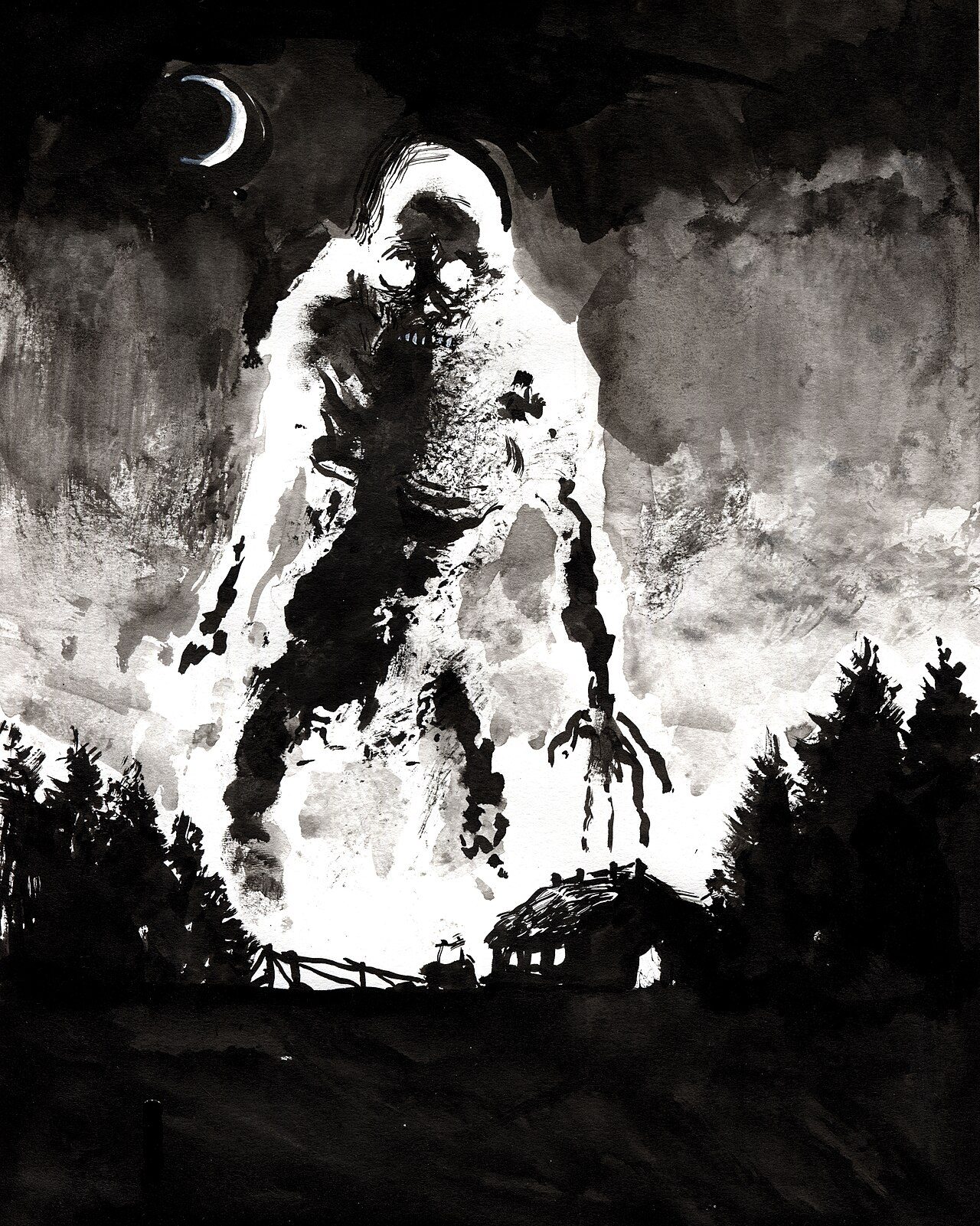
In Nordic folklore, the folk belief of shapeshifting continued way past the pagan days, in rural populations into the early modern period and beyond. It was believed that evil-minded people and trolls could shift into the form of bears (Swedish: hamnbjörn, lit. 'hamr bear') and wolves (Swedish: hamnvarg, lit. 'hamr wolf') and then attack people or their livestock in anger. In 1935, on the so called "Dead man's headland" (Dödmansudden) at Hottön in Mörsil, Jämtland, Sweden, a memorial stone was erected, called the "Bear Stone" (since 1965 it has been moved to another location). The stone tells the story of two people who fell to a hamr bear in 1691. The stone reads: 1
The text above is adapted from the Wikipedia article “Hamr (folklore)”, available under the Creative Commons Attribution-ShareAlike 4.0 licence. 1
hamr is Shapeshifting and out-of-body manifestations in Nordic folklore, according to the structured record cited below. This entry was generated automatically from that record and has not yet been reviewed by a person familiar with the tradition. 2