The tradition & historical record
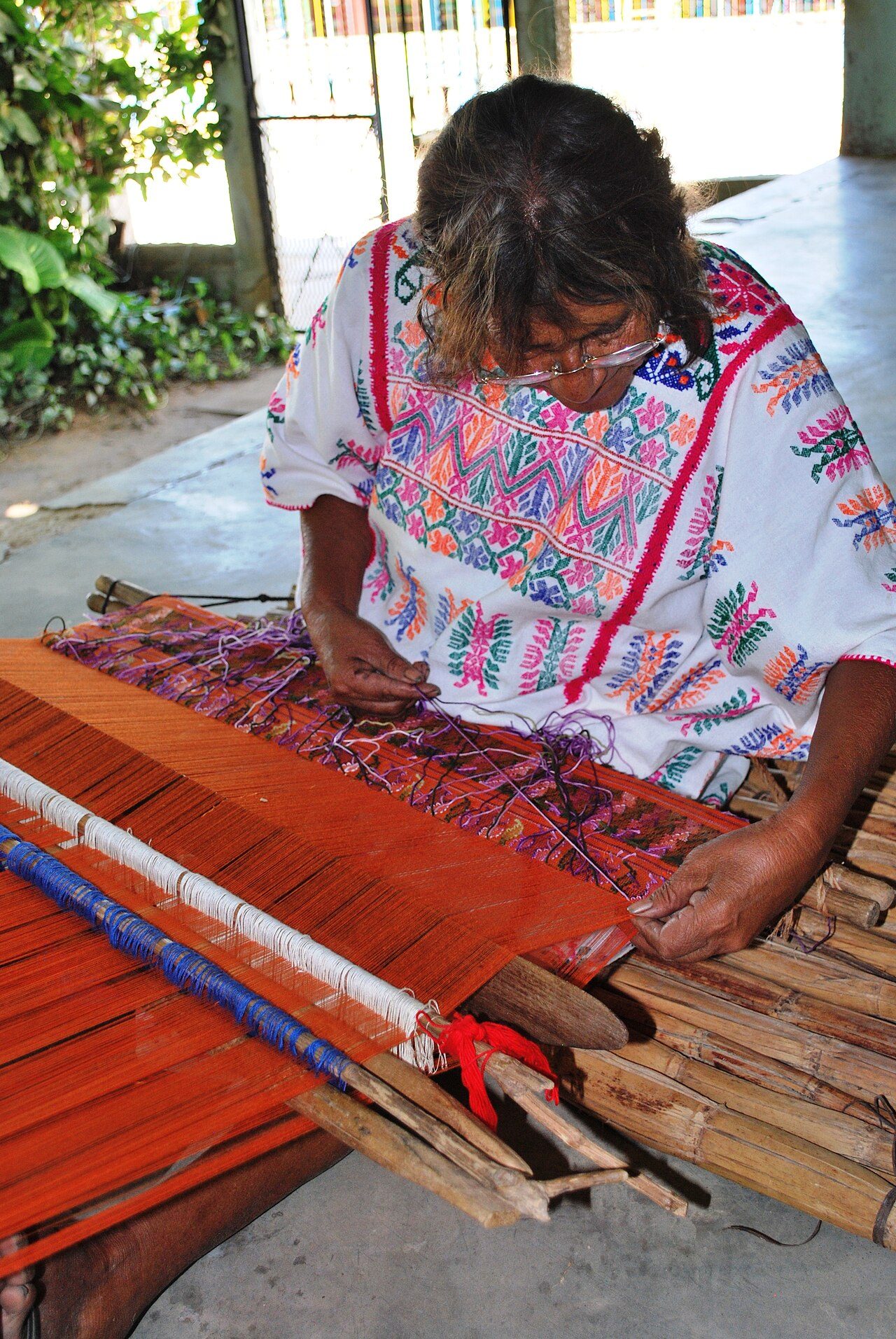
6 min read · 2 sourcesThe handcrafts of Guerrero include a number of products which are mostly made by the indigenous communities of the Mexican state of Guerrero. Some, like pottery and basketry, have existed relatively intact since the pre Hispanic period, while others have gone through significant changes in technique and design since the colonial period. Today, much of the production is for sale in the state's major tourism centers, Acapulco, Zihuatanejo and Taxco, which has influence the crafts’ modern evolution. The most important craft traditions include amate bark painting, the lacquerware of Olinalá and nearby communities and the silverwork of Taxdo. 1
History
Evidence of art and handcraft production in the state dates back to about 300 BCE, with the earliest showing Olmec influence. In the 7th century, the Mezcala people established themselves in the region, introducing stone sculpture and ceramics, of Teotihuacan heritage. The Aztecs conquered much of the region, with some handcraft production becoming important tribute items, for example, gold worked into pieces for nobility and priests. After the Spanish conquest of the Aztec Empire, European techniques, designs and materials were introduced, which drastically changed how a number of products were made, and some indigenous products disappeared completely. Many of the colonial period handcrafts, such as palm frond, metal and basket making, continue to the present day, buoyed to a large extent by tourism. In 1988 the state established an agency to preserve and preserve Guerrero's culture, including its handcrafts. 1
Overview
The handcrafts of the state reflect its socio-economic situation. The handcraft tradition is important not only culturally, but also because it provides much of the state's income, especially in small, isolated indigenous communities, which rely on it for most or all of its income. For this reason, Guerrero's handcrafts show a strong indigenous nature, although European and even Asian influence can be seen in its aesthetics and techniques. Modern handcraft production in the past decades has been strongly influence by sales in the state's three main tourist centers, Acapulco, Zihuatanejo and Taxco. The main handcraft market within the state is Acapulco, both for goods made in Guerrero and other parts of the country. While there are locations selling high-quality wares, most are of low quality, especially those made from seashells. Because of the mix of cultural influences, past and present, some crafts, such as pottery, show a wide range of styles and decorative motifs. 1
Paintings
One of the state's better known crafts is the painting of images onto amate (bark) paper, done in Nahua communities such as Ameyaltepec, Maxela, Xalitla and San Agustin de las Flores. One reason for its prominence is that it is very popular with tourists. It is popular with artisans as well, as the paintings yield a higher income than pottery. Although more colorful, the paintings are based on the sepia designs of certain traditional pottery, which in turn have roots in pre Hispanic codices. However, since it is a new craft, it is still evolving Initially the motifs were of animals and plants but then human figures began to appear, placed in scenes and landscapes. The amate paper is not made in the state of Guerrero, but rather it is from the state of Puebla, in particular from San Pablito in the Sierra Norte region. The paintings have become a characteristic of the state's handcraft tradition. Painters have been commissioned to create murals both in Mexico and abroad. and a number have taken the work to canvas, but still mostly sold in tourist markets. 1
Lacquerware
Another important product is lacquerware, part of a larger Mesoamerican craft tradition. Most is produced in Olinalá, but there are also production in nearly Acapetlahuaya and Temalscacingo. Lacquer work dates back to the pre Hispanic period, when it was used to preserve and decorate wood objects, gourds and more. It survives mostly intact, with changes only in decorative motifs through the colonial period to modern times. Until recently, most wood items were made from a fragrant species called linaloe, but over exploitation has made it scarce and expensive. While historically both chia seed oil and a waxy substance from an insect larvae were both used, today only chia seed oil is used, mixed with mineral or vegetable pigments. Most Guerrero lacquerware is distinguished by the use of a “scratch” (rayado) technique for decoration, although pieces with inlay or painted motifs are also made. The rayado technique has its origins from Asian pieces brought by the Manila Galleon, but the current incarnation became popular in the 20th century. The technique consists of two or more layers of lacquer of different colors. When the new layer is added on top of the old, it is scraped with a tool such as a quill before it is dried to expose the color underneath in areas. The designs appear to be in relief. The color is generally over a base of red, white or black. The items that are lacquered today include boxes, chests, gourds. 1
Silver and other metals
The working of silver and gold date from the pre Hispanic period, when these metals, especially gold, was an important tribute item. The metals were worked into ceremonial and decorative objects reserved for the nobility and priests. Today, the best known work of this type is the silver objects, especially jewelry, produced in the mountain town of Taxco, about three hours from Mexico City. During the colonial period, the area was rich in silver, making one man, José de la Borda, particularly wealthy. However, the mines eventually dried up and the working of this metal was down to one old silversmith by 1931, when American William Spratling arrived. Believing that the handcrafting of silver should be done where the metal has a history, Spratling convinced two young gold smiths in Iguala to move to Taxco to help him open a shop. He also believed that the role of designers, was to “utilize and dignify” the material, which was a new ideal for craftsmen at the time. Spratling's shop was not only a success, he attracted apprentices who then went on to open their own shops, including noted artisans Antonio Castillo and Antonio Pineda. These new generations of silversmiths have also rescued a forgotten technique of combining different metals, which has a pre Hispanic origin, called “wedded metals.” The craft remains important in Taxco, buoyed by the town's status as a tourist attraction, as well as the National Silver Fair (Feria Nacional de la Plata) and competition in the last week of November. Most of the town's production is sold to tourists, and is taken out of Mexico. 1
The text above is adapted from the Wikipedia article “Handcrafts of Guerrero”, available under the Creative Commons Attribution-ShareAlike 4.0 licence. 1
handcrafts of Guerrero is recorded in open cultural data. The structured record cited below does not describe the practice, and this entry has not yet been reviewed by a person familiar with the tradition. 2
The source record links this tradition to 1 external register, which can be verified through the citation. 2