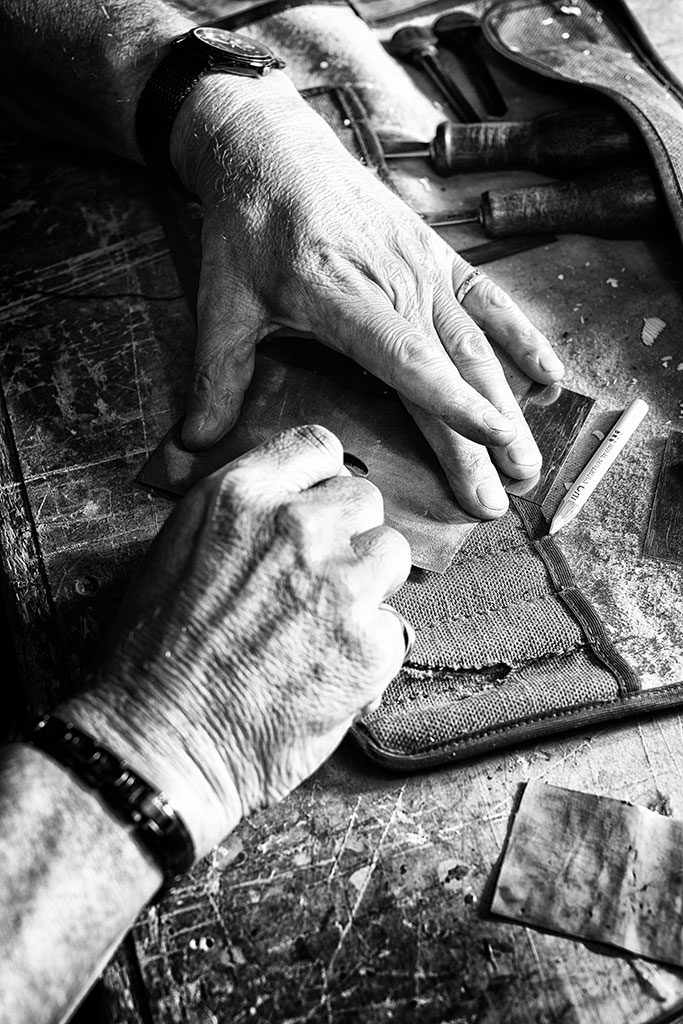
The tradition & historical record
6 min read · 2 sourcesA handicraft is a traditional main sector of craft making and applies to a wide range of creative and design activities that are related to making things with one's hands and skill, including work with textiles, moldable and rigid materials, paper, plant fibers, clay, etc. Usually, the term is applied to traditional techniques of creating items (whether for personal use or as products) that are both practical and aesthetic. Handicraft industries are those that produce things with hands to meet the needs of the people in their locality without using machines. Collective terms for handicrafts include artisanry, crafting, and handcrafting. The term arts and crafts is also applied, especially in the United States and mostly to hobbyists' and children's output rather than items crafted for daily use, but this distinction is not formal, and the term is easily confused with the Arts and Crafts design movement, which is in fact as practical as it is aesthetic. Handicraft has its roots in the rural crafts—the material-goods necessities—of ancient civilizations, and many specific crafts have been practiced for centuries, while others are modern inventions or popularizations of crafts which were originally practiced in a limited geographic area. One of the oldest handicraft is Dhokra; this is a sort of metal casting that has been used in India for over 5,000 years and is still used. 1
The Arts and Crafts movement in the West
The Arts and Crafts movement originated as a late-19th-century design reform and social movement principally in Europe, North America and Australia, and continues today. Its proponents are motivated by the ideals of movement founders, such as William Morris and John Ruskin, who proposed that in pre-industrial societies, such as the European Middle Ages, people had achieved fulfillment through the creative process of handicrafts. This was held up in contrast to what was perceived to be the alienating effects of industrial labor. 1
These activities were called crafts because originally many of them were professions under the craft guild system. Adolescents were apprenticed to a master craftsman and refined their skills over a period of years in exchange for low wages. By the time their training was complete, they were well equipped to set up in trade for themselves, earning their living with the skill that could be traded directly within the community, often for goods and services. 1
In modern education
Simple "arts and crafts" projects are a common elementary and middle school activity in both mainstream and alternative education systems around the world. In some of the Scandinavian or Nordic countries, more advanced handicrafts form part of the formal, compulsory school curriculum, and are collectively referred to as slöjd in Swedish, and käsityö in Finnish. Students learn how to work mainly with metal, textile and wood, not for professional training purposes as in American vocational–technical schools, but with the aim to develop children's and teens' practical skills, such as everyday problem-solving ability, tool use, and understanding of the materials that surround us for economical, cultural and environmental purposes. Secondary schools and college and university art departments increasingly provide elective options for more handicraft-based arts, in addition to formal "fine arts", a distinction that continues to fade throughout the years, especially with the rise of studio craft, i.e. the use of traditional handicrafts techniques by professional fine artists. Many community centers and schools run evening or day classes and workshops, for adults and children, offering to teach basic craft skills in a short period of time. 1
Handicraft production
Handicraft production or craft production is a small-scale production of products using manual labor. It was especially common in the Middle Ages, during the era of the Industrial Revolution it was mainly supplanted by mass production, however, it still exists for the production of goods such as luxury goods. The "handmade effect" is a phenomenon where consumers exhibit a preference for products that are crafted by human labor rather than produced through automated or robotic processes. This preference is particularly pronounced for products with higher symbolic value, where expressing one's beliefs and personality holds greater significance. Consumers, especially in contexts emphasizing symbolic consumption, have a stronger motivation for uniqueness and associate human labor more closely with product uniqueness. In product categories where mechanical production is common, consumers are more attracted to products labeled as handmade. The positive handmade effect on product attractiveness is driven, in large part, by the perception that handmade products symbolically "contain love." The handmade effect is influenced by two key factors. Firstly, consumers express stronger intentions to purchase handmade products when buying gifts for loved ones, compared to more distant recipients. Secondly, they are willing to pay a higher price for handmade gifts when the purchase is motivated by the desire to convey love rather than simply acquiring the best-performing product. The handicraft method of production has been used by people since ancient times. 1
Craft production at the community scale
Craft production is a part of the informal economy in many cities, such as Istanbul, Turkey where the informal craft economy is a vital source of income for the Turkish craftspeople. Craft markets are highly dependent on social interactions, and verbal training which results in variations in the goods produced. Often, the craft economy consists of craft neighbourhoods, by which a community is structured on the craft activity present in the area. Often used in the household, many craft goods such as historic Mumun Pottery in Korea, originated from the need for economic alternatives to meet household needs. Changes in the craft economies have often coincided with changes in household organization, and social transformations, as in Korea in the Early to Middle Mumun Period. Given that craft production requires an intimate knowledge of methods of production from an experienced individual of that craft, the connection between trades people is highly evident in craft communities. The production of many crafts have a high technical demand, and therefore require full-time specialization of the skill-set in the form of workshops, or verbal, hands-on training. The verbal interaction between teacher and student encourages strong social bonds, which ultimately leads to cohesive communities, typical of modern-day craft communities. 1
Craft economies and location
Craft economies are highly related to place. Craft-specialization explores how portable goods are integral to the social relations of a community, and links groups of people together through the creation of tangible items. Places where craft economic activity is taking place indicate strong linkages between sociopolitical organization and societal complexity. 1
The text above is adapted from the Wikipedia article “Handicraft”, available under the Creative Commons Attribution-ShareAlike 4.0 licence. 1
handicraft is field of work where useful and decorative objects are made completely by hand or by using only simple tools, according to the structured record cited below. This entry was generated automatically from that record and has not yet been reviewed by a person familiar with the tradition. 2
The source record links this tradition to 54 external registers, which can be verified through the citation. 2