The tradition & historical record
3 min read · 2 sourcesHandloom saris are a traditional textile art of Bangladesh and India. The production of handloom saris is important for economic development in rural India.Completion of a single sari takes two to three days of work. Several regions have their own traditional styles of weaving handloom saris. 1
The weaving process
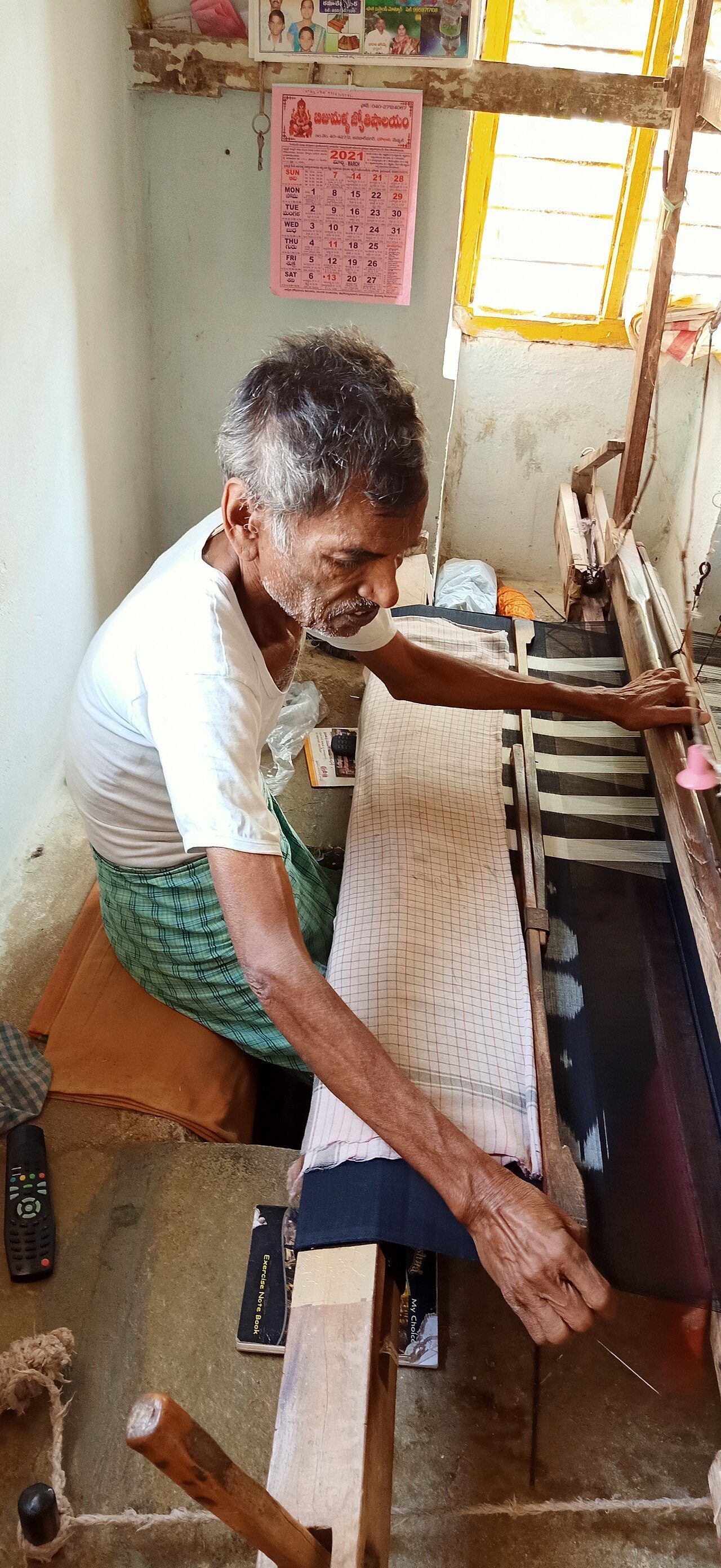
A handloom sari is often woven on a shuttle-pit loom made from ropes, wooden beams and poles. The shuttle is thrown from side-to-side by the weaver. Other weavers use a fly-shuttle loom which can produce different types of patterns. The saris can vary in size and quality. Handloom sari weaving is generally a family business and is one of India's cottage industries. The handloom saris are made from silk or cotton threads. The handloom weaving process requires several stages in order to produce the final product. Traditionally the processes of dyeing (during the yarn, fabric, or garment stage), warping, sizing, attaching the warp, weft winding and weaving were done by weavers and local specialists around weaving villages. However, currently most of the activities are outsourced. 1
Major regional weaving traditions
Weaving takes place in many regions of India. Each region follows traditions for the motifs, designs and colours. Handloom weaving takes place in villages supporting lakhs (hundred thousands) of families for their livelihoods. 1
Types of handloom saris
Tant sari is a traditional sari of Bangladesh. "Tant" means "Handloom" in Bengali language. Handloom industry in Tangail is famous for its Tangail saris which are also a type of Tant sari. Some of the well-known Indian handloom saris are Kanchipuram silk saris, Maheshwari saris, Bagh print saris, Chanderi silk saris, Tussar silk saris, Banarasi silk saris, Baluchuri saris, Sambalpuri saris, Kantha stitch saris, Bandhani saris and Munga saris.Munga saris, and Narayanpet handloom saris, which are known for their checkered patterns and temple-style borders.” Some handloom saris are made out of high-quality silk fabric, which is valued for its lustre. 1
Tant sari
Tant saris are one of the earliest sari weaving techniques. It is the most common cloth used by Bengali women. Bengal Tant handlooms especially thrived during the Mughal period in Dhaka and Sonargaon, where it received immense support from the royalty with muslin and jamdani which are now a Intangible cultural heritage as well as Gi products of Bangladesh. 1
Tangail saris
Tangail weaving stands as one of Bangladesh's oldest cottage industries, with Tangail weave sarees gaining global appreciation.The immensely popular Handloom sarees from, Tangail, Bangladesh are known for their finer count and intricate designs, with extra warp designs using coloured yarn. 1
The text above is adapted from the Wikipedia article “Handloom sari”, available under the Creative Commons Attribution-ShareAlike 4.0 licence. 1
handloom sari is sari woven by hand-operated loom, according to the structured record cited below. This entry was generated automatically from that record and has not yet been reviewed by a person familiar with the tradition. 2
The source record links this tradition to 1 external register, which can be verified through the citation. 2