The tradition & historical record
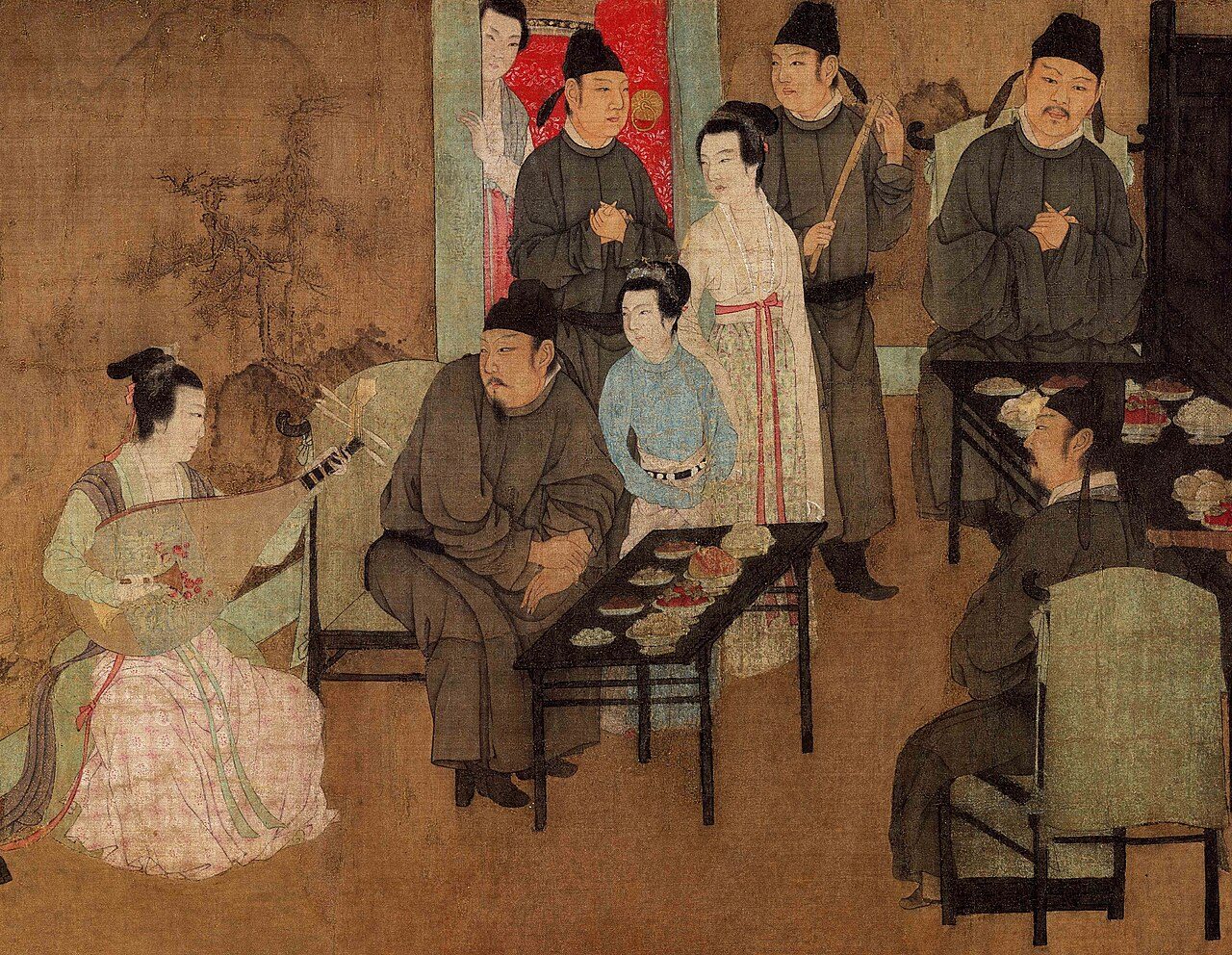
6 min read · 2 sourcesHanfu (simplified Chinese: 汉服; traditional Chinese: 漢服; pinyin: Hànfú, lit. "Han clothing"), also known as Hanzhuang (simplified Chinese: 汉装; traditional Chinese: 漢裝; pinyin: Hànzhuāng, "Han attire") or traditional Chinese clothing, are historical Chinese clothings worn by the majority Han Chinese people from at least the 2nd millennium BC to the mid-17th century AD — encompassing nearly all of the recorded history of China up to the end of the Ming dynasty — until violent conquest and forced assimilation by the Qing dynasty led to their replacement by the Manchu qizhuang and magua in a historical event known as Tifayifu. Due to the rise of China since the start of the 21st century, there is currently a growing cultural movement among the younger generations in Mainland China and the Chinese diaspora to revive and reinstate hanfu as the genuine, orthodox representative of Chinese culture and aesthetics, as opposed to the Manchu-inspired qipao and tangzhuang and the Japanese school uniform (gakuran)-inspired Mao suit. There are several representative styles of hanfu, such as the ruqun (a long skirt worn high over the upper garment), aoqun (an upper garment with a long underskirt), beizi (a loose-fitting, open-front coat) and shenyi (one-piece robe), and the shanku (an upper-body garment with trousers). 1
History
Hanfu generally comprises all historical clothing classifications of the Han Chinese with a recorded history of more than three millennia. Each succeeding dynasty produced their own distinctive dress codes, reflecting the socio-cultural environment of the times. Clothing made of silk was initially used for decorative and ceremonial purposes. The cultivation of silk, however, ushered the development of weaving, and by the time of the Han dynasty, brocade, damask, satin, and gauze had been developed. From the beginning of its history, hanfu (especially in elite circles) was inseparable from silk and the art of sericulture, supposedly discovered by the Yellow Emperor's consort Leizu, who was also revered as the Goddess of sericulture. There is even a saying in the Book of Change, which says that: 1
Huang Di, Yao, and Shun (simply) wore their upper and lower garments [衣裳; yī cháng] (as patterns to the people), and good order was secured all under heaven Hanfu had changed and evolved with the fashion of the days since its commonly assumed beginnings in the Shang dynasty. Many of the earlier designs are more gender-neutral and simpler in cut than later examples. Later garments incorporate multiple pieces with men commonly wearing pants and women commonly wearing skirts. Clothing for women usually accentuates the body's natural curves through wrapping of upper garment lapels or binding with sashes at the waist. From ancient times, the ru upper garments of hanfu were typically worn wrapped over the front, in a style known as jiaoling youren; the left side covering the right side and extend to the wearer's right waist. Initially, the style was used because of the habit of the right-handed wearer to wrap the right side first. 1
Shang dynasty, 2nd millennium BCE
In China, a systemic structure of clothing was first developed during the Shang dynasty, where colours, designs, and rules governing use was implemented across the social strata. Only primary colours (i.e. red, blue, and yellow) and green were used due to the degree of technology at the time. The rudiments of hanfu was developed in this period; the combination of upper and lower garments, called yichang, was usually worn with a bixi. The jiaoling youren yi a style of upper garment, started to be worn during this period. In winter, padded jackets were worn. The ku or jingyi, which were knee-high trousers tied onto the calves but left the thighs exposed, were worn under the chang. During this period, this clothing style was unisex. Only rich people wore silk; poor people continued to wear loose shirts and ku made of hemp or ramie. An example of a Shang dynasty attire can be seen on an anthropomorphic jade figurine excavated from the Tomb of Fu Hao in Anyang, which shows a person wearing a long narrow-sleeved yi with a wide band covering around waist, and a skirt underneath. This yichang attire appears to have been designed for the aristocratic class. 1
Zhou dynasty, 1046–256 BCE
Following the Shang dynasty, the Western Zhou dynasty established new system of etiquette and rites on clothing, placing new ceremonial, political and cultural significance on clothing. This tied fashion to the rites and culture of its people, which became the basis for the Li (禮) orthodoxy of Confucianism that dominated East Asian culture for 2000 years. In reference to this, Ruist writings such as Kong Yingda's "True Meaning of Chunqiu- Zuo zhuan" suggest that the term huaxia (華夏) referred to both the ceremonial etiquettes of the central states and the clothing that those states' denizens wore. Principle of this practice was the standardization of a garment style called Shangyi Xiachang (上衣下裳, "upper top, and lower garnment", meaning separating the upper and lower garments into two items). Though the fashion gradually evolved and was replaced by styles such as shenyi, the Shangyi Xiachang still maintained as the basis for formal and ceremonial wear such as the mianfu and chaofu. This created a strict hierarchical society that used clothing as a status meridian, and inevitably, the height of one's rank influenced the ornateness of a costume. Costumes would also be distinguished by their ceremonial usage. This became the antecedent for the complex system of clothing for all succeeding eras and dynasties. Importance were hence placed on items such as the guan and mianfu, as recorded in Rites of Zhou and Book of Rites. The guan was used to distinguish social ranks; the use of guan was one of the distinctive features of the Hanfu system, and men could only wear it after the Adulthood ceremony known as Guan Li. 1
Spring and Autumn period, Warring States period
During the Spring and Autumn period and the Warring States period, numerous schools of thought emerged in China, including Confucianism; those different schools of thoughts naturally influenced the development of the clothing. Moreover, due to the frequent wars occurring during the Warring States period, various etiquette were slowly revoked. Eastern Zhou dynasty dress code started to erode by the middle of Warring States period. Later, many regions decided not to follow the system of Zhou dynasty; the clothing during this period were differentiated among the seven major states (i.e. the states of Chu, Han, Qin, Wei, Yan, Qi and Zhao). Moreover, the year 307 B.C. also marked an important year with the first reform of the military uniform implemented by King Wuling of Zhao. This reform, commonly referred to as Hufuqishe, required all Zhao soldiers to wear the Hufu-style uniforms of the Donghu, Linhu and Loufan people in battle to facilitate fighting capability. 1
Qin dynasty
Although the Qin dynasty was short-lived, it set up a series of systems that impacted the later generations greatly. 1
The text above is adapted from the Wikipedia article “Hanfu”, available under the Creative Commons Attribution-ShareAlike 4.0 licence. 1
hanfu is traditional dress of the Han Chinese, according to the structured record cited below. This entry was generated automatically from that record and has not yet been reviewed by a person familiar with the tradition. 2
The source record links this tradition to 7 external registers, which can be verified through the citation. 2