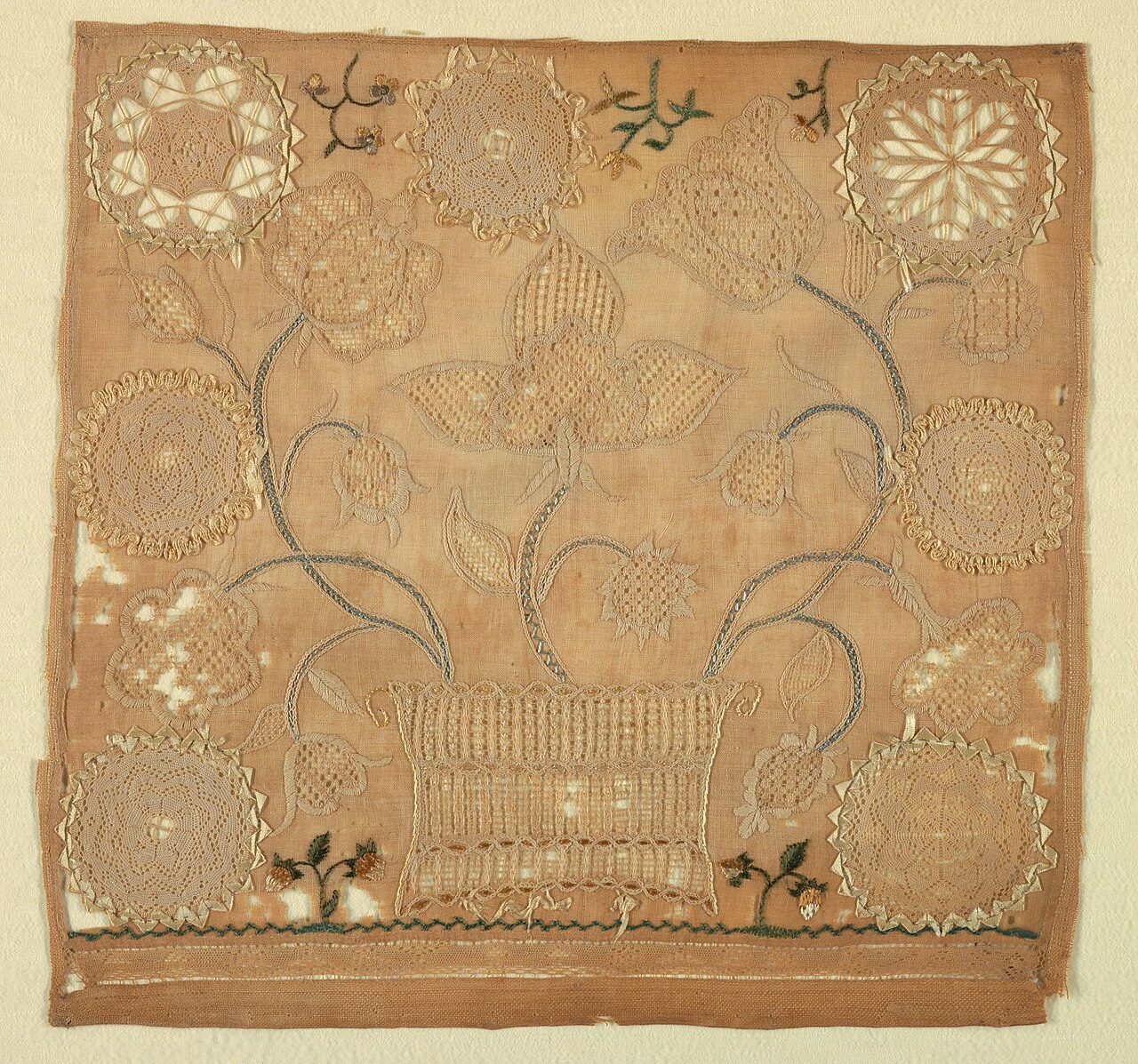
The tradition & historical record
2 min read · 2 sourcesHollie point is an English needle lace noted for its use in baby clothes, particularly in the 18th century. It is also known as Holy point, because it was originally used in liturgical laces. The Puritans were the first to make common usage of Hollie point beginning in the reign of James I. 1
Hollie point is a flat needlepoint lace whose name derives either from lace made for religious purposes (holy work) or from the holes that create the pattern. It is made up of rows of twisted buttonhole stitches worked over horizontal threads. At the end of each row, the stitching returns to the starting point, creating the next horizontal thread. Simple pinprick designs are created by leaving gaps, or holes, in the otherwise plain cloth work formed by the buttonhole stitches. Hollie point has always been more or a domestic, rather than a professional, art. Hollie point was used primarily on baby clothes in the 18th and early 19th century, especially, christening sets. The lace was stitched in the crown of baby bonnets, or caps, and sometimes on a band that extended from the centre front of the cap to the nape of the neck. The shoulder seams of small shirts were decorated with initials, dates, and mottoes. 1
The text above is adapted from the Wikipedia article “Hollie point”, available under the Creative Commons Attribution-ShareAlike 4.0 licence. 1
Hollie Point is needle lacing technique originating in England, according to the structured record cited below. This entry was generated automatically from that record and has not yet been reviewed by a person familiar with the tradition. 2
The source record links this tradition to 1 external register, which can be verified through the citation. 2