The tradition & historical record
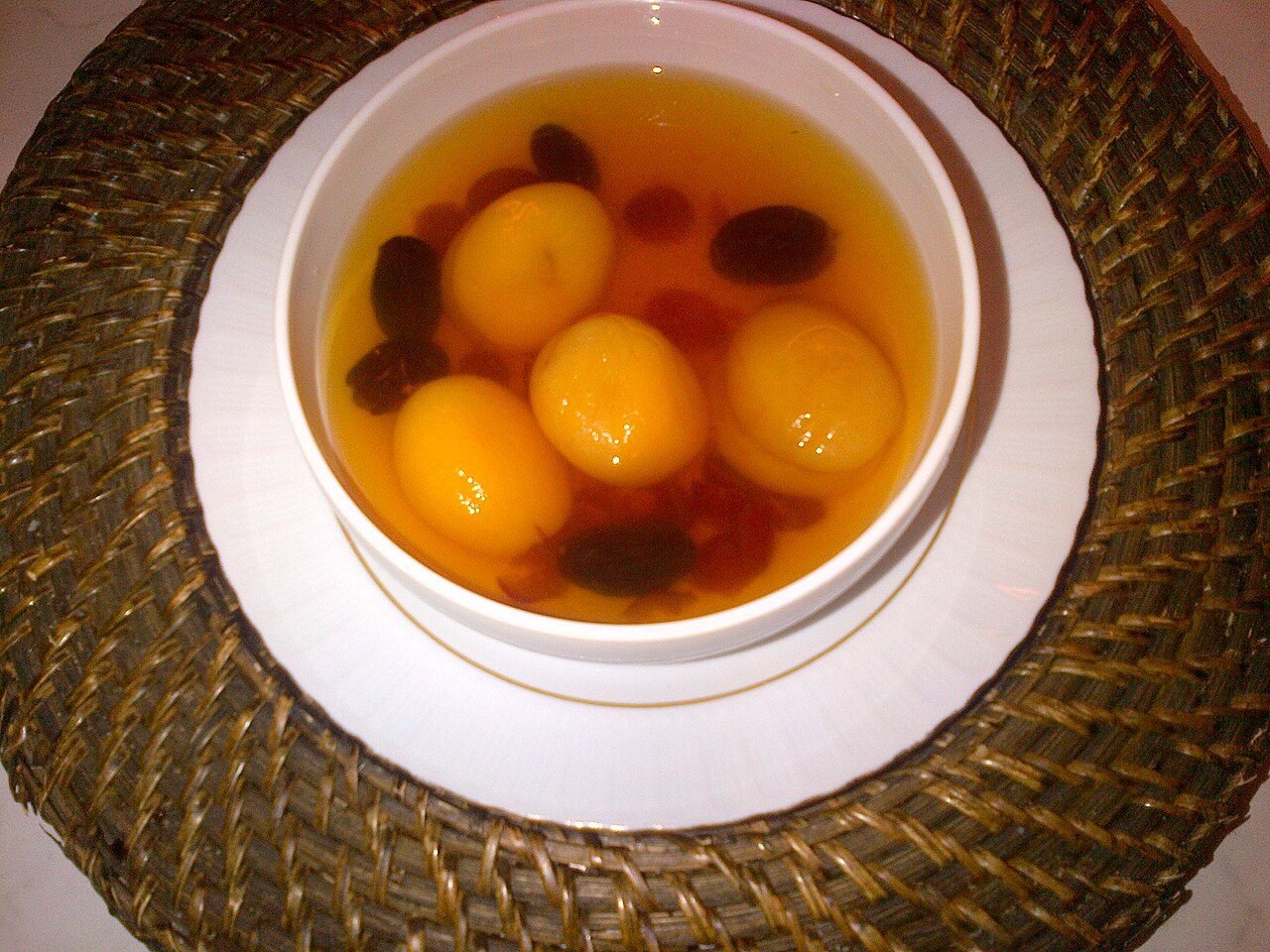
1 min read · 2 sourcesHoşaf (Turkish, from Persian خوشآب khosh ab meaning nice water) is an Iranian and Turkish dessert made of dried fruits like raisins, dried prunes, apricots, and figs boiled in water with some sugar and left to cool. Hoşaf may also contain cinnamon or cloves. It is often consumed with dishes without juices, such as pilav and makarna, just like cacık. It is especially consumed during Ramadan, as a tradition. Differently from kompot, hoşaf is always served cold. Whereas, the similar, and more universal, fresh fruit compote is called "komposto" in Turkish. 1
In popular culture
In Turkish language there are several idioms with the word hoşaf. Hoşafın yağı kesilmek and Eşek hoşaftan ne anlar? may be translated as "not to be able to explain a situation or find an excuse for a misdeed" and "throw pearls before swine" respectively. 1
The text above is adapted from the Wikipedia article “Hoşaf”, available under the Creative Commons Attribution-ShareAlike 4.0 licence. 1
hoşaf is Turkish dried fruit compote, according to the structured record cited below. This entry was generated automatically from that record and has not yet been reviewed by a person familiar with the tradition. 2
The source record links this tradition to 2 external registers, which can be verified through the citation. 2