The tradition & historical record
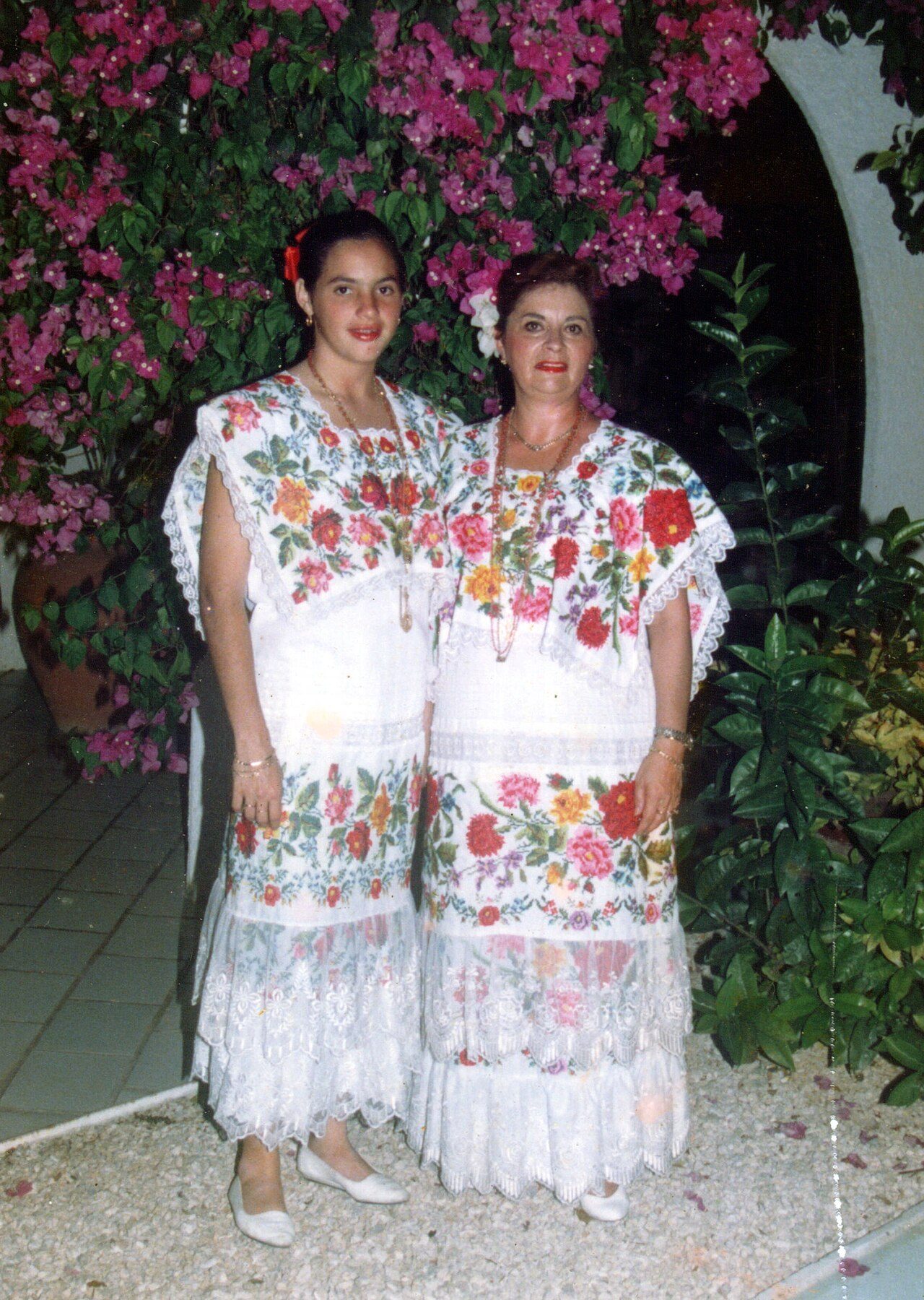
7 min read · 2 sourcesHuipil [ˈwipil] (Nahuatl: huīpīlli [wiːˈpiːlːi]) is the most common traditional garment worn by indigenous women from central Mexico to Central America. It is a loose-fitting tunic, generally made from two or three rectangular pieces of fabric, which are then joined with stitching, ribbons, or fabric strips, with an opening for the head and, if the sides are sewn, openings for the arms. Traditional huipils, especially ceremonial ones, are usually made with fabric woven on a backstrap loom and are decorated with designs woven into the fabric, embroidery, ribbons, lace, and more. However, some huipils are also made from commercial fabric. A huipil can vary in length from a short blouse to a garment long enough to reach the floor. The style of traditional huipils generally indicates the ethnicity and community of the wearer as each has its own methods of creating the fabric and decorations. Ceremonial huipils are suitable for weddings, burials, women of high rank and even to dress the statues of saints. The huipil has been worn by indigenous women in Mesoamerica of both high and low social rank since well before the Spanish invasion. A characteristic item of Aztec clothing, it remains the most common female indigenous garment still in use. It is most often seen in the Mexican states of Chiapas, Yucatán, Quintana Roo, Oaxaca, Tabasco, Campeche, Hidalgo, Michoacán (where it is called a huanengo), Veracruz and Morelos. 1
Names
Alternative names for the huipil include: 1
Chortí: b’ujk Chuj: nip Mixtec: xighu/dzico 1
History
After the Spanish conquest of the Aztec Empire and subsequent Spanish expansion, the huipil endured but it evolved, incorporating elements from other regions and Europe. One of the oldest known huipils in existence is the "La Malinche", named such because it was believed to have been worn by La Malinche, Hernán Cortés’ interpreter as it looks much like ones in depictions of her in the Lienzo de Tlaxcala and the Florentine Codex. However, carbon-14 tests date it to the 18th century. It is exceptional not only for its age but there is none like it in any collection and it is larger than usual at 120 by 140 centimetres (47 in × 55 in). It is made of cotton with feathers, wax and gold thread. The design is dominated by an image of a double headed eagle, showing both indigenous and Spanish influence. It is part of the collection of the National Museum of Anthropology. Some huipils, such as those from the Isthmus of Tehuantepec show Asian influence due to cloth brought from the Philippines. In addition, the huipil began to be worn with other garments, especially European skirts, during the colonial period. This led to changes in the garment itself and how it was used. In some cases, the huipil became shorter, to function as a kind of blouse rather than a dress. In the same region, the huipil also evolved into a long flowing and sometimes voluminous head covering which frames the face. To this day, the most traditional huipils are made with handwoven cloth on a backstrap loom. However, the introduction of commercial fabric made this costly, and many indigenous women stopped making this fabric or making simpler versions. By the early 1800s, women began to wear undecorated huipils or European style blouses. 1
Description
The huipil is a tunic-like garment made by stitching together anywhere from one to five pieces of cloth. The most common fiber is cotton, but there are those made from wool and silk as well. Most huipils are made from two or three pieces, which are usually the same size, with one exception being those from the highlands of Chiapas, where the center piece is wider than the side ones. The panels are not sewn together in the normal sense with seams but rather they are joined using ribbons, small strips of cloth or complicated stitching which has the edges of the panels touching or almost touching. This adds a layer of decoration to the garment. 1
Most classic huipils are wider than they are long although there has been a reduction in width in recent years. Huipils can be as short as waist length or can reach to the ankles or anywhere in between, but most fall just above or just below the knee. Long or short, it is not designed to be a close-fitting garment. The neckline can be round, oval, square or a simple slit. Most are sewn on the sides, leaving an opening in the upper part for the arms to pass through. Some huipils are not sewn on the sides, especially the very short ones. While huipils today are made from commercial cloth, the most traditional are made from hand woven fabric made on a backstrap loom. The pieces to be used to make the huipil are woven to size and are never cut. Despite its simplicity, the backstrap loom permits more types of techniques and designs to be woven into the cloth than other types of looms. Most of the hand woven fabric have designs woven into them, especially cloth destined for ceremonial huipils. The decorative elements can signify history, cultural identity, something personal about the wearer and more. 1
Variations in different regions
Traditional huipils generally identify the indigenous group and a community of the wearer as each has its own designs for both weaving and embroidering. Some communities, such as Jamiltepec in Oaxaca, have a taboo against huipils made there being worn by women from other areas. Except for very long huipils, they are generally worn with other items of clothing such as a skirt or slip. Most huipils hang loose but some can be tied at the waist or can be tucked into a skirt like a blouse. In some cases, such as in San Juan Copala, Oaxaca, the extra length of the huipil is rolled up onto the waist when worn with a skirt. 1
Women commonly have an everyday huipil and those worn only on special occasions such as weddings. Decorative elements are often arranged in horizontal bands but those with vertical orientation are found as well. In a number of indigenous communities, extravagant huipils made for a woman's wedding is then carefully put away and stored to be used later for her funeral. In others, a special huipil is begun when a woman reaches a certain age for this purpose. Ceremonial huipils are also made to dress images of saints. During festivals, these saints can be dressed in many layers of huipils, giving them a fattened appearance. The garment is common among the various Mayan groups. For Mayan women in Guatemala, huipil designs on the front back and shoulders can identify which type of Maya and from what community. Mayan ceremonial huipils are worn only by the statues of saints and the wives of religious officials. Chinanteca huipils are elaborate with the entire garment covered in woven and embroidered geometric designs in various colors, with the edges further decorated with ribbons. 1
The text above is adapted from the Wikipedia article “Huipil”, available under the Creative Commons Attribution-ShareAlike 4.0 licence. 1
huipil is blouse or tunic worn by idigenous women of Mexico and Central America, according to the structured record cited below. This entry was generated automatically from that record and has not yet been reviewed by a person familiar with the tradition. 2
The source record links this tradition to 3 external registers, which can be verified through the citation. 2