The tradition & historical record
2 min read · 2 sourcesIcheon Ceramic Festival is a South Korean festival opened every year in Gyeonggi-do province. 1
About
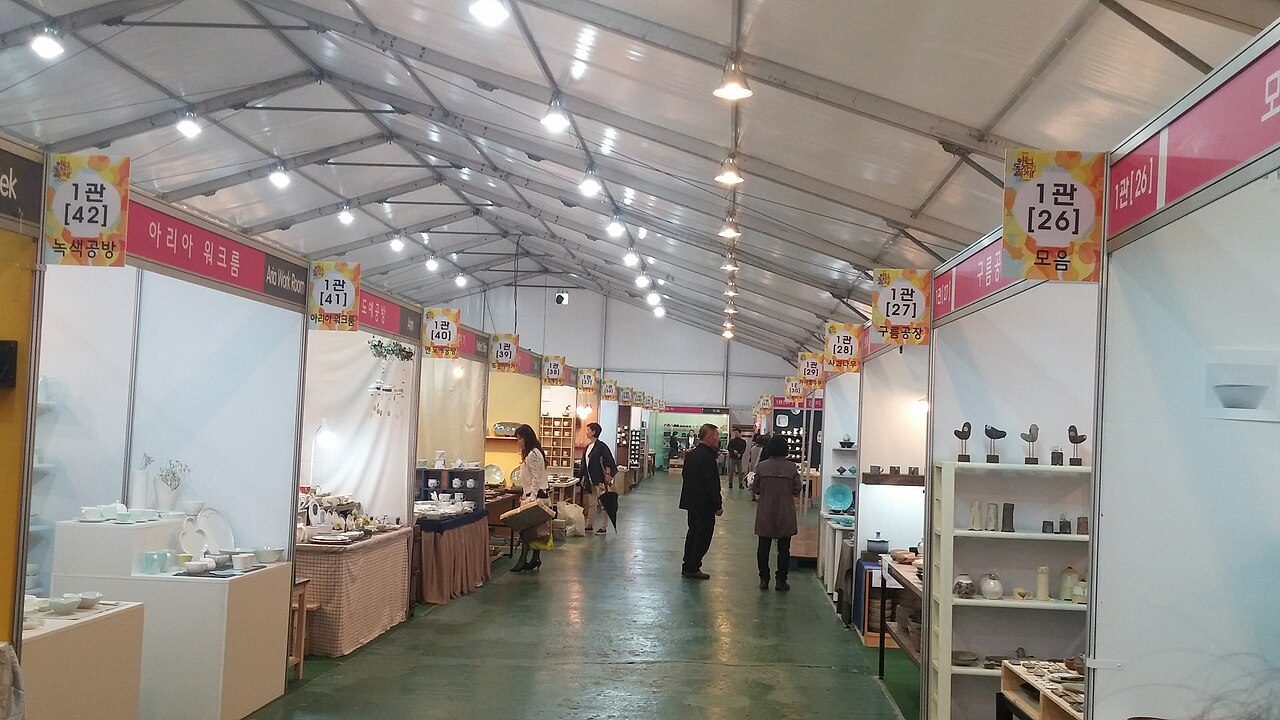
Icheon, Gyeonggi-do, has been a valuable city for ceramic arts since the Bronze Age. In 2010, the city was designated as "City of Crafts and Folk Art" on the UNESCO Creative Cities Network. A variety of South Korea's finest ceramics such as Cheongja (celadon porcelain), Baekja (white porcelain) and Buncheong (grayish-blue powdered celadon) are exhibited in this festival. This festival is Korea's largest ceramic culture festival and is a free exhibition that takes place every year during April and May. 1
History
The first Icheon Ceramic Festival was held at the event area of Seolbong Hotel in the form of small scale ceramic market. During the time, revenue of the festival was only 20 million won. As a part of the Seolbong Cultural Festival, Icheon Ceramic Festival was organized by Icheon Cultural Center until the 8th festival in 1994. It was a small-scaled local festival due to insufficient budget and low participation of ceramic artists. 1
Ceramic product hall
Ceramic products Ceramic road booth Docent operated 1
Exhibitions
Meeting of tradition and modernization Symposium Ceramic road workshop Ceramic making demonstration and large ceramic performance Ceramic exhibition 2006 "From Earth to Light" Master Kim Se-yong (ceramist) held at Icheon World Ceramic Center 1
Events and performance
Icheon youth art festival B-boy graffiti contest Face painting Nail art Invitation performance by military music group Street performances Hands-on programs 1
The text above is adapted from the Wikipedia article “Icheon Ceramic Festival”, available under the Creative Commons Attribution-ShareAlike 4.0 licence. 1
Icheon Ceramic Festival is recorded in open cultural data. The structured record cited below does not describe the practice, and this entry has not yet been reviewed by a person familiar with the tradition. 2
The source record links this tradition to 2 external registers, which can be verified through the citation. 2