The tradition & historical record
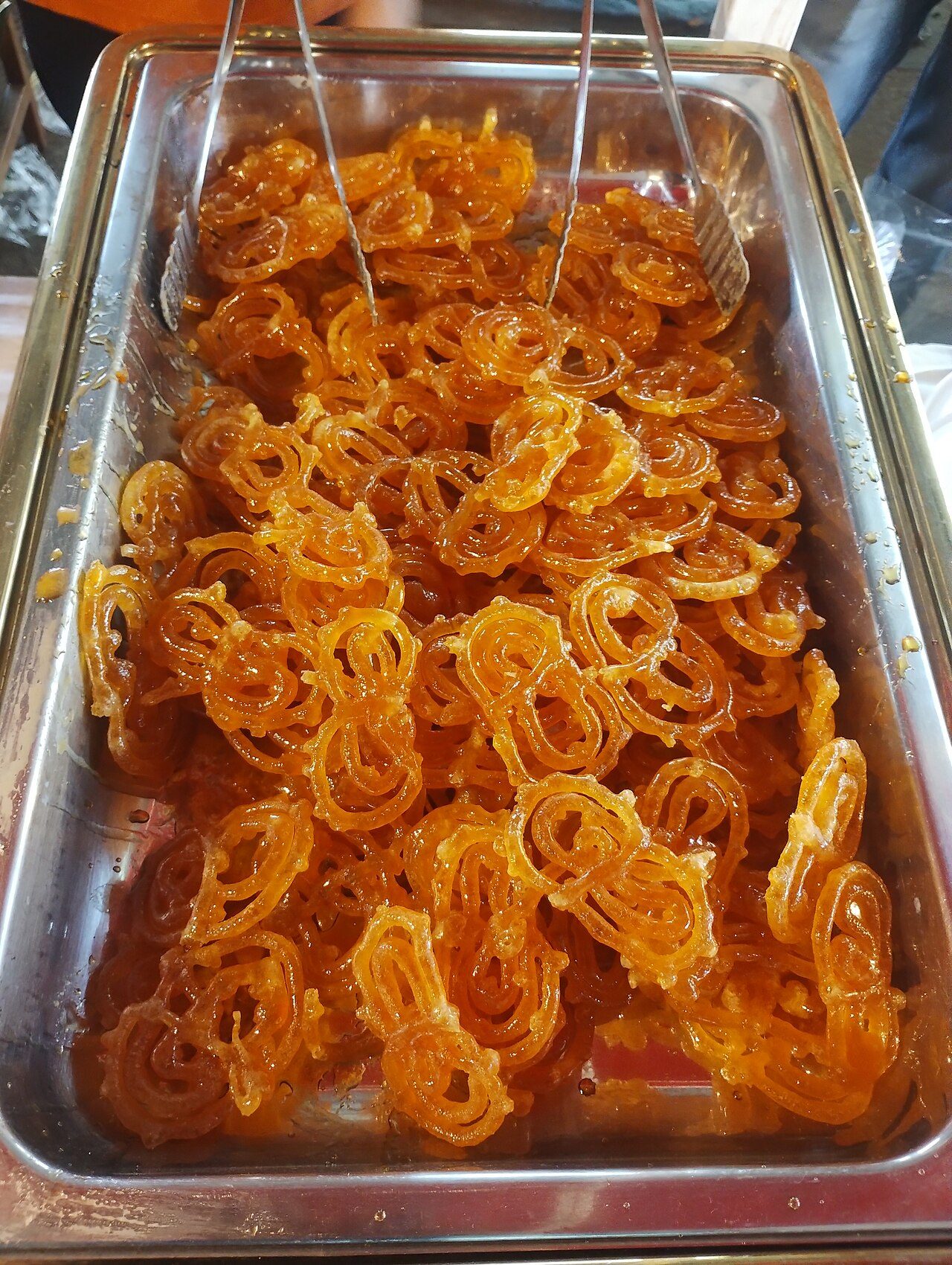
4 min read · 2 sourcesJalebi is a common sweet snack in South Asia, West Asia and some parts of Africa. The south Asian variety is made by deep-frying maida flour (plain flour or all-purpose flour) batter in pretzel or circular shapes, which are then soaked in sugar syrup. Jalebi is eaten with curd or rabri (in North India) along with optional other flavors such as kewra (pandanus flower essence). In some west Asian cuisines, jalebi may consist of yeast dough fried and then dipped in a syrup of honey and rose water. North African zalabia uses a different batter and a syrup of honey (Arabic: ʻasal) and rose water. 1
History
The earliest known recipe of this food comes from the 10th century in the Arabic cookbook Kitab al-Tabikh (English: The Book of Dishes) by Ibn Sayyar al-Warraq. In the 13th century Abbasid Caliphate, a cookbook by Muhammad bin Hasan al-Baghdadi mentioned a similar dish. Zalābiya mushabbaka as described by Ibn Sayyar, are latticed fritters made in discs, balls and squares. They are dipped in clarified honey perfumed with rose water, musk and camphor. A recipe from a caliph's kitchen suggests milk, clarified butter, sugar and pepper to be added. Zalābiya funiyya is a "sponge cake" version cooked in a special round pot on a trivet and cooked in a tannur. According to the Hobson-Jobson (1903) historical dictionary, the word jalebi is derived from the Arabic word zulabiya, or the Persian zolbiya. Priyamkara-nrpa-katha, a work by the Jain author Jinasura, composed around 1450 CE, mentions jalebi in the context of a dinner held by a rich merchant. Gunyagunabodhini, another Sanskrit work dating before 1600 CE, lists the ingredients and recipe of the dish; these are identical to the ones used to prepare the modern jalebi. According to the Indian ambassador Nagma Malik, jalebi might have started life in Turkey and then arrived in Tunisia long ago before making its way to India. Others claim that it was created by a musician during the reign of the Abbasid caliph Harun al-Rashid, Abdourrahman Ibnou Nafaâ Ziriab, who made a prolonged stop over in Tunisia while traveling from Baghdad to Andalusia. It has been suggested that the American funnel cake is derived from the Arab and Persian cuisine, brought by German emigrants and called Drechterkuche. 1
Afghanistan
In Afghanistan, Jalebi is a popular dessert. There are some slight differences between Afghan Jalebi and other variants. The Afghan Jalebi does not use any food coloring in contrast to the Indian and Pakistani variants and so is usually yellow and not orange in color. The Afghan Jalebi is also thinner. It is a popular dessert that is commonly consumed in households and at public events such as weddings or festivals. Jalebi is oftentimes served with green tea. There is also a popular song from the Bollywood film Phantom named Afghan Jalebi. 1
India
Jalebi made from khoya or mawa, was invented by Harprasad Badkul, in the year 1889, in Jabalpur. In Norman Chevers book, A Manual of Medical Jurisprudence for India (1870, page 178) mentions "jelabees" as a historical way of poisoning prisoners in India in the 1800s. 1
Pakistan
In Pakistan, jalebis are a popular dessert that are commonly consumed in households and in public events such as weddings or festivals. Particularly during winter season, used as commonly paired with warm milk as a breakfast option. Also consumed as a snack with evening tea, or sometimes served alongside savory items like samosas and other sweets such as gulab jamun, offering a combination of flavors. 1
Nepal
In Nepal, it is known as Jerry, a word derived from Jangiri and the Mughal Emperor Jahangir. People usually eat Jerry with Swari, a very thin fried bread like Puri (food). It is often eaten in morning with Nepali Masala chiya. 1
The text above is adapted from the Wikipedia article “Jalebi”, available under the Creative Commons Attribution-ShareAlike 4.0 licence. 1
Jalebi is sweet popular in countries of South Asia, West Asia, North Africa, and East Africa, according to the structured record cited below. This entry was generated automatically from that record and has not yet been reviewed by a person familiar with the tradition. 2
The source record links this tradition to 2 external registers, which can be verified through the citation. 2