The tradition & historical record
4 min read · 2 sourcesJamdani (Bengali: জামদানি) is a fine muslin textile (figured with different patterns) produced for centuries in South Rupshi of Narayanganj district in Bangladesh on the bank of Shitalakshya River. The historic production of jamdani was patronized by imperial warrants of the Mughal emperors. During the period of British rule in India, Bengal's jamdani and muslin industries rapidly declined due to being unable to compete with imported textiles manufactured in Great Britain. In more recent years, the production of jamdani has witnessed a revival in Bangladesh. Jamdani involved skilful use of white, black, golden, silver and other similar coloured threads to weave geometric and floral patterns into the fabric. In 2013, the traditional art of weaving jamdani was declared a UNESCO Intangible Cultural Heritage of Humanity. In 2016, Bangladesh received geographical indication (GI) status for Jamdani Sari. 1
Etymology
Jamdani was originally known as Dhakai (Daccai) named after the city of Dhaka (Dacca), one of many ancient textile weaving centers in Bengal region. Under the Mughal Empire the Persian term Jamdani came to be in popular use, since it was the court language of the Mughals. Jamdanis are popularly known as Dhakai Jamdani or simply Dhakai. The earliest mention of jamdani and its development as an industry is found into Dhaka, Bangladesh. 1
Origin
An early reference to Indian origins of muslin is found in the book of Periplus of the Erythraean Sea and in the accounts of Arab, Chinese and Italian travelers and traders. Jamdani is a hand loom woven fabric made of cotton, which was historically referred to as muslin. The Jamdani weaving tradition is of Bengali origin. It is one of the most time and labor-intensive forms of hand loom weaving, and is considered one of the finest varieties of muslin, and the most artistic textile of Bangladeshi weavers. Traditionally woven around Dhaka and created on the loom brocade, jamdani is rich in motifs. In the late 19th century, T. N. Mukharji referred to this fabric as jamdani muslin. 1
Weave
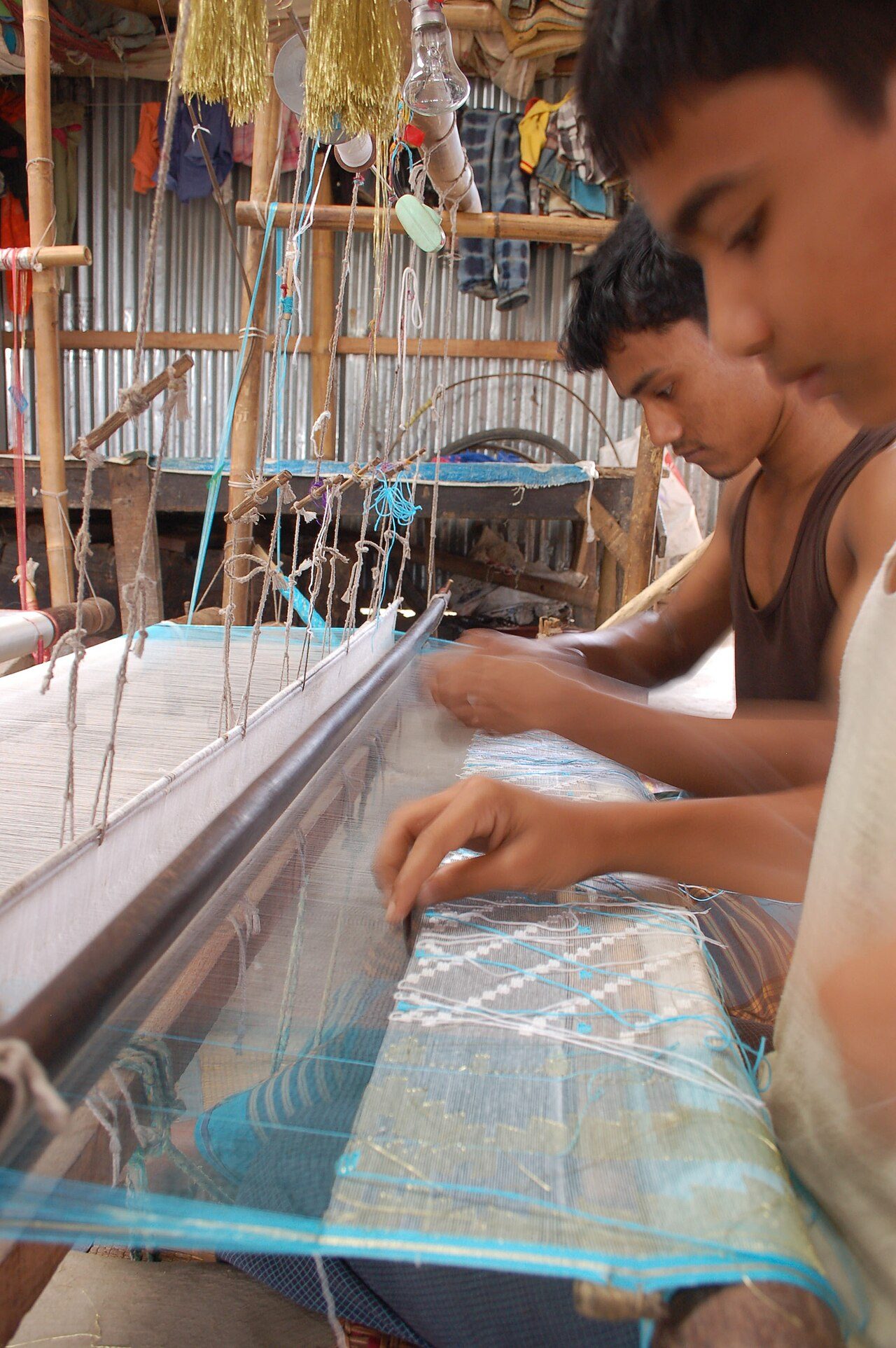
Whether figured or flowered, jamdani is a woven fabric in cotton. This is a supplementary weft technique of weaving, where the artistic motifs are produced by a non-structural weft, in addition to the standard weft that holds the warp threads together. The standard weft creates a fine, sheer fabric while the supplementary weft with thicker threads adds the intricate patterns to it. Each supplementary weft motif is added separately by hand by interlacing the weft threads into the warp with fine bamboo sticks using individual spools of thread. The result is a complex mix of different patterns that appear to float on a shimmering surface. The pattern is not sketched or outlined on the fabric, but is drawn on a graph paper and placed underneath the warp. Jamdani is a fine muslin cloth on which decorative motifs are woven on the loom, typically in grey and white. Often a mixture of cotton and gold thread was used. 1
Varieties of jamdani work
Though mostly used for saris, Jamdani is also used for scarves and handkerchiefs. Jamdani is believed to be a fusion of the ancient cloth-making techniques of Bengal (possibly 2,000 years old). Jamdani is the most expensive product of Dhaka looms since it requires the most lengthy and dedicated work. Jamdani patterns are mostly of geometric, plant, and floral designs and are said to have originated thousands of years ago. Due to the exquisite painstaking methodology required, only aristocrats and royal families were able to afford such luxuries. 1
Changes with time
We do not know exactly when jamdani came to be adorned with floral patterns of the loom. It is, however, certain that in the Mughal period, most likely during the reign of either Emperor Akbar (1556–1605) or Emperor Jahangir (1605–1627), the figured or flowered muslin came to be known as the jamdani. John Forbes Watson in his work titled Textile Manufactures and Costumes of the people of India holds that the figured muslin because of their complicated designs, were always considered the most expensive productions of the Dhaka looms. The price for a piece was recorded as 56 Livre in 1776. 1
The text above is adapted from the Wikipedia article “Jamdani”, available under the Creative Commons Attribution-ShareAlike 4.0 licence. 1
jamdani is traditional weaving art of Bengal, according to the structured record cited below. This entry was generated automatically from that record and has not yet been reviewed by a person familiar with the tradition. 2
The source record links this tradition to 5 external registers, which can be verified through the citation. 2