The tradition & historical record
6 min read · 2 sourcesTraditional Japanese crafts (工芸, kōgei; lit. 'engineered art') have a long history. Included in the category of traditional crafts are handicrafts produced by individual artisans or groups, as well as works created by independent studio artists working with traditional craft materials, processes, or techniques. 1
History
Japanese craft dates back to the earliest human settlement of the islands. Handicrafting in Japan has its roots in the rural crafts and the material-goods necessities of ancient times. Traditionally, artisans used naturally and indigenously occurring materials, and objects were created to be used, not just to be displayed. As such, the border between art and craft is not always clearly defined. Crafts were needed by all strata of society and became increasingly sophisticated in their design and execution. Craft had close ties to folk art, but developed into fine art, with a number of aesthetic schools of thought, such as wabi-sabi, arising. Craftsmen and women therefore became artisans with increasing sophistication. However, wares were not just produced for domestic consumption, but at some point items such as ceramics made by studio craft were produced for export and became an important pillar of the economy. Family affiliations or bloodlines are of special importance to the aristocracy and the transmission of religious beliefs in various Buddhist schools. In Buddhism, the use of the term "bloodlines" likely relates to a liquid metaphor used in the sutras: the decantation of teachings from one "dharma vessel" to another, describing the full and correct transference of doctrine from master to disciple. Similarly, in the art world, the process of passing down knowledge and experience formed the basis of familial lineages. For ceramic, metal, lacquer, and bamboo craftsmen, this acquisition of knowledge usually involved a lengthy apprenticeship with the master of the workshop, often the father of the young disciple, from one generation to the next. In this system called dentō (伝 統), traditions were passed down within a teacher-student relationship (師弟, shitei). 1
20th century
Although these objects were designated as National Treasures – placing them under the protection of the imperial government – it took some time for their cultural value to be fully recognized. In order to further protect traditional craft and arts, the government, in 1890, instituted the guild of Imperial Household Artists (帝室技芸員, Teishitsu Gigei-in), who were specially appointed to create works of art for the Tokyo Imperial Palace and other imperial residences. These artists were considered most famous and prestigious and worked in the areas such as painting, ceramics, and lacquerware. Although this system of patronage offered them some kind of protection, craftsmen and women on the folk art level were left exposed. One reaction to this development was the mingei (民芸, "folk arts" or "arts of the people") – the folk art movement that developed in the late 1920s and 1930s, whose founding father was Yanagi Sōetsu (1889–1961). The philosophical pillar of mingei was "hand-crafted art of ordinary people" (民衆的な工芸, minshū-teki-na kōgei). Yanagi Sōetsu discovered beauty in everyday ordinary and utilitarian objects created by nameless and unknown craftspersons. The Second World War left the country devastated and as a result, craft suffered. The government introduced a new program known as Living National Treasure to recognise and protect craftspeople (both individually and as groups) on the fine and folk art level. Inclusion in the list came with financial support for the training of new generations of artisans so that the art forms could continue. In 1950, the national government instituted the intangible cultural properties classification, which is given to cultural property considered of high historical or artistic value in terms of the craft technique. 1
Contemporary practice
The Japan Traditional Kōgei Exhibition (日本伝統工芸展) takes place every year with the aim of reaching out to the public. In 2015, the Museum of Arts and Design in New York exhibited a number of modern kōgei artists in an effort to introduce Japanese craft to an international audience. In 2020 the Victoria and Albert Museum exhibition Kimono: Kyoto to Catwalk "presented the kimono as a dynamic and constantly evolving icon of fashion." The show, which was described as "a revelation" and "unmissable", was subsequently displayed at the V&A Dundee. More recent exhibitions and initiatives such as the ORIGIN of SIMPLICITY at the ADI Design Museum in Milan, Nendo sees Kyoto at the Friedman Benda gallery in New York, the Craft x Tech Tohoku Project andTokai Project, as well as Distillation of Architecture at the Architectural Association in London have set out to both preserve these unique craft traditions and bring them to a wider audience by introducing modern technologies and instigating collaborations with Japanese and international artists, architects, and designers such as Kengo Kuma, Sabine Marcelis, Yoichi Ochiai, Oki Sato, Schemata Architects, Studio SWINE, Atang Tshikare, and Bethan Laura Wood. These initiatives have taken diverse approaches to the overall question of how the ancient "aesthetic sensibilities embedded in Japanese craft can be reimagined" through the lens of contemporary design and technology so that they continue to exist and remain relevant in the future. Other initiatives and promotional activities highlighting the contemporary practice and relevance of Japanese craft traditions include collaborations with Japanese and international luxury brands, exhibitions such as international art, craft, and design fairs, and events such the Osaka-Kansai Expo 2025. 1
Ceramics
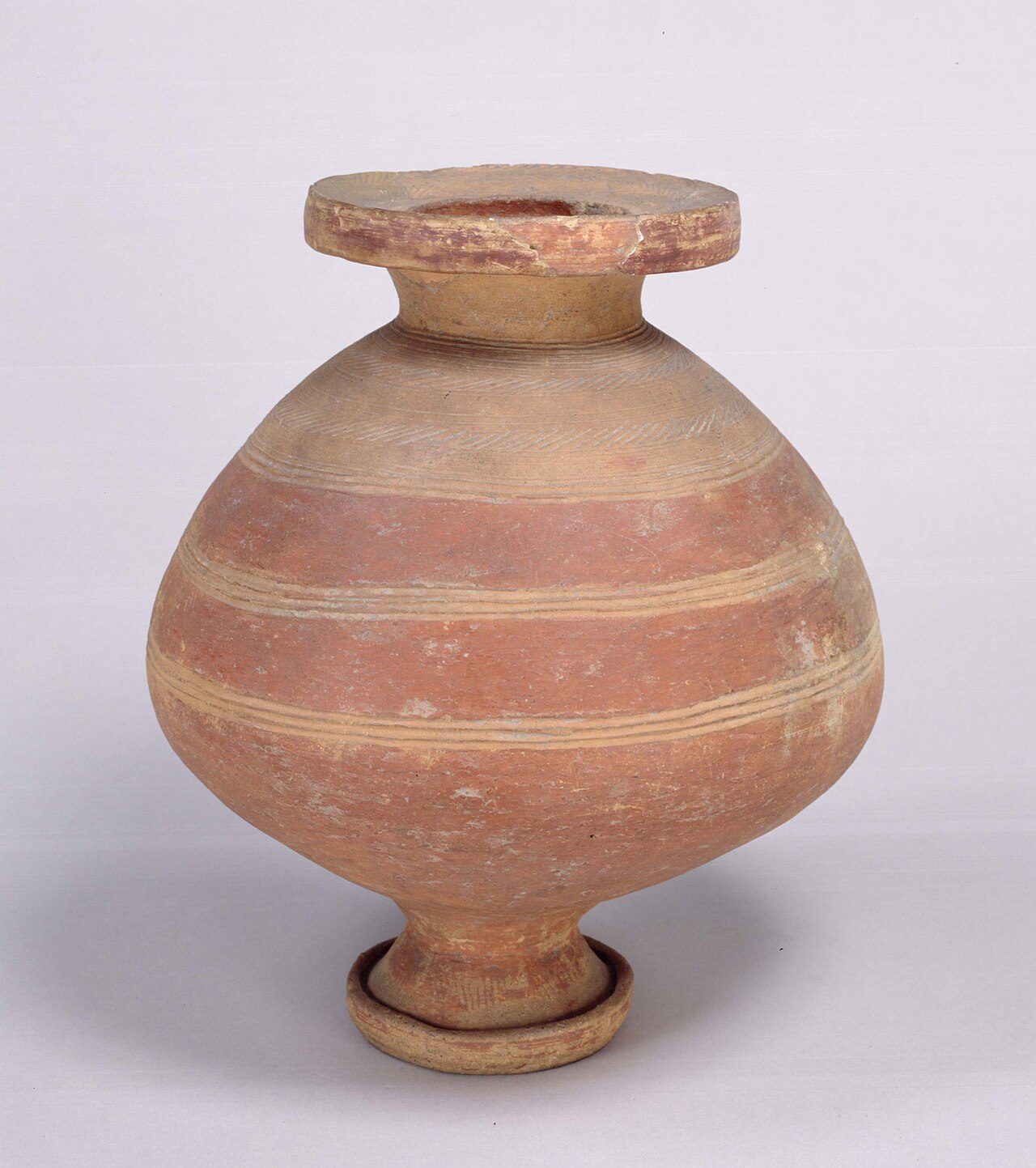
Japanese pottery and porcelain, one of the country's oldest art forms, dates back to the Neolithic period. Kilns have produced earthenware, pottery, stoneware, glazed pottery, glazed stoneware, porcelain, and blue-and-white ware. Japan has an exceptionally long and successful history of ceramic production. Earthenware was created as early as the Jōmon period (10,000–300 BC), giving Japan one of the oldest ceramic traditions in the world. Japan is further distinguished by the unusual esteem that ceramics holds within its artistic tradition, owing to the enduring popularity of the tea ceremony. Some of the recognised techniques of Japanese ceramic craft are: 1
Iro-e (色絵, colour painting) Neriage (練上げ, using different colours of clay together) Sansai (三彩, three colours of brown, green, and a creamy off-white) Saiyū (彩釉, glaze technique with dripping effect) Seihakuji (青白磁, a form of blue-white hakuji porcelain) Sometsuke (染付, blue and white pottery) Tetsu-e (鉄絵, (also known as Tetsugusuri), iron glazing) Yūri-kinsai (釉裏金彩, metal-leaf application) Zōgan (象嵌, damascening and champlevé) There are many different types of Japanese ware. 1
Textiles
Textile crafts include silk, hemp, linen and cotton woven, dyed and embroidered into various forms—from crafts originating from folk designs to complex silk weaves intended for the … 1
The text above is adapted from the Wikipedia article “Japanese craft”, available under the Creative Commons Attribution-ShareAlike 4.0 licence. 1
Japanese craft is handicraft of Japan, according to the structured record cited below. This entry was generated automatically from that record and has not yet been reviewed by a person familiar with the tradition. 2
The source record links this tradition to 1 external register, which can be verified through the citation. 2