The tradition & historical record
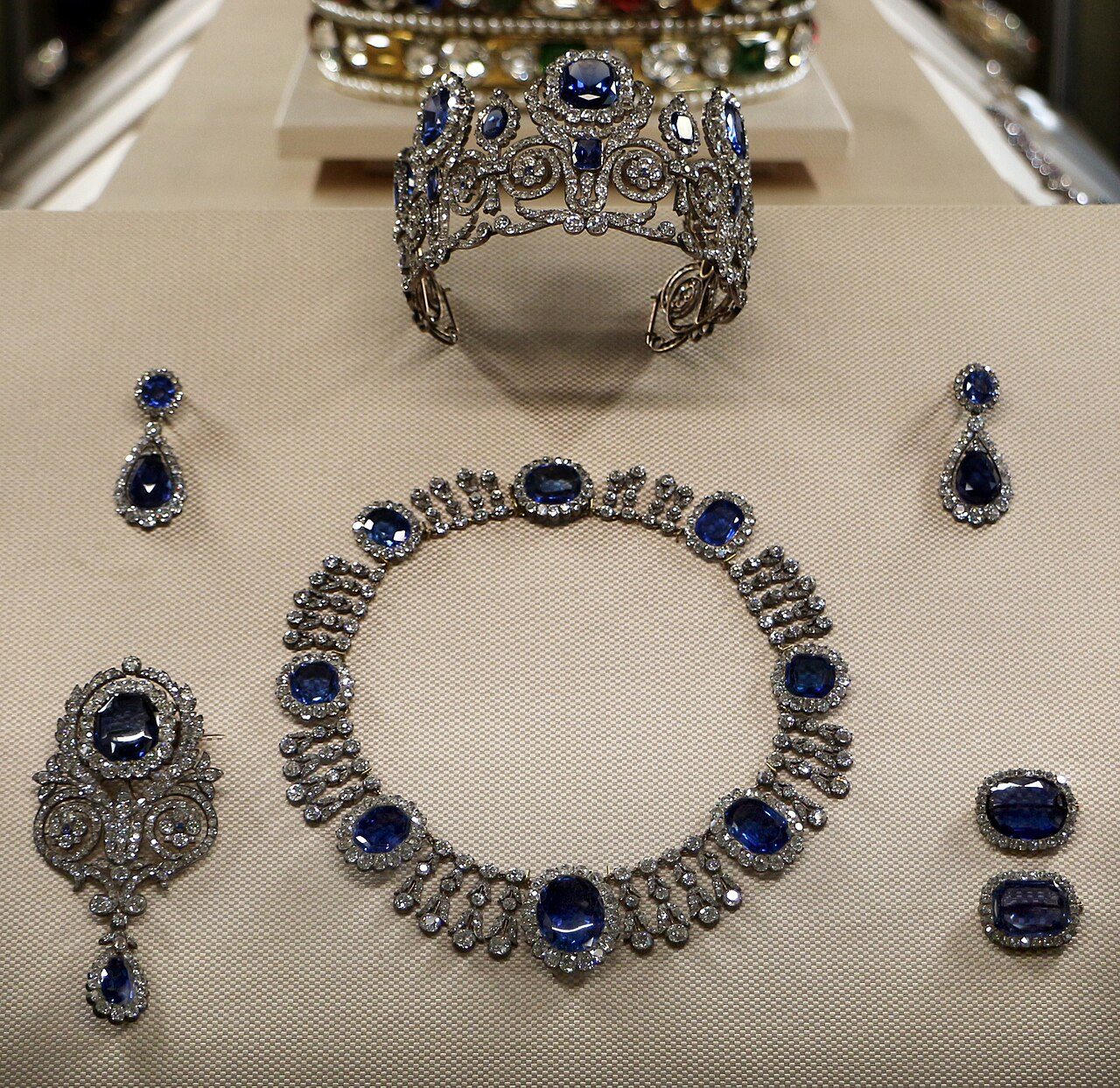
6 min read · 2 sourcesJewellery (or jewelry in American English) consists of decorative items worn for personal adornment such as brooches, rings, necklaces, earrings, pendants, bracelets, and cufflinks. Jewellery may be attached to the body or the clothes. From a Western perspective, the term is restricted to durable ornaments, excluding flowers for example. For many centuries, metals such as gold and silver, often combined with gemstones, have been the standard material for jewellery. Other materials such as glass, shells, or wood may also be used. Jewellery is one of the oldest types of archaeological artefacts – with 100,000-year-old beads made from Nassarius shells thought to be the oldest known jewellery. Jewellery may be made from a wide range of materials. Gemstones and similar materials such as amber and coral, precious metals, beads, and shells have been widely used. The use of enamel is often important in jewelry making. In many cultures jewellery can be understood as a status symbol because of its material, its patterns, or for meaningful symbols. Jewellery has been made to adorn nearly every body part, from hairpins to toe rings, and even genital jewellery. In modern European culture the amount worn by adult males is relatively low compared with other cultures and other periods in European culture. Jewellery that is designed to be worn for long periods, is created without a clasp or opening, or is always worn is called permanent jewellery. 1
Etymology
The word jewellery itself is derived from the word jewel, which was anglicised from the Old French "jouel", and beyond that, to the Latin word "jocale", meaning plaything. In British English, Indian English, New Zealand English, Hiberno-English, Australian English, and South African English it is spelled jewellery. At the same time, the spelling is jewelry in American English. Both are used in Canadian English. However, jewellery prevails by a two-to-one margin. In French and a few other European languages the equivalent term, joaillerie, may also cover decorated metalwork in precious metal such as objets d'art and church items, not just objects worn on the person. 1
Form and function
Humans have used jewellery for a number of different reasons: 1
functional, generally to fix clothing or hair in place. as a marker of social status and personal status, as with a wedding ring as a signifier of some form of affiliation, whether ethnic, religious or social to provide talismanic protection (in the form of amulets) as an artistic display as a carrier or symbol of personal meaning – such as love, mourning, a personal milestone or even luck Superstition Numerous cultures store wedding dowries in the form of jewellery or make jewellery as a means to store or display coins. Alternatively, jewellery has been used as a currency or trade good to buy and sell, an example being the use of slave beads. Many items of jewellery, such as brooches and buckles, originated as purely functional items, but evolved into decorative items as their functional requirement diminished. Similarly, Tiffany & Co. produced inkwells in the late 19th and early 20th centuries, skillfully combining materials like enamel and fine metals, reflecting the same craftsmanship seen in their jewellery collections. These inkwells were not only practical but also artistic in design. Jewellery can symbolise group membership (as in the case, of the Christian crucifix or the Jewish Star of David) or status (as in the case of chains of office, or the Western practice of married people wearing wedding rings). Wearing of amulets and devotional medals to provide protection or to ward off evil is common in some cultures. These may take the form of symbols (such as the ankh), stones, plants, animals, body parts (such as the Khamsa), or glyphs (such as stylised versions of the Throne Verse in Islamic art). 1
Materials and methods
In creating jewellery, gemstones, coins, or other precious items are often used, and they are typically set into precious metals. Platinum alloys range from 900 (90% pure) to 950 (95% pure). The silver used in jewellery is usually sterling silver, or 92.5% fine silver. In costume jewellery, stainless steel findings are sometimes used. Other commonly used materials include glass, such as fused-glass or enamel; wood, often carved or turned; shells and other natural animal substances such as bone and ivory; natural clay; polymer clay; Hemp and other twines have been used as well to create jewellery that has more of a natural feel. However, any inclusion of lead or lead solder will give a British Assay office (the body which gives U.K. jewellery its stamp of approval, the Hallmark) the right to destroy the piece, however, it is very rare for the assay office to do so. Beads are frequently used in jewellery. These may be made of glass, gemstones, metal, wood, shells, clay and polymer clay. Beaded jewellery commonly encompasses necklaces, bracelets, earrings, belts and rings. Beads may be large or small; the smallest type of beads used are known as seed beads, these are the beads used for the "woven" style of beaded jewellery. Seed beads are also used in an embroidery technique where they are sewn onto fabric backings to create broad collar neck pieces and beaded bracelets. Bead embroidery, a popular type of handwork during the Victorian era, is enjoying a renaissance in modern jewellery making. 1
Diamonds
Diamonds were first mined in India. Pliny may have mentioned them, although there is some debate as to the exact nature of the stone he referred to as Adamas. In 2005, Australia, Botswana, Russia and Canada ranked among the primary sources of gemstone diamond production. There are negative consequences of the diamond trade in certain areas. Diamonds mined during the recent civil wars in Angola, Ivory Coast, Sierra Leone, and other nations have been labeled as blood diamonds when they are mined in a war zone and sold to finance an insurgency. 1
Now popular in engagement rings, the use of diamonds in jewellery dates back to the marriage of Maximilian I to Mary of Burgundy in 1477. A popular style is the diamond solitaire, which features a single large diamond mounted prominently. The British crown jewels contain the Cullinan Diamond, part of the largest gem-quality rough diamond ever found (1905), at 3,106.75 carats (621.35 g). 1
Other gemstones
Many precious and semiprecious stones are used for jewellery. Aside from their color, the gemstones are selected on the basis of practical considerations: rarity (value), hardness (see Mohs scale), and optical properties such as refractive index. With these criteria, diamond, zircon, and the carborundum-based gems (sapphire, ruby) stand out. 1
Amber Amber, an ancient organic gemstone, is composed of tree resin that has hardened over time. The stone must be at least one million years old to be classified as amber, and some amber can be up to 120 million years old. Amethyst Amethyst has historically been the most prized gemstone in the quartz family. 1
The text above is adapted from the Wikipedia article “Jewellery”, available under the Creative Commons Attribution-ShareAlike 4.0 licence. 1
jewelry is creation of objects of personal adornment, which may fulfill both decorative and functional purposes, according to the structured record cited below. This entry was generated automatically from that record and has not yet been reviewed by a person familiar with the tradition. 2
The source record links this tradition to 52 external registers, which can be verified through the citation. 2