The tradition & historical record
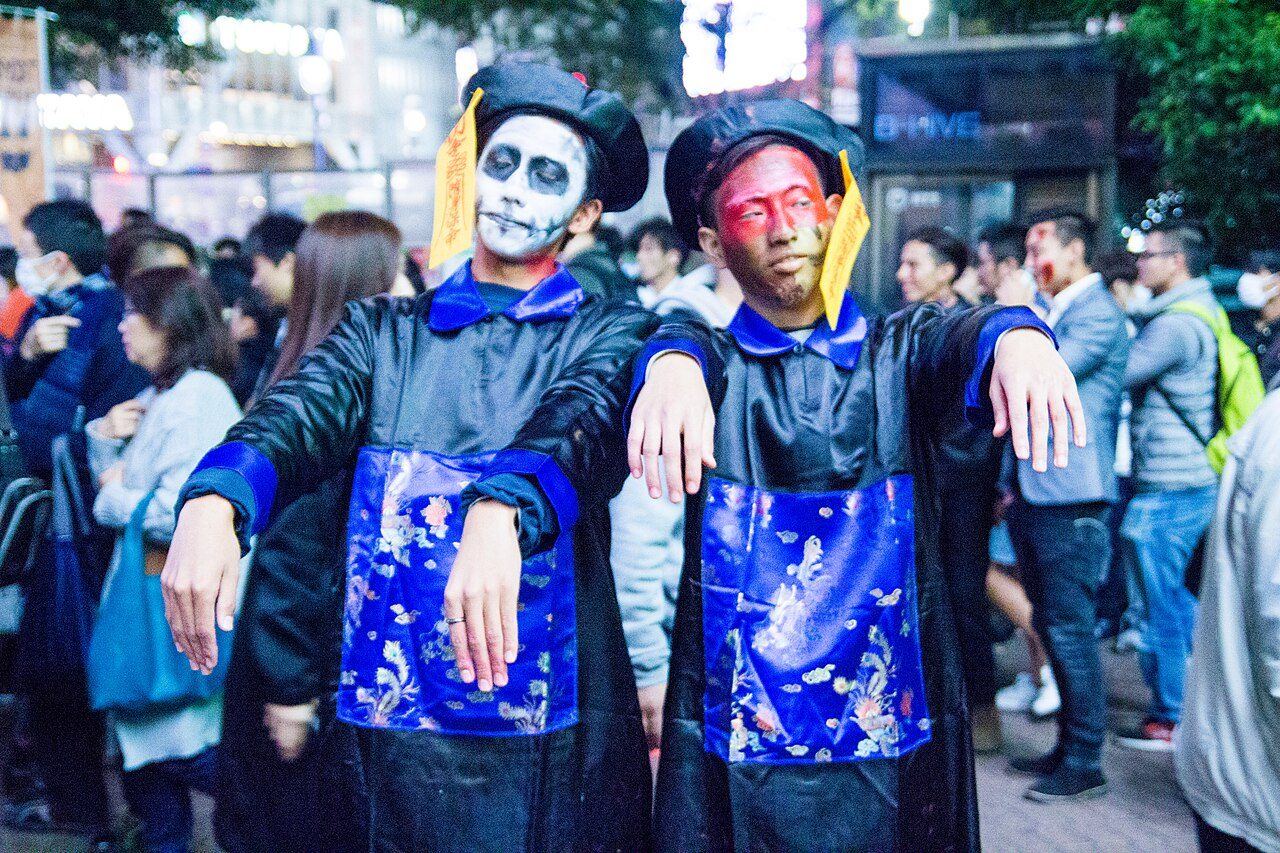
5 min read · 2 sourcesA jiāngshī (simplified Chinese: 僵尸; traditional Chinese: 殭屍; pinyin: jiāngshī; Jyutping: goeng1 si1), also known as a Chinese hopping vampire, is a type of undead creature or reanimated corpse in Chinese legends and folklore. Due to the influence of Hong Kong cinema, it is typically depicted in modern popular culture as a stiff corpse dressed in official garments from the Qing dynasty. Although the pronunciation of jiangshi varies in different East Asian countries, all of them refer to the Chinese version of vampire. In popular culture, it is commonly represented as hopping or leaping. In folkloric accounts, however, it is more formidable, capable of giving chase by running, and if sufficiently ancient or if it has absorbed sufficient yang energy, capable also of flight. According to folkloric understandings, "jiāngshī came from the hills, soaring through the air, to devour the infants of the people". Historian J. J. M. de Groot suggests that the belief in jiangshi was the result of the natural horror at the sight of dead bodies, nourished by the presence of unburied corpses in imperial China, which "studded the landscape", the idea of the vital energy flowing through the universe as capable of animating objects - including exposed corpses - and by severe cultural taboos concerning postponement of burial. 1
Origins
The Qing dynasty scholar Ji Xiaolan mentioned in his book Yuewei Caotang Biji (閱微草堂筆記) (c. 1789 – 1798) that the causes for a corpse to be reanimated can be classified in either of two categories: a recently deceased person returning to life, or a corpse that has been buried for a long time but does not decompose. Some causes are described below: 1
The use of supernatural arts to resurrect the dead. Spirit possession of a dead body. A corpse absorbs sufficient yang qi (positive energy) to return to life. When the lower parts of the person's soul remain in the body to assume control after death. Traditional Chinese thought posits that a person's body is governed by three huns and seven pos. The Qing dynasty scholar Yuan Mei wrote in his book Zi Bu Yu that "A person's hun is good but the po is evil, the hun is intelligent but the po is not so good". When the hun leaves the body after death but the po remains and takes control of the body, the dead person becomes a jiangshi. When the dead person is not buried even after a funeral has been held. The corpse comes to life after it is struck by a bolt of lightning, or when a pregnant cat (or a black cat in some tales) leaps across the coffin. When a person's soul fails to leave their deceased body, due to improper death, suicide, or that person just wanting to cause trouble. A person injured by a jiangshi is infected with the "jiangshi poison" and gradually changes into a jiangshi over time, as seen in the Mr. Vampire films. 1
Appearance and attributes
In both folklore and popular culture, the appearance of a jiangshi can range from that of a recently deceased person in a state of rigor mortis to that of a horribly decayed and rotting corpse. The jiangshi always lacks the suppleness that characterized a living person or even the Western vampire. The Chinese character for jiang (殭/僵) in "jiangshi" literally means "hard" or "stiff". 1
Folklore
Jiangshi are described as having greenish-white skin, possibly deriving from fungus or mould growing on corpses. They have long hair and may behave like animals. They are ferocious, ravenous beings possessing extreme strength, being described as attacking men with "brute force and clumsy violence". They are often represented as being capable of giving chase by running, and sometimes by flying - "a jiangshi came from the hills, soaring through the air, to devour the infants of the people". 1
Methods and items used to counter jiangshi
Mirrors: According to Li Shizhen's medical book Bencao Gangmu, "A mirror is the essence of liquid metal. It is dark on the outside but bright inside." (鏡乃金水之精,內明外暗。) Jiangshi are also said to be terrified of their own reflections. Items made from the wood of a peach tree: According to the Jingchu Suishi Ji (荊楚歲時記)), "Peach is the essence of the Five Elements. It can subjugate evil auras and deter evil spirits." (桃者,五行之精,能厭服邪氣,制御百鬼。) A rooster's call: According to Yuan Mei's book Zi Bu Yu, "Evil spirits withdraw when they hear a rooster's call" (鬼聞雞鳴即縮。), because the rooster's call usually occurs with the rise of the sun. Jujube seeds: According to Zi Bu Yu, "Nail seven jujube seeds into the acupuncture points on the back of a corpse." (棗核七枚,釘入屍脊背穴。) Fire: According to Zi Bu Yu, "When set on fire, the sound of crackling flames, blood rushes forth and bones cry." (放火燒之,嘖嘖之聲,血湧骨鳴。) Hooves of a black donkey: Mentioned in Zhang Muye's fantasy novel Ghost Blows Out the Light Vinegar: Mentioned by coroners in eastern Fujian. Fulu (Taoist talisman), stuck on the forehead to immobilise them. 1
Taboos regarding unburied dead
De Groot observes that unburied corpses studded the landscape of imperial China, causing great fear and nourishing "an inveterate belief in these specters". Furthermore, it was supposed that corpses, if left unburied and exposed to the sun and moon so as to absorb the vital energy permeating the universe, could reanimate as ravening jiangshi. The notion that corpses are prone to becoming jiangshi when their burial is long-postponed would have motivated the populace to quickly bury the dead in their midst. 1
The text above is adapted from the Wikipedia article “Jiangshi”, available under the Creative Commons Attribution-ShareAlike 4.0 licence. 1
Jiangshi is type of creature from Chinese legend and folklore, according to the structured record cited below. This entry was generated automatically from that record and has not yet been reviewed by a person familiar with the tradition. 2
The source record links this tradition to 4 external registers, which can be verified through the citation. 2