The tradition & historical record
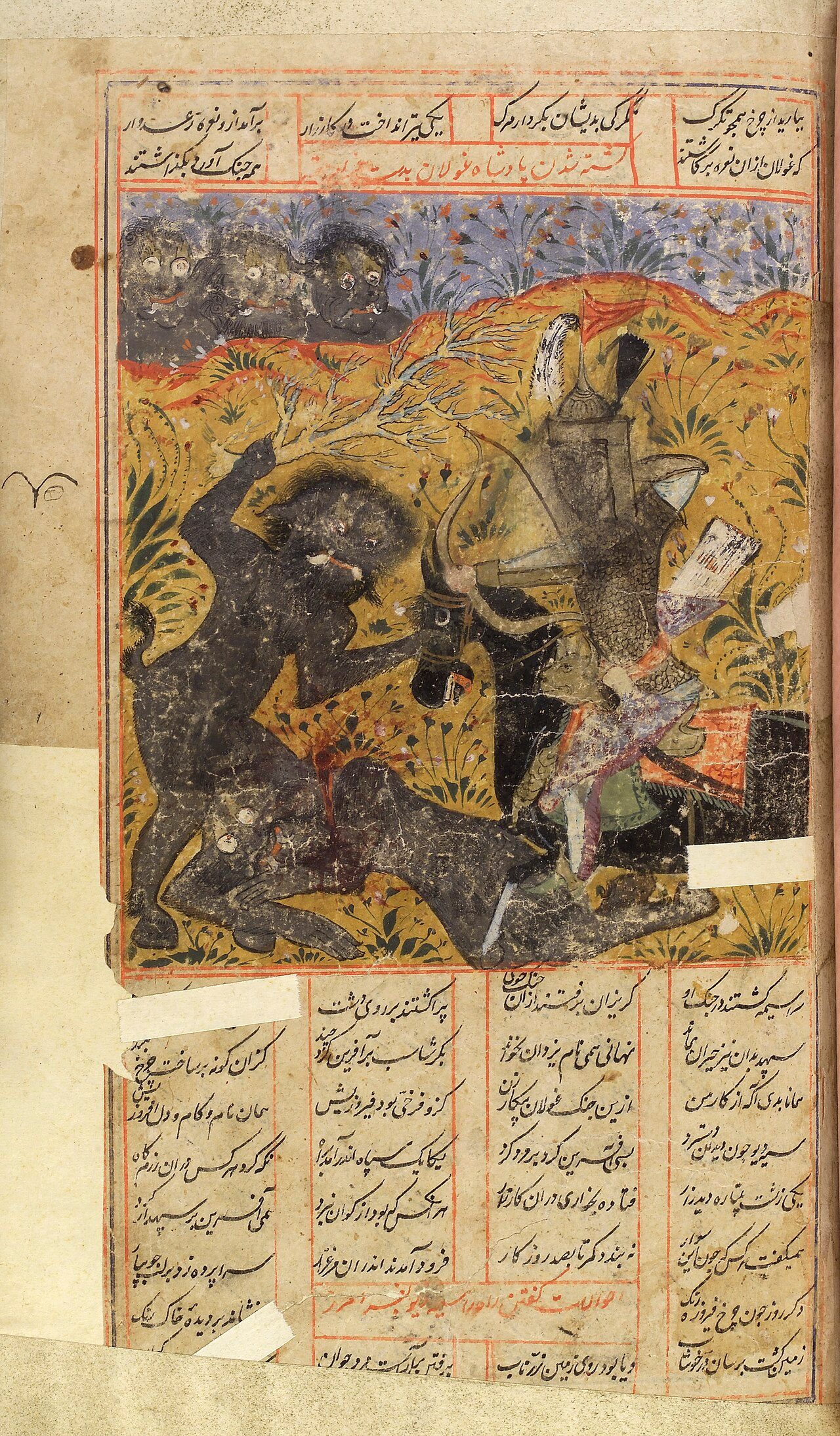
6 min read · 2 sourcesJinn (Arabic: جِنّ), also romanized as djinn or anglicized as genies, are supernatural beings in Islam, ancient Arabian religion and Arabic folklore and mythology. Like humans, they are accountable for their deeds and can be either believers (Mu'minun) or unbelievers (kuffar), depending on whether they accept God's guidance. Since jinn are neither innately evil nor innately good, Islam acknowledged spirits from other religions and could adapt them during its expansion. Likewise, jinn are not a strictly Islamic concept; they may represent several pagan beliefs integrated into Islam. Islam places jinn and humans on the same plane in relation to God, with both being subject to divine judgement and an afterlife. The Quran condemns the pre-Islamic Arabian practice of worshipping or seeking protection from them. While they are naturally invisible, jinn are supposed to be composed of thin and subtle bodies (أَجْسَام, ajsām) and are capable of shapeshifting, usually choosing to appear as snakes, but also as scorpions, lizards, or humans. A jinni's interaction with a human may be negative, positive, or neutral, and can range from casual to highly intimate, even involving sexual activity and the production of hybrid offspring. However, they rarely meddle in human affairs, preferring instead to live among their own in a societal arrangement similar to that of the Arabian tribes. 1
Etymology and translation
Jinn is an Arabic collective noun deriving from the Semitic root jnn (Arabic: جَنّ / جُنّ, jann), whose primary meaning is 'to hide' or 'to adapt'. Some authors interpret the word to mean, literally, 'beings that are concealed from the senses'. Cognates include the Arabic majnūn (مَجْنُون, 'possessed' or, generally, 'insane'), jannah (جَنَّة, 'garden', 'eden' or 'heaven'), and janīn (جَنِين, 'embryo'). Jinn is properly treated as a plural (however in Classical Arabic, may also appear as jānn, جَانّ), with the singular being jinnī (جِنِّيّ), from which the English word "genie" is derived. The origin of the word jinn remains uncertain. Some scholars relate the Arabic term jinn to the Latin genius – a guardian spirit of people and places in Roman religion – as a result of syncretism during the reign of the Roman empire under Tiberius and Augustus; however, this derivation is also disputed. Supporters argue that both Roman genii as well as Arabian jinn are considered to be lesser deities inhabiting local sanctuaries, trees or springs, and persons or families. Aramaic ginnaya (Classical Syriac: ܓܢܝܐ) with the meaning of 'tutelary deity' or 'guardian' are attributed to similar functions and are another possible origin of the term jinn. Another suggestion holds that the word is of Persian origin and appeared in the form of the Avestic Jaini, a wicked (female) spirit. Jaini were among various creatures in the possibly even pre-Zoroastrian mythology of peoples of Iran. Wensick advocates a purely Arabic origin of the term, asserting that according to the common Semitic view psychic and bodily affections are caused by spirits. An object reacting upon such an effect would be an incarnation of said spirit. 1
Pre-Islamic era
The exact origins of belief in jinn are not entirely clear. Belief in jinn in pre-Islamic Arab religion is attested not only by the Quran, but also by pre-Islamic Arabic poetry. Some scholars of the Middle East hold that they originated as malevolent spirits residing in deserts and unclean places, who often took the forms of animals; others hold that they were originally pagan nature deities who gradually became marginalized as other deities took greater importance. Many ancient deities may have developed from jinn, while others represent degraded gods. Joseph Chelhod connects the jinn to ancient Middle Eastern dualistic beliefs, according to which heaven and earth represent the polar opposites of order and chaos respectively. The high god El (or Allah) represents the source of the holy celestial abode, while the jinn are the chthonic powers of the lower world. The jinn continuously rise to the sky in an attempt to obtain divinity. The belief that angels are daughters born from a union between Allah and jinn would derive from the assumption of a union between the heavenly and earthly forces, which are then represented in the intermediate world in the form of stars. 1
Fear and veneration
Jinn were already worshipped by many Arabs in pre-Islamic Arabia. Julius Wellhausen observed that jinn were often thought to "inhabit or haunt desolate, dark and dingy places in the desert". For that reason, they were held responsible for various diseases and mental illnesses. Emilie Savage-Smith asserts that malicious jinn and good gods were distinct in pre-Islamic Arabia, but admits that such distinction is not absolute. In the regions north of the Hejaz, Palmyra and Baalbek, the terms jinni and ilah (deity) were often used interchangeably. Julius Wellhausen likewise agrees that in pre-Islamic Arabia it was assumed there are at least some friendly and helpful beings among the jinn. He distinguishes between a god and a jinni, not on the basis of morality, but on the basis of worship; the jinn are worshipped in private while the gods are worshipped in public. 1
Muqatil ibn Sulayman attributes the origin of the practice of jinn-veneration to the Banu Hanifa. When travelling through the wilderness and the sun sets, they sought refuge among the spirits of the place:فأول من تعوذ بالجن قوم من أهل اليمن من بني حنفية، ثم فشا ذلك في سائر العرب، وذلك أن الرجل كان يسافر في الجاهلية فإذا أدركه المساء في الأرض القفر قال أعوذ بسيد هذا الوادي من سفهاء قومه فيبيت آمنا في جوارهم حتى يصبح. The first who sought refuge among the jinn were people from Yemen, from the Banu Hanifa tribe. Afterwards, this [practice] spread to the rest of the Arabs. 1
Poetry and soothsaying
Even though they were often feared or inspired awe, the jinn were also pictured to befriend humans or have romantic feelings for them. According to common Arabian belief, pre-Islamic soothsayers, philosophers, and poets were inspired by the jinn. In his Book of Idols, Al-Kalbi records a story about a jinni named Abū-Thumama working as an oracle advising Amr ibn Luhay. The Arabian poet al-A'sha (d. after 3/625) claimed that his inspiration for his poetry came from a befriended jinni named Misḥal ("daʿawtu khalīlī Misḥalan") whom he called his jinni-brother ("akhī ʾl-jinnī"). Similarly, the poet Thābit (d. 54/674) who later converted to Islam and became known as "the poet of the prophet", referred to his jinni-friend as his "sharp-sighted brother from the jinn" ("wa-akhī min al-jinn al-baṣīr"). The relationship between jinn and humans can also be romantic in nature. According to one famous Arabian story, the jinni Manzur fell in love with a human woman called Habbah, and taught her the arts of healing. The mutual relationship between jinn and humans is different from that of a jinni and a soothsayer (kāhin). The soothsayer is presented as someone who is totally controlled by the jinni entering them. 1
Islam
Jinn have been called an integral part o… 1
The text above is adapted from the Wikipedia article “Jinn”, available under the Creative Commons Attribution-ShareAlike 4.0 licence. 1
jinn is supernatural spirits integrated in Islamic beliefs, according to the structured record cited below. This entry was generated automatically from that record and has not yet been reviewed by a person familiar with the tradition. 2
The source record links this tradition to 43 external registers, which can be verified through the citation. 2