The tradition & historical record
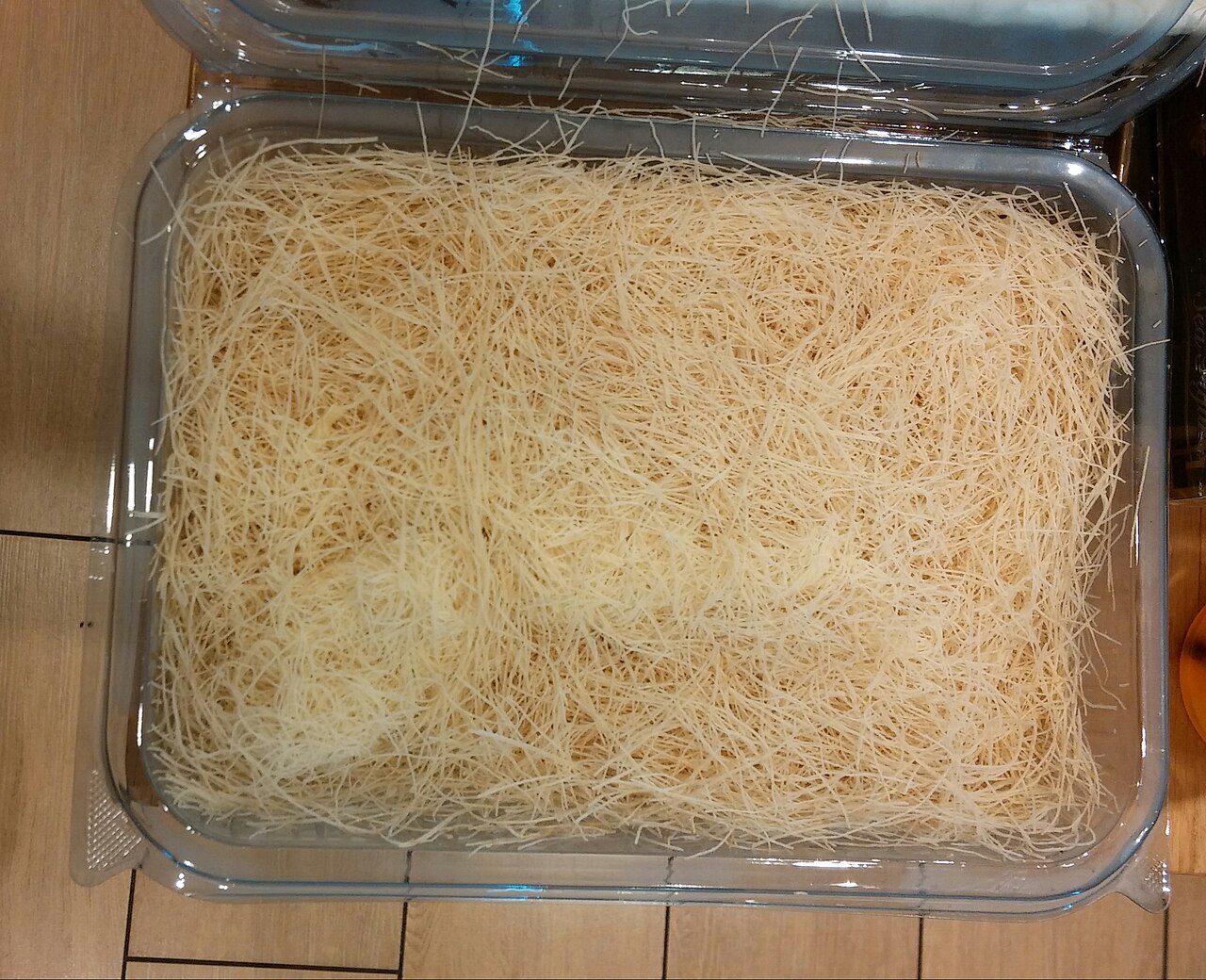
2 min read · 2 sourcesKadayif (Arabic: قطائف) is a both a sweet spun Middle Eastern dessert, and a type of shredded filo pastry dough popular in the Balkans and Levant, used for various Middle Eastern desserts. 1
Preparation
Kadayif is made from fine dough threads ("string kadayif") with a filling of milled almonds or walnuts and sugar syrup. This filling is seasoned with vanilla sugar and then wrapped in the dough threads. After baking and cooling, it is soaked in lemon sugar syrup. 1
Etymology and history
The word kadayif is the plural of the Arabic qatifah (قطيفة) 'velvet'. The shredded dough is called knafeh/kunafa (كنافة) in Arabic, which is also a dessert similar to kadayıf but stuffed with cheese. The name first appears in an Ottoman translation of Al-Baghdadi's 13th century cookbook Kitab al-Tabikh, as translated by Muhammed bin Mahmud Şirvani, a 15th-century Ottoman physician. According to oral tradition in Diyarbakır, the first kadayif vendor in the city was an Armenian shop owner named Agop. A version filled with walnuts or pistachios flavored with cinnamon was traditionally served by the Sephardic Jewish community of Jerusalem during Rosh Hashanah and Purim. 1
Varieties of kadayif and its usage
There are many recipes and desserts using Kadayif with some of them being documented in the first Ottoman printed cookbook, Melceü't-Tabbâhîn. 1
Tel Kadayif Ekmek Kadayif Kadayif Pudding Knafeh Erzurum Dolma Dubai chocolate Burma Kadayif Tash Kadayif Sheki halva Othmalliyya 1
The text above is adapted from the Wikipedia article “Kadayif (pastry)”, available under the Creative Commons Attribution-ShareAlike 4.0 licence. 1
Kadayif is middle Eastern dessert, according to the structured record cited below. This entry was generated automatically from that record and has not yet been reviewed by a person familiar with the tradition. 2