The tradition & historical record
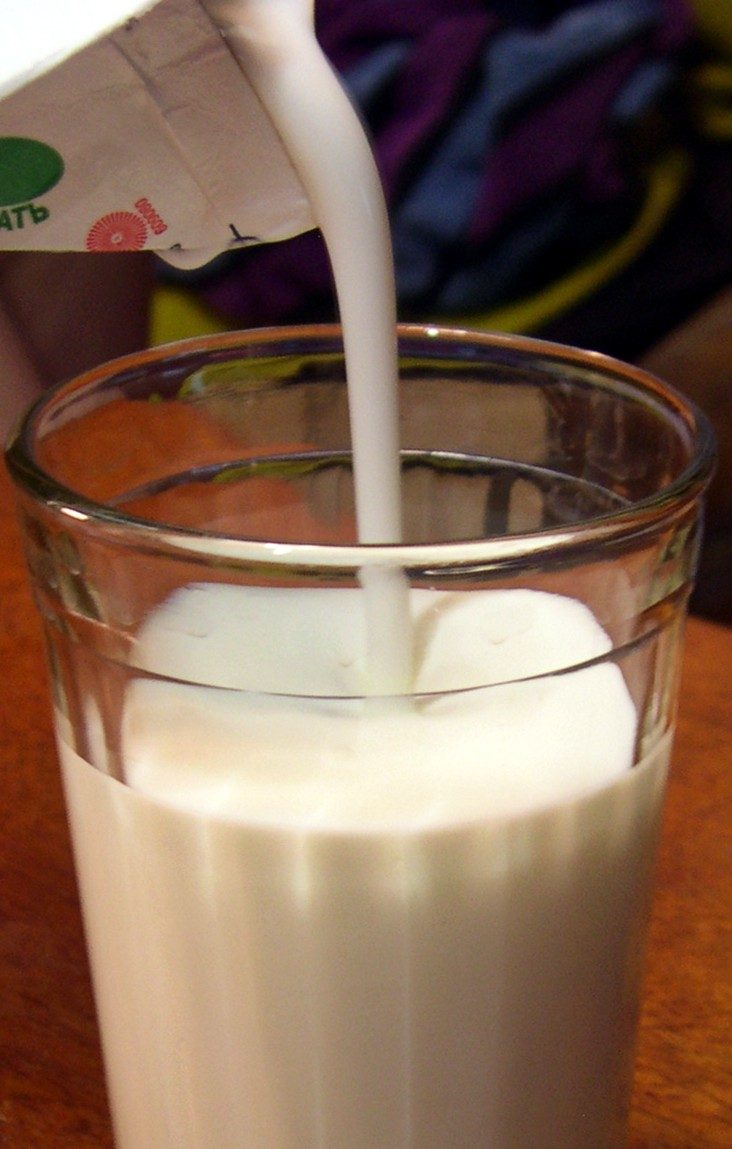
5 min read · 2 sourcesKefir ( kə-FEER; alternative spellings: kephir or kefier) is a fermented milk drink similar to a thin yogurt or ayran that is made from kefir grains, a specific type of mesophilic symbiotic culture. It is prepared by inoculating the milk of cows, goats, or sheep with kefir grains. Kefir is a common breakfast, lunch or dinner drink consumed in countries of West Asia and Central and Eastern Europe. Kefir is consumed at any time of the day, alongside Central Asian breads like shelpek (Kazakh bread), burek and banitsa/gibanica, and is an ingredient in cold soups. 1
Origin and etymology
Kefir has been found in graves in the Bronze Age Xiaohe Cemetery, dating back 3,600 years. The word kefir is of North Caucasian origin, where related words are attested in several languages: Mingrelian ქიფური (kipuri), Karachay-Balkar гыпы (gıpı) and Ossetian къӕпы (k'æpy). One theory is that the word comes from Old Turkic köpür '(milk) froth'. It was loaned into Russian where it is attested since 1870s, and from there it was loaned into English, there attested in 1880s. It has become an internationalism, as it is found in many European languages. Kefir is a very popular drink in the North Caucasus, it is a part of traditional Circassian cuisine to this day. Traditional kefir was made in goatskin bags that were hung near a doorway; the bags would be knocked by anyone passing through to keep the milk and kefir grains well mixed. In Karachay-Balkar, gıpı has a connection with gıpıt (wineskin). It was under the name wineskin that Karachay kefir was distributed in the second half of the 19th century and at the beginning of the 20th century. Kefir spread from the former Soviet Union to the rest of Europe, Canada, Japan, and the United States by the early 21st century. 1
Fermentation and kefir grain formation
Traditional kefir is fermented at ambient temperatures, generally overnight. Fermentation of the lactose yields a sour, carbonated, slightly alcoholic beverage, with a consistency and taste similar to drinkable yogurt. The kefir grains initiating the fermentation are initially created by auto-aggregations of Lactobacillus kefiranofaciens and Maudiozyma turicensis or M. humilis, where multiple biofilm producers cause the surfaces to adhere which form a three dimensional microcolony. The biofilm is a matrix of heteropolysaccharides called kefiran, which is composed of equal proportions of glucose and galactose. It resembles small cauliflower grains, with color ranging from white to creamy yellow. A complex and highly variable symbiotic community can be found in these grains, which can include acetic acid bacteria (such as Acetobacter aceti and Acetobacter rasens), yeasts (such as Kluyveromyces lactis, K. marxianus, Saccharomyces cerevisiae, M. turicensis) and a number of Lactobacillus species, such as L. parakefiri, L. kefiranofaciens (and subsp. kefirgranum), L. kefiri, L. brevis, etc. While some microbes predominate, Lactobacillus species are always present. The microbe flora can vary between batches of kefir due to factors such as the kefir grains rising out of the milk while fermenting or curds forming around the grains, as well as temperature. Additionally, Tibetan kefir composition differs from that of the Russian kefir, Irish kefir, Taiwan kefir and Turkey fermented beverage with kefir. 1
Decreased lactose content
During the fermentation process, bacteria and yeast break lactose down into glucose and galactose. As a result of the fermentation, lactose levels are decreased by 20–30% with respect to the initial lactose levels present in the milk. One study found that when people with lactose intolerance consumed the same amount of lactose in milk, kefir or yogurt products, the latter two showed significantly reduced symptoms of lactose intolerance during the first 8 hours after consumption. This result suggests that yogurt and kefir might be suitable for people with lactose intolerance. However, the long-term impact of kefir consumption on lactose intolerance has not been studied. It has also been shown that fermented milk products have a slower transit time than milk, which may further improve lactose digestion. 1
Alcohol content
Kefir contains a small amount of ethanol. The level of ethanol in kefir can vary by production method. A 2016 study of kefir sold in Germany showed an ethanol level of only 0.02 g per litre, which was attributed to fermentation under controlled conditions allowing the growth of Lactobacteria only, but excluding the growth of other microorganisms that generate much higher amounts of ethanol. A 2008 study of German commercial kefir found levels of 0.002–0.005% of ethanol. Kefir produced by small-scale dairies in Russia in the early 20th century had 1–2% ethanol, but this is no longer common. 1
Nutrition
Plain kefir is 87% water, 7% carbohydrates, 4% protein, and 1% fat (table). In a reference amount of 100 g (3.5 oz), kefir provides 52 calories of food energy, and contains moderate amounts (10-19% of the Daily Value, DV) of vitamin A, vitamin B12, riboflavin, and calcium (table). Kefir contains byproducts of the fermentation process, including carbon dioxide and ethanol. 1
The text above is adapted from the Wikipedia article “Kefir”, available under the Creative Commons Attribution-ShareAlike 4.0 licence. 1
kefir is fermented milk drink, according to the structured record cited below. This entry was generated automatically from that record and has not yet been reviewed by a person familiar with the tradition. 2
The source record links this tradition to 34 external registers, which can be verified through the citation. 2