The tradition & historical record
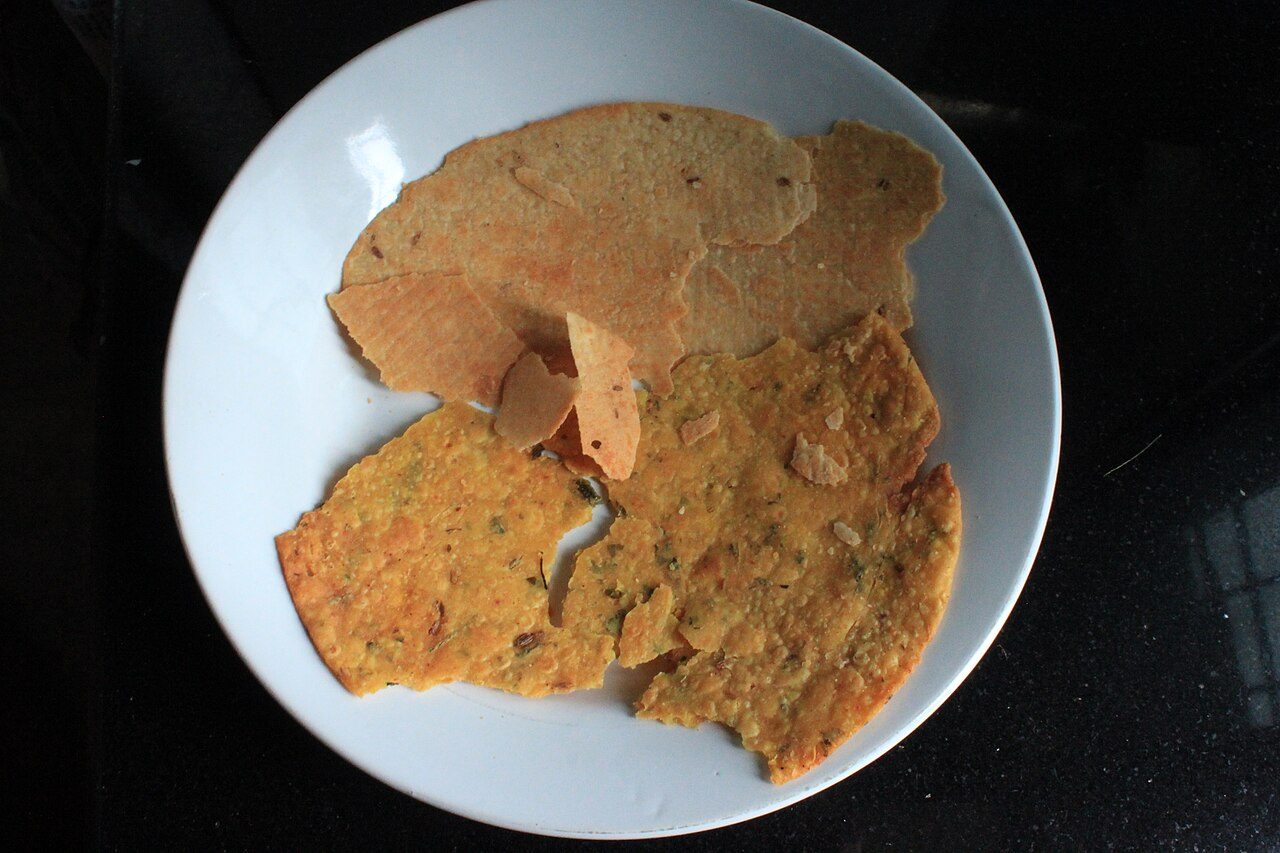
2 min read · 2 sourcesKhakhra or khakra is a thin, crisp flatbread from western India, closely associated with Gujarati and Jain cuisines and is also eaten in some parts of Rajasthan. It is traditionally made by rolling a dough of whole-wheat flour (atta) with a little oil, then roasting it on a griddle (tava) while pressing until fully dry and brittle. Khakhra is commonly eaten as a light breakfast or snack, often with tea, South Asian pickle, chutneys, ghee or butter. 1
Ingredients and preparation
The base dough is primarily whole-wheat flour and oil; salt and mild spices may be added. During cooking, partially puffed phulka-like discs are pressed firmly on a hot tava with a cloth or wooden press until moisture is driven off and the disc turns rigid and shatter-crisp. 1
Varieties
Beyond plain (sada) khakhra, common flavourings include methi (fenugreek), jeera (cumin) and mixed masala. Contemporary commercial and home recipes also substitute or blend other flours (such as finger millet/ragi, barley, or besan, among others) to create multigrain versions. 1
Consumption and commercialization
Khakhra is a breakfast and teatime staple in many Gujarati and Jain households and has an established packaged-snack market with numerous regional brands and flavours. 1
The text above is adapted from the Wikipedia article “Khakhra”, available under the Creative Commons Attribution-ShareAlike 4.0 licence. 1
Khakhra is Indian crispy flatbread, according to the structured record cited below. This entry was generated automatically from that record and has not yet been reviewed by a person familiar with the tradition. 2
The source record links this tradition to 2 external registers, which can be verified through the citation. 2