The tradition & historical record
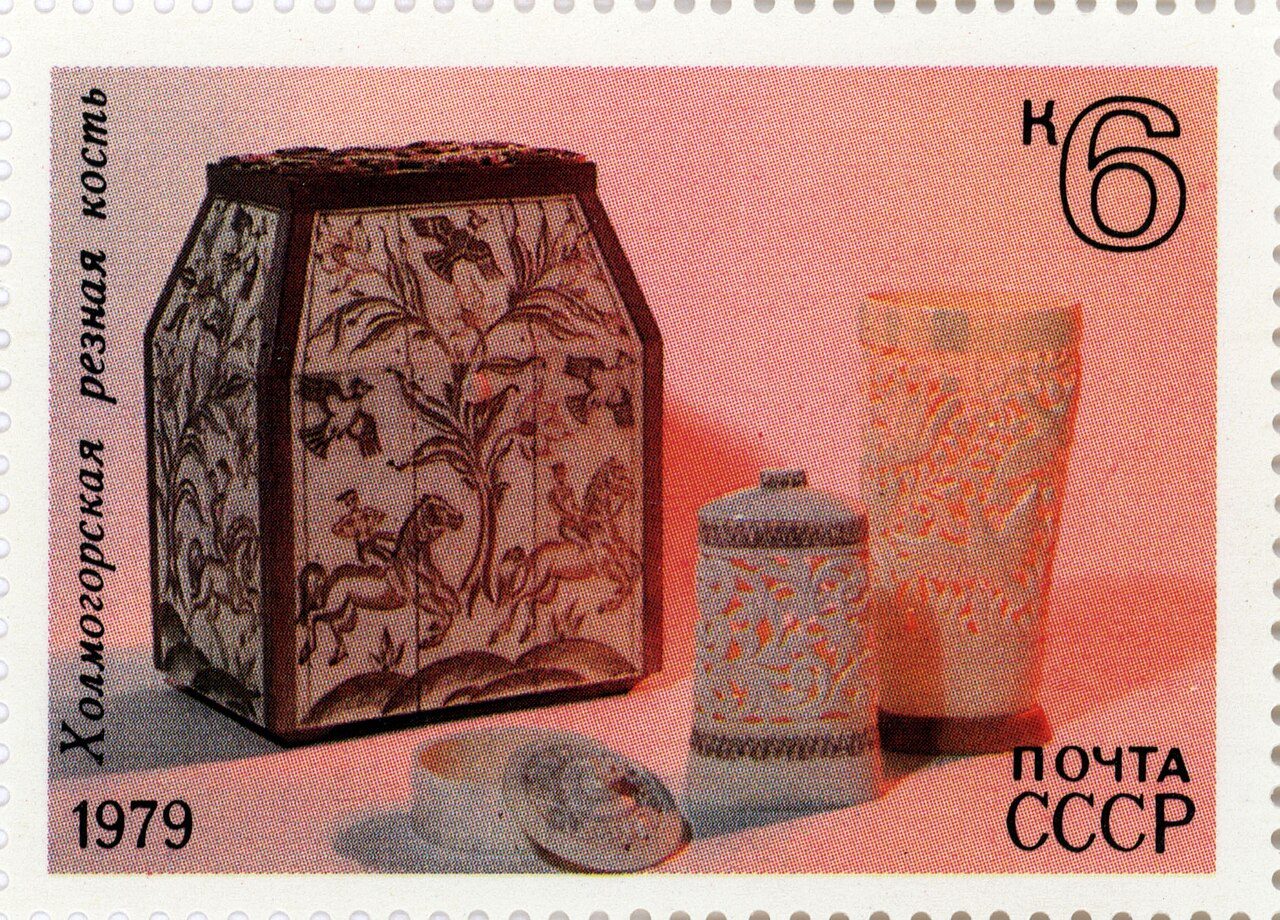
2 min read · 2 sourcesKholmogory bone carving (Russian: Холмогорская резная кость) is a traditional handicraft practiced in the villages of Kholmogorsky District, Arkhangelsk Oblast, in the north of Russia. The craft of bone carving was developed in the town of Kholmogory in the 17th century. It has been first mentioned in connection with the fact that two Kholmogory carvers, brothers Yevdokim and Semyon Sheshenin, were invited to work in the Kremlin Armoury, which performed orders for the tsar’s court. The handicraft reached its peak in the 18th century under the reign of Peter the Great. Artisans were using walrus ivory, seal bones, and in rare cases even elephant and mammoth ivory. In the 18th century, carved boxes, bracelets, portrait frames and similar objects were very popular. The famous 18th-century Russian sculptor, Fedot Shubin, started his career at Kholmogory as a walrus ivory carver. In the second half of the 18th century, the most notable carvers in Kholmogory were Osip Dudin and Nikolay Vereshchagin. In the second half of the 19th century, the handicraft declined, and by the 1880s only several carvers were left. The local authorities made an attempt to save the handicraft, and in 1885 in the village of Lomonosovo, close to Kholmogory, a master class in bone carving opened. The class had to be closed in 1900 due to the lack of interest. 1
The text above is adapted from the Wikipedia article “Kholmogory bone carving”, available under the Creative Commons Attribution-ShareAlike 4.0 licence. 1
Kholmogory bone carving is Russian traditional handcraft, according to the structured record cited below. This entry was generated automatically from that record and has not yet been reviewed by a person familiar with the tradition. 2
The source record links this tradition to 2 external registers, which can be verified through the citation. 2