The tradition & historical record
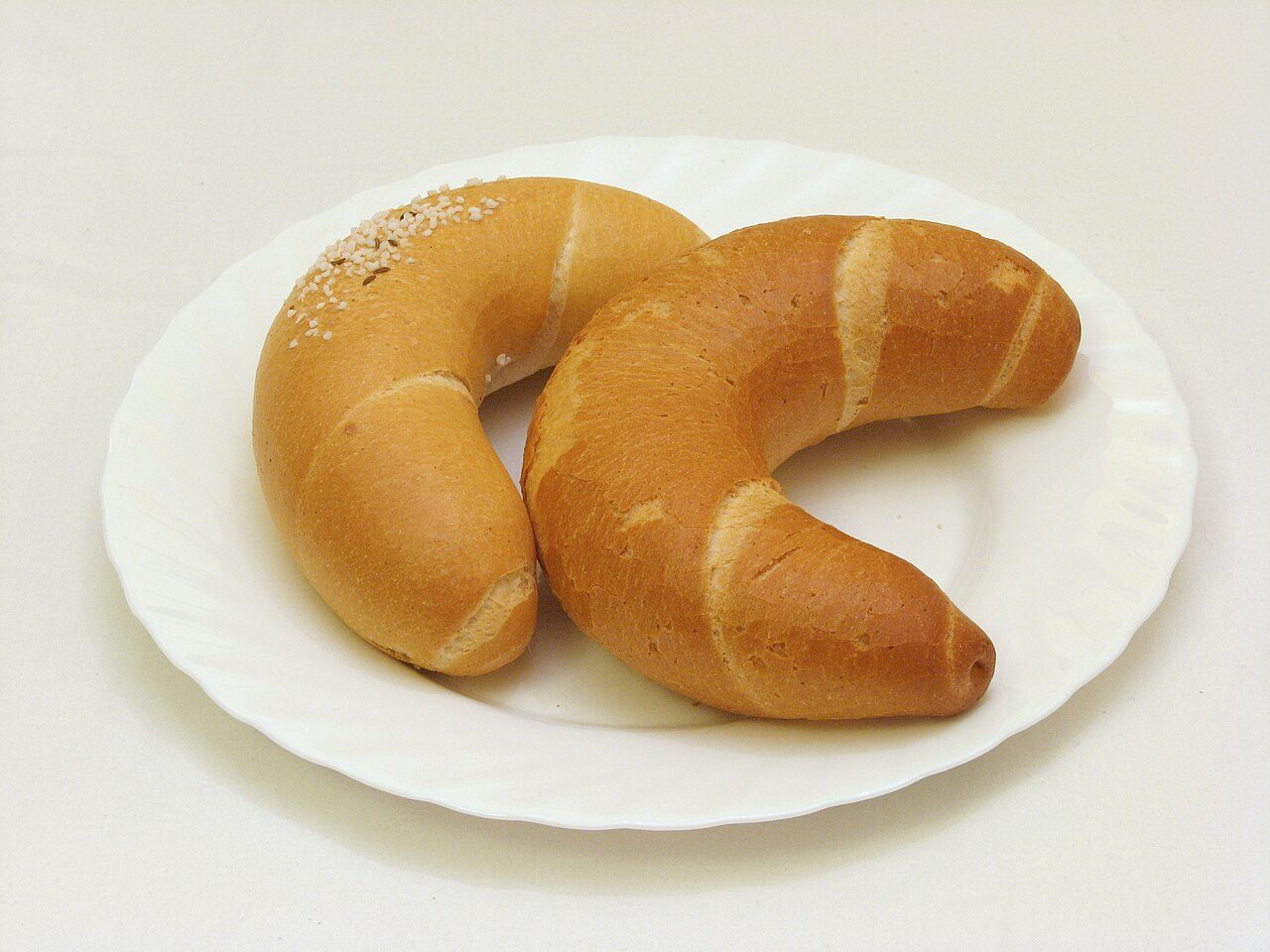
5 min read · 2 sourcesKipferl, kifli, kiflice, kifle or cornuri is a traditional yeast-based bread roll, rolled and formed into a crescent-shape before baking. It is a common type of bread roll throughout much of central Europe and nearby countries, and is known by several names. It is thought to be the inspiration for the French croissant, which has a very similar shape, though is made with a different type of dough. In Germany and Austria, unused kipfel are used to make a sweet bread pudding called Kipfelkoch. 1
Names
The roll is called: 1
Kipferl in Austrian German küpfel or a Meidlinger roll in Vienna kipfl in German speaking South Tyrol Italy kifli in Hungarian kifla / кифла (pl. kifle / кифле or kiflice / кифлице) in Bosnian, Croatian, and Serbian кифла [kifla] in Bulgarian кифла [kifla] in Macedonian kifle in Albanian giffel in Danish and Swedish rogal or rogalik (little horn) in Polish rohlík in Czech rožok in Slovak рогалик [rogalik] in Russian рогалик [rohalyk] in Ukrainian rogljiček or kifelc in Slovene corn in Romanian horn (horn) in Norwegian Hörnchen (little horn) in German In Old High German, Kipfa means "carriage stanchion" and refers to the stanchions or "horns" of a cart. In the 13th century, that usage referred to a bread shape of pagan origin. The Czech, Slovak, Polish, Slovenian, Ukrainian, and Russian names derive as diminutives from the Slavic word rogal or rohel ("horned") which in turn derives from "rog/roh" ("horn/protrusion"). Some other languages use a simple translation ("horn", "cornulet"). The similarity between the words "rohalyk" or "rohlík" and the English word "roll" is coincidental; the words are not related by origin. The Slavic root "rog" can be hypothetically associated with the German verb "ragen" ("to protrude"). 1
Background
Kipferl is a traditional yeasted bread rolled into a crescent shape. The Austrian kipferl is a small wheat roll with pointed ends. The 17th-century Austrian monk Abraham a Sancta Clara described the roll as crescent-shaped, writing "the moon in the first quarter shines like a kipfl", and noted there were Kipferl in various forms: "vil lange, kurze, krumpe und gerade kipfel" ("many long, short, crooked and straight kipfel"). Breads or pastries in the shape of a crescent moon are believed to have been served in ancient times as offerings to the goddess of the moon, Selene. The shape is also reminiscent of horns; both are associated with ancient symbolism and considered the oldest surviving pastry shape. A list of foods eaten in a 10th-century convent includes panis lunatis, described as a small, crescent-shaped roll often eaten during fasts. The Kipferl has been documented in Austria to at least 1227 when they were recorded in Babenberg-ruled Vienna as chipfen: 1
dô brâchten im die pecken chipfen und weiʒe flecken, 1
weiʒer dann ein hermelein. In Austria, the Kipferl is formally recognized by the government as a traditional food. According to the Austrian Ministry of Agriculture, Regions and Tourism, Kipferl were probably a traditional monastery roll baked for Easter. They are described as crescent-shaped rolls made of yeast wheat dough in a variety of shapes and as being popular for coffee breaks and breakfasts, particularly in Vienna. The Kipferl likely inspired the similarly shaped French croissant, which is made from a viennoiserie. 1
Origin myths
A common culinary myth claims that the Kipferl was invented in Vienna after or during the siege of the city by Ottoman Turks. This may be in error. The rumor may have changed over time, from a story that the bakers made Kipferl in honor of the victory, which tends to point to a similar story about the victory in Buda. Another story claims when Christian forces freed Buda from Ottoman occupation in 1686, the bakers of the town celebrated the victory the next day by selling freshly baked bread rolls made into a crescent shape. This, however, raises the question of why would the bakers make a crescent shape (a Muslim symbol) instead of a Christian one. One possible explanation is the fact that the survivors within Vienna would then have consumed their enemy's symbol. 1
Preparation
Traditionally, Kipferl are made by cutting sheets of soft yeast dough into triangular wedges, rolling them into crescent shapes, and baking them. Unlike the French croissant (crescent), Kipferl is made from a plain, bread-like dough and is more akin to a roll than to pastry. Kipferl is also thinner and longer than the croissant. Kipferl are made in various sizes; some of them weigh as much as a small bread loaf. In commercial preparation, the dough is mixed, cut into small pieces, and fed into a machine that flattens and rolls it. 1
Regular
When they come out of the oven, the rolls can be left plain or brushed with water to give them a shiny finish. They can be given an egg wash and sprinkled with either poppy seeds or caraway seeds mixed with coarse salt. The latter variety is often made into a straight shape rather than a crescent. Kipferl is eaten like bread or rolls; it is usually made into a sandwich, sometimes plain or with butter like a fresh baguette. Often, especially for breakfast, the topping is jam or honey. They may also be used for dunking. 1
The text above is adapted from the Wikipedia article “Kifli”, available under the Creative Commons Attribution-ShareAlike 4.0 licence. 1
kifli is crescent-shaped bread roll, originating in Central Europe, according to the structured record cited below. This entry was generated automatically from that record and has not yet been reviewed by a person familiar with the tradition. 2
The source record links this tradition to 4 external registers, which can be verified through the citation. 2