The tradition & historical record
5 min read · 2 sourcesKilju (Finnish pronunciation: [ˈkilju]) is the Finnish word for a mead-like homemade alcoholic beverage made from a source of carbohydrates (such as cane sugar or honey), yeast, and water, making it both affordable and cheap to produce. The ABV depends on the yeast that was used, and since it does not contain a sweet reserve it is completely dry. Crude product may be distilled into moonshine. Kilju intended for direct consumption is usually clarified and stabilized to avoid wine faults. It is a flax-colored alcoholic beverage with little discernible taste other than that of ethanol. It can be used as an ethanol base for drink mixers. 1
Cultural aspects
Kilju is commonly associated with the punk subculture. Kilju has long been part of Finnish alcohol and counterculture, as documented in an old video showing its production and consumption at one of the country’s leading engineering schools. "Four thousand litres of gases are generated. They are led to the neighbours' delight." The drink tends to invite such black humour, of the deadpan kind. The first commercially produced kilju was introduced in 2022. 1
Production
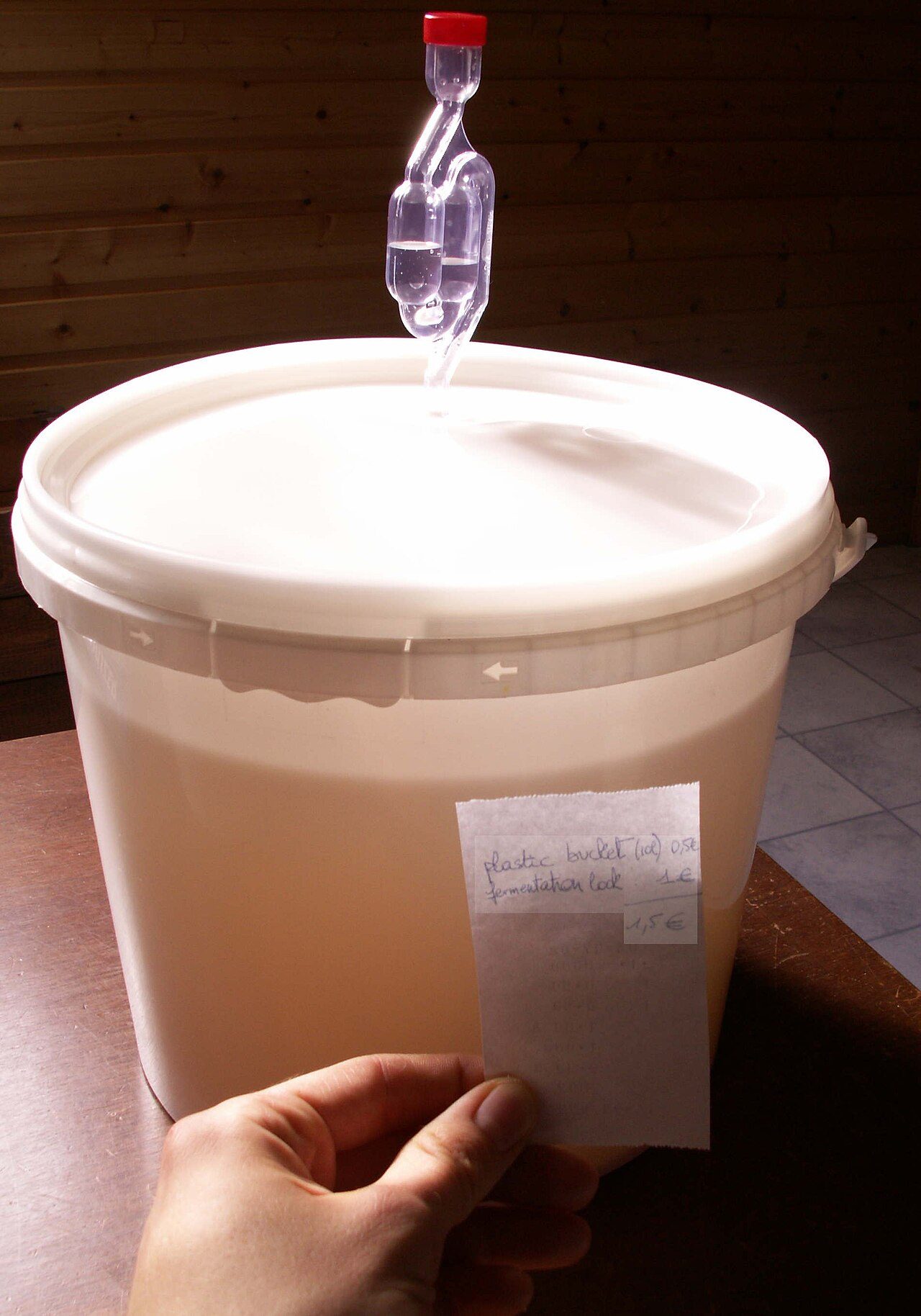
The process is similar to that of homebrewing wine. If done slowly, it requires rigorous hygiene and filtering of the product. If brewed fast, specialized dried yeasts are available in amounts to drive the fermentation process through before bacterial infiltration can take place, in about three days. In Finnish, the latter are called pikahiiva (lit. quick-yeast), and they are sold in about 100 g (3+1⁄2 oz) packs dry, as opposed to the live standard pack of brewer's yeast of 50 g (1+3⁄4 oz) wet. Properly made kilju is a clear, colorless, or off-white liquid with little discernible taste other than that of ethanol. It can be produced by natural settling of the yeast over time, but nowadays various fining agents are used to hasten the process as well. Kilju is often produced improperly by home brewers who allow contaminants to disrupt fermentation or do not adequately filter or rack the liquid, or do not use a fining agent. The latter mistakes result in yeast being suspended, causing the mixture to be cloudy rather than clear. The yeast is not harmful, but can yield an unpleasant taste and intestinal discomfort. It is also a common mistake to leave the carbon dioxide produced by fermentation into the suspension, so that the yeast provides it with nucleation sites, keeping the yeast up in the solution. Proper technique calls for airing the product during the first few days of fermentation by stirring the must. Fining agents such as microsilica or various semipolar proteinaceacous or carbohydrate agents are also used to get the yeast to fall out of suspension. However, once alcohol is produced, care should be taken to avoid oxidisation. 1
Ingredients
An easy way to produce fermented water is to obtain turbo yeast kits (contains Saccharomyces cerevisiae yeast strain, enzymes, vitamins, and minerals) that instructs on the package the quantity of white sugar, and tap water needed. 1
Inverted sugar syrup Water Sugars in wine: White sugar (or crystallized sucrose) is cheap and common. Also, partially refined sugars such as brown sugar should be avoided, as a major constituent of fine commercial brown sugar is molasses, and molasses are used to (for example) produce a distinct flavor in rum. Using plain sugar is beneficial over whole fruit, as unwanted methanol tends to be a major occurrence in fruit spirits. Yeast in winemaking: The most common yeast associated with winemaking is Saccharomyces cerevisiae. Saccharomyces cerevisiae is excellent at producing ethanol. Yeast are dependent on a few nutrients (often included in yeast kit sanchets) to produce as much ethanol as possible; the most important ones are: Invertase is an enzyme that cleaves the glycosidic linkage between the glucose and fructose molecules in sucrose. This helps the yeast metabolize the sugars faster. Thiamine increases the resistance of the yeast Saccharomyces cerevisiae against oxidative, osmotic and thermal stress. Yeast assimilable nitrogen (YAN), is the combination of free amino nitrogen (FAN), ammonia (NH3) and ammonium (NH4+) that is available for the wine yeast Saccharomyces cerevisiae to use during fermentation. Outside the sugars in wine, nitrogen is the most important nutrient needed to carry out a successful fermentation that doesn't end prior to the intended point of dryness or sees the development of off-odors and related wine faults. 1
Inverted sugar syrup
Inverted sugar syrup for fermented water is usually home-made by fully dissolving sugar in cold tap water. Yeast requires oxygen rich water that does not exceed 25 °C (77 °F). A common manual way to dissolve refined sugar is to mix with water in a container which is half filled, and then sealed and shaken. However, a mixer or blender may be used to automatically dissolve the sugar, in turns, if necessary. 1
Yeast
Yeast, and yeast nutrition, is mixed in the syrup. One gram pure yeast consumes approximately 0.2 g sugar. Yeasts will usually die out once the alcohol level reaches about 15% due to the toxicity of alcohol on the yeast cells' physiology while the more alcohol tolerant Saccharomyces species take over. In addition to S. cerevisiae, Saccharomyces bayanus is a species of yeast that can tolerate alcohol levels of 17–20%. 1
The text above is adapted from the Wikipedia article “Kilju”, available under the Creative Commons Attribution-ShareAlike 4.0 licence. 1
kilju is Finnish alcoholic beverage, according to the structured record cited below. This entry was generated automatically from that record and has not yet been reviewed by a person familiar with the tradition. 2
The source record links this tradition to 2 external registers, which can be verified through the citation. 2