The tradition & historical record
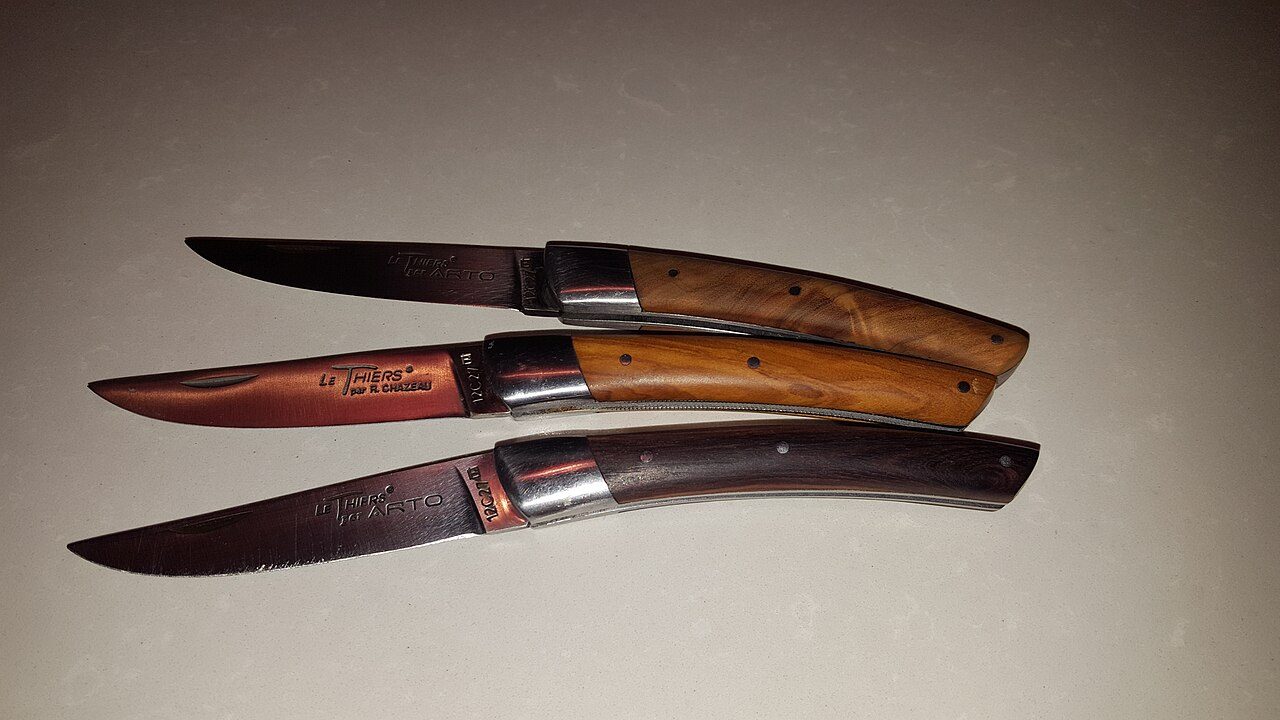
4 min read · 2 sourcesThe cutlery of Thiers, a specialized tradition in the Thiers region of the Puy-de-Dôme department, Auvergne-Rhône-Alpes, France, is supported by the presence of the Durolle River and local forests. Cutlery production in Thiers, first documented in the 13th century, has significantly contributed to the region's national and international reputation in artisanal and industrial sectors. By the 17th century, Thiers merchants exported cutlery beyond France. During the 19th-century Industrial Revolution, production became industrialized. In the early 20th century, cutlers transitioned from using the Durolle River's mechanical power to electricity. By 2016, Thiers accounted for 80% of France's annual knife production, remaining the largest cutlery production center in the European Union and earning the title "capital of cutlery," despite facing industrial challenges and requiring state support. In 2020, cutlery was the sector with the highest number of jobs in the Thiers region. In 2016, the Chamber of Commerce and Industry estimated that the cutlery industry in the city of Thiers employed over 2,000 people. The large proportion of workers residing in the municipality is largely explained by this factor. 1
Geographic origins
In the 15th century, cutlery workshops were established along the Durolle River in Thiers, utilizing water-powered "rouets" (grinding workshops) from the Moûtier district upstream to the Thiers mountains, in areas later known as the Valleys of the Factories and the Rouets. The "parceling out of work" system distributed knife production across multiple sites, leading to the establishment of manufacturing workshops in the medieval city center and nearby villages. During the Trente Glorieuses (France's post-war economic boom), cutlery workshops and factories began relocating from the Durolle gorges to new facilities in Thiers' lower city. From the 1980s, this expansion included the development of industrial zones, Felet and Racine, near the A89 motorway exits. 1
Origins
The hydraulic power of the Durolle was used in Thiers as early as the Middle Ages to power flour mills, fulling mills for tanners, hammers for papermakers, and, with the development of cutlery, tilt hammers for metalworkers and grindstones for sharpeners. According to legend, crusaders from Auvergne brought back from the East the secret of steelmaking—specifically, the carburizing process. By the 15th century, one quarter of Thiers' workers were cutlers. The objects produced in Thiers were exported to several countries as early as the 17th century: Spain, Italy, Germany, Turkey, and "the Indies." 1
Material sourcing
The cutlery industry in Thiers developed primarily due to the Durolle River's hydraulic power and a substantial local workforce. From the Middle Ages, most materials, except wood for knife handles sourced from local forests like Bois Noirs in the Thiers mountains, were imported. Coal was obtained from Saint-Éloy-les-Mines and Brassac-les-Mines in Puy-de-Dôme, while iron and steel were sourced from Nivernais, Burgundy, and Dauphiné. Grindstones were supplied from Langeac quarries and, from the 19th century, the Vosges region. 1
Organization of the cutlers of Thiers
Since the 15th century, Thiers' cutlers adopted a labor division system to enhance production efficiency. Knife manufacturing was distributed across the town, with workers specializing in specific tasks, often passed down through generations, fostering high skill levels. Steel bars were first processed by "martinaires," who thinned them using trip hammers powered by the Durolle River. Blacksmiths then forged the knife components, which were subsequently handled by filers, drillers, grinders, and polishers, who sharpened and polished blades on river-driven grindstones. Manufacturers tempered the blades, while handle-makers provided handles. Final assembly was typically performed by workers in Thiers' suburbs. 1
Marketing of knives
From the 17th century, Thiers' cutlers employed two primary marketing channels for their knives. Direct sales occurred through cutlery shops established in the medieval city's narrow streets, serving both locals and visitors. Recognizing the potential of the national market, Thiers' high-quality knives were also sold to affluent customers in major French cities such as Lyon, Paris, and Bordeaux. By the 18th century, Thiers expanded into international markets, with merchants gaining prominence in Spain, Italy, and regions referred to as the Indies. The knife trade significantly contributed to Thiers' economic growth, supporting a population exceeding 10,000 by the 18th century and maintaining the region's artisanal vitality. Unlike other knife-producing centers that focused on local sales and were vulnerable to France's economic crises, Thiers' export-oriented approach ensured greater resilience. 1
The text above is adapted from the Wikipedia article “Cutlery of Thiers”, available under the Creative Commons Attribution-ShareAlike 4.0 licence. 1
Knives industry in Thiers is thiers' traditional activity, according to the structured record cited below. This entry was generated automatically from that record and has not yet been reviewed by a person familiar with the tradition. 2